Net materials

Description

Netting materials contribute to several important factors including maintenance, durability, strength, weight, noise in the water, efficiency of the gear, cost, etc. Cotton mesh was originally used for fish sampling gear, replaced by nylon starting in the 1930’s. Nylon has been the dominant mesh material for decades but now is being replaced in part by higher tech materials with greater advantages for sampling.

NameMaterialDensity (Specific Gravity)Strength and StretchAppropriate UseAdvantagesDis-advantages
NylonPolyamide

1.14

(Sinks)

Strong but loses 10-15% when wet; stretchesCommon mesh material in many types of gears; 

Can be stored wet;

Less expensive; softens in water

Needs net coating; 
Polyethylene (PE)Ethylene polymer

0.96-0.98

(Floats)

Lower tensile strength than nylonMesh, 3-strand; replacing nylonRequires no net coating; faster to tow than braided PEVaries in quality, so stay with a proven company; UV will destroy
Braided PEEthylene polymer

0.96-0.98

(Floats)

Same strength as PE8-strand braided meshGood abrasion resistance;Needs UV inhibitor
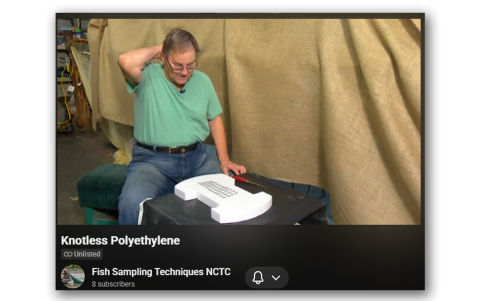
Knotless PolyethylenePolyethylene

0.96-0.98

(Floats)

Strong, stronger than knotted PE of similar or larger DenierMesh for seines, trap nets, trawlsKnotless, easier on fish, less drag in water; tow fast; very quiet in water (hydrophonic efficient); has a higher catch efficiency compared to knotted PE; can be repaired easilyCheaper versions exist, use quality control checks
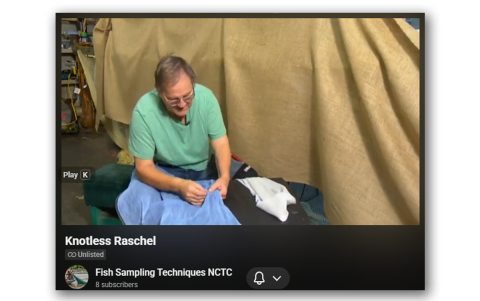
Knotless RaschelPolyester, but also commonly made of nylon or polyethylene

1.35

(Sinks)

Research only; bottom netsAbrasion resistant; very durable, sturdy; does not weaken when wet; dries quicklyWoven raschel can make trawls heavy
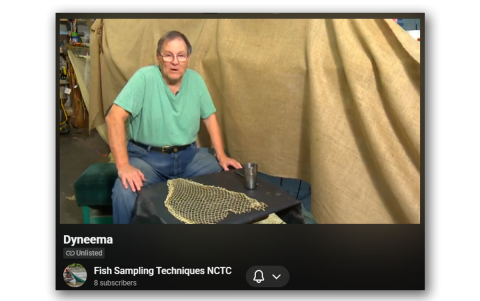
DynemaUltrahigh density polyethylene

0.98

(Floats)

Extremely strong; strongest material for fisheries gear;Trawl meshCan use smaller diameter mesh for lighter weight trawls, thus able to use smaller boats; highest abrasion resistance; allows great trawl geometry and more designsMore expensive;
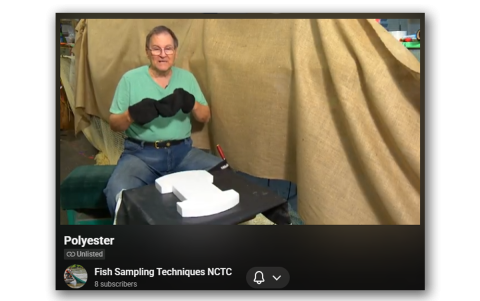
Polyester Filter ClothRetains very small fish in cod end of trawls; use instead of plankon nets in trawl cods; hoop configurations, bongos, tucker trawlsVery durable and pliable; good hydro-dynamics

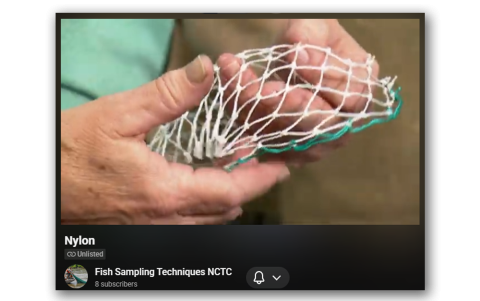
Nylon

VIDEO LINK:https://youtu.be/Ib6UJJOdquU

  • Polyamide synthetic fibers, a plastic; substitute for cotton
  • Invented by Dupont in 1930s, fishing gear used to replace cotton mesh
  • Nylon is hard and stiff but softens with water (water molecules mix with the molecular structure of nylon
  • “True” nylon can be stored wet, won’t rot
  • Nylon mesh and line will absorb water and stretch (helpful but can be dangerous as well)
  • 1.14 spg
  • Strong but loses 10-15% of strength when wet
  • Being replaced by newer generation materials in fisheries gears
  • Single knot; attach nylon mesh to framing line or float/lead line by double selvage for strength
  • Needs net coating

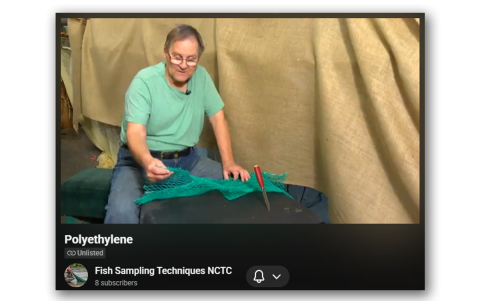
Polyethylene (PE)

VIDEO LINK: https://youtu.be/Iwu9Y1HwbeI

  • 1970s, plastic, plastic B-Bs are melted and extruded molten material to make twine; in cheaper PE netting, the B-Bs are melted in a larger vial; more expensive netting (twisted and braided) has B-Bs confined to a smaller container and the molecules line up and are organized in the netting more so.
  • High density PE fibers
  • 0.96-0.98 spg; floats
  • Absorbs no water
  • Less tensile strength than nylon
  • Requires no net coating
  • UV destroys PE; manufacturers include a UV inhibitor (2-3% maximum before reducing material strength)
  • High class, top end PE: melted beads that are extruded; netting is made on machine with loose knots, netting is then run through a bar, autoclaved and stretched, 2.5 tons of stretch for 10-20 minutes pulling the knots tight
  • Cheaper PE is not steam-set, but rather stretched on a table with heat lamps; result is net with strong and weak areas
  • Another type of PE is “re-ground”; recycled from various sources and starts as chunks instead of beads; result is net with strong and weak areas
  • Learn where to purchase materials from or where the net comes from is important (know your materials; the cost is the same to build a net from cheap and high quality ; beads or reground cannot be determined by visual inspection of the net; cost of more expensive nets may be due in part to using high quality bead PE.Water pressure by itself can tear nets made of low quality PE.
  • Tip: try to stay with the same supplier or net company over the years to help maintain consistency in your sampling gear
  • PE can resist most acids (if made with high quality virgin beads)
  • Replacing nylon in fisheries gear
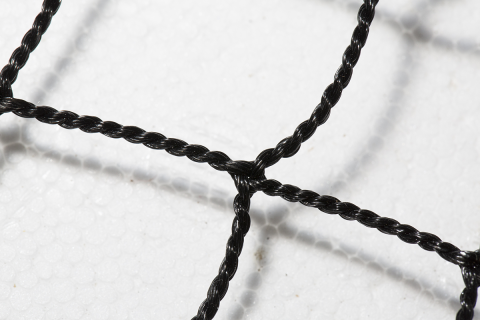
  • Example: 3-strand twisted mesh
  • Twisted PE faster to tow, a smoother venturi effect than braided (better for sand, mud, organic ooze, no rock)

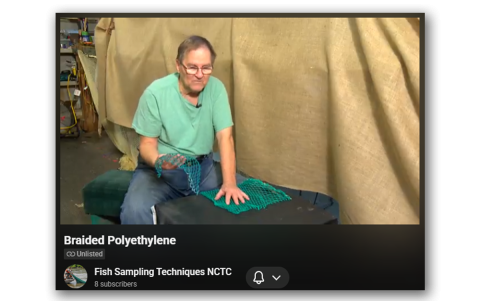
Braided PE: Braided Polyethylene

  • High density PE fibers
  • Example: 8-strand braided mesh
  • Bulkier
  • Tensile strength the same with PE, but takes some more abrasion than PE (substrates of cobble, shell, rock, snags; expecting to tear net); could last longer than twisted PE mesh
  • Same specific gravity as PE, UV inhibitor added
  • Braided is slower in the water (“non-venturi” effect)

VIDEO LINK: https://youtu.be/z35Yj-pV2ok

Knot-less Poly netting using Z-lock (a type of PE)

  • Very high-quality material
  • No knots; (but not Raschel netting); knots can cause breakage (weaken line by 15-35%)
  • Strong; a #9 as strong as a #12 knotted polyethylene netting
  • No orientation (square can go to diamond shape), no top, no bottom, no left nor right
  • Quality control tips: cheaper versions exist; grab a piece of netting and pull, if cheaper, the z-locks will move, particularly in the middle of the patch you are holding; cheap version stretch and z-locks move
  • Issue: when breaks, tear across a bar but can be repaired easily with a special knot
  • Tow Fast in water; very quiet in water (hydrophonic efficient); has a higher catch efficiency compared to knotted PE
  • Used in seines, trap nets, trawls; this is the quietest trawl material

VIDEO LINK: https://youtu.be/eEa-rgq4uDA

Knotless Polyester Raschel netting

  • Common in research applications, exclusively used in research; often having smaller mesh size (<35mm)
  • Woven fabric; crossover by knots; more crossovers, more strength
  • Made from polyester (as used in tires)
  • 1.35 spg; sinks and good for bottom nets; very efficient for bottom nets.
  • Does not weaken when wet as does nylon
  • Dries very quickly
  • Takes serious beating in small mesh nets
  • Also: woven high grade raschel netting with tight weaves which makes for a stronger net (used in anchovy seines in South America);
  • Durable but heavy in trawls

VIDEO LINK: https://youtu.be/OVRmmssCLoE

Dyneema (ultrahigh density polyethylene)

  • Gamechanger; Dutch origin
  • 3-4x stronger than nylon of same size; 5-6x stronger than PE of same size; #6 dyneema thread can replace a PE #15 or #18
  • More expensive but can use smaller thread size; can have bigger trawl for same sized boat or smaller boat (30’ boat and 200 hp motor works); can use for mid-water trawls with small doors; lighten up gear apparatus and still keep great strength; dyneema material can allow a trawl tow by a small boat.
  • During manufacture, the B-Bs are aligned totally
  • One of the strongest materials (ultracross is the strongest, as it is knotless dyneema)- but way to strong (problem with snags) and too expensive
  • 35mm – 200 mm mesh size; if need is for < 35mm mesh, then go with another material as raschel netting.
  • Produces great net geometry in the water (bottom of trawl rides off the bottom); dyneema allows for innovative net designs
  • Dynema trawl weighs 1/3 less than similar size PE net.
  • 0.98 spg, floats
  • Abrasion equipment off the chart

VIDEO LINK: https://youtu.be/SMN99FS6v_Y

Polyester filter cloth

  • Retains very small fish in cod end; consider using in cod end instead of plankton nets
  • 450 – 500 micron filter cloth; very durable, weave within a weave; extremely pliable, sews well for hoop configurations, bongos, tucker trawls.Use in cod end of mid-water trawl.Great hydrodynamics.Improvement on the typical stiffer plankton nets.
  • Plankton nets use nitex nylon mesh (stiffer material, bulkier, more expensive)

VIDEO LINK: https://youtu.be/1tTNf8HHnVI