Boat Electrofishing
DescriptionElectrofishing is the application of electricity into water to capture or control fish. Electrofishing gear takes several forms, the most common types are backpack, barge, and boat electrofishers. Boat electrofishing is for non-wadeable, deeper habitats and is typically used in mid-sized to larger rivers and along lake shorelines. Boat electrofishers have the highest power capacities of the common gears. All three major waveform types are used (Alternating Current [AC], Direct Current [DC], and Pulsed Direct Current [PDC]. For the purposes of this discussion, DC or PDC output is assumed. Accordingly, electrode terminology will refer to anodes and cathodes. | ||||||
| ||||||
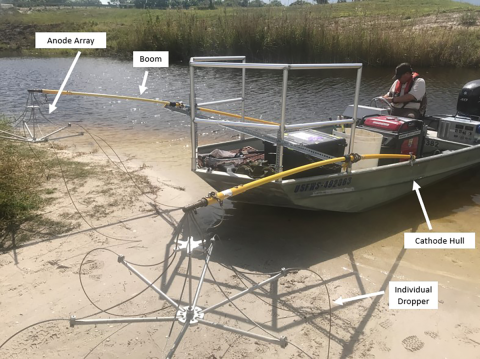
DefinitionsAnode: The positive electrode in a DC system. Termed the “fishing” electrode since fishes will sometimes exhibit movement toward the anode (galvanotaxis or taxis). Always a handheld electrode in backpack electrofishers. Droppers or spheres extending from booms off boat or raft bow. Many configurations for different applications. Cathode: The negative electrode. Fish are affected by the cathode, but in a less predictable manner. Is either a trailing cable or a handheld electrode in backpack electrofishers. Commonly metal boat hulls wired directly with or without a cathode skirt; if using a raft (non-conductive hull), then must add cathode electrodes. Control Box: Also termed the “pulsator”, control boxes in barges are usually those used in boats, although there are dedicated barge control box models. Generator: Power source of the barge, usually smaller than for boats, often 2,500 average Watts. Power supply- provides power to entire system Electrodes- metal structures joined with circuitry to output power into water | ||||||
Overview | ||||||
| Boat electrofishers or “shockers” are the most powerful electrofishing gear. Generators commonly range from 5,000 – 12,000 average Watts. Boat shockers have the largest electric field and can sample the largest water conductivity ranges of the electrofishing gear types. Still, boats are considered a shallow water sampling technique, potentially sampling down to about 9 feet in depth, unless electrode modifications are implemented for deeper electrofishing. Effective depths for sampling are less, possibly ≤ 5 feet. Crew sizes vary from 2 - 4. Primary roles are boat operator, dip netter, and sometimes an assistant for transferring captured fishes to the live well. The boat operator also operates the control box and usually is the team leader. One or two dip netters are stationed on the bow behind protective railing. Hard-hulled (metal) boats are useful in many habitats, but rafts are used in higher velocity rocky bottom streams particularly in western North America. Electrofishing boats are used both in the day and night. Due to safety concerns and logistic issues, river electrofishing is usually done during the day. Reservoir sampling typically occurs at night. | ||||||
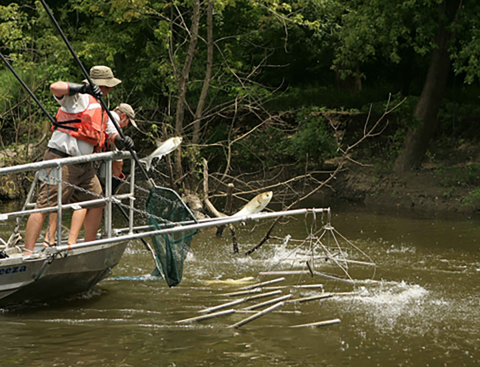
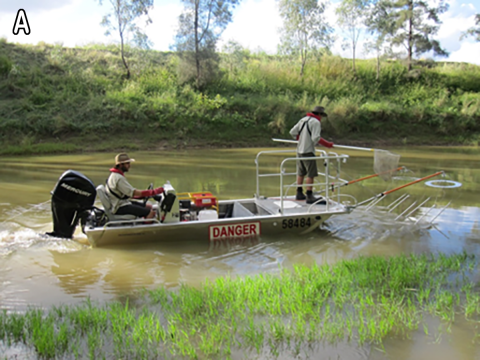
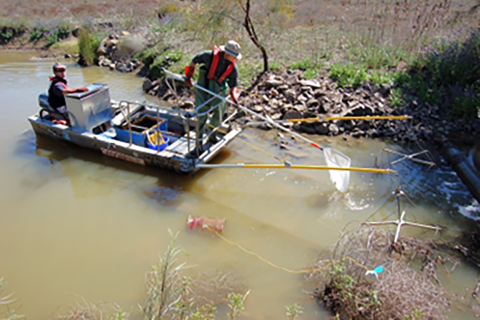
A typical 2-boom hard hull electrofishing boat with a 2-person crew. | ||||||
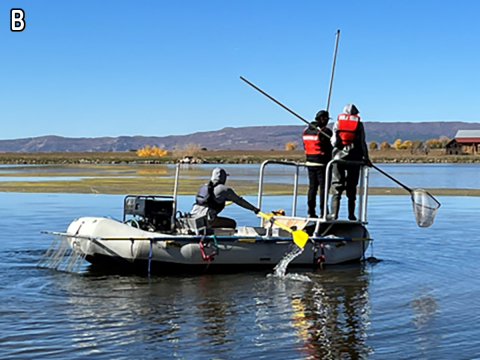
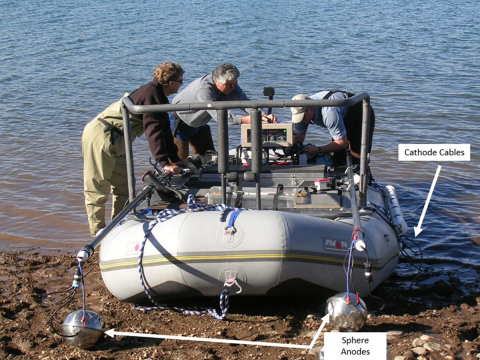
A raft electrofishing boat with a crew of three. There are two short booms off the bow, one is visible in this picture. | ||||||
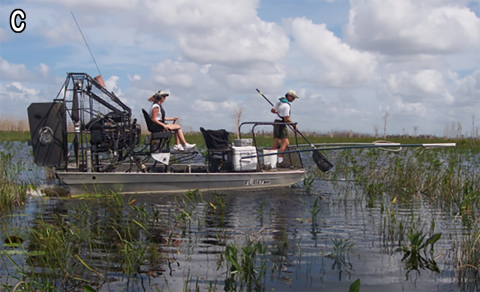
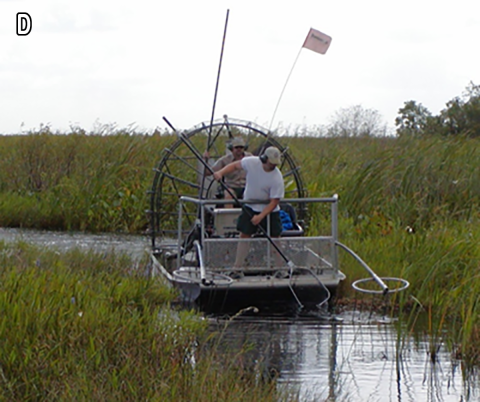
Airboat 2-boom electrofishers for sampling marsh habitats. | ||||||
Airboat 2-boom electrofishers for sampling marsh habitats. | ||||||
Pros
Cons
| ||||||
Boat Electrofisher Anatomy | ||||||
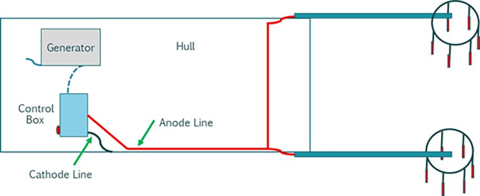
A schematic of a typical 2-boom boat electrofisher viewed from above. | ||||||
Components of an Electrofishing Boat or Raft | ||||||
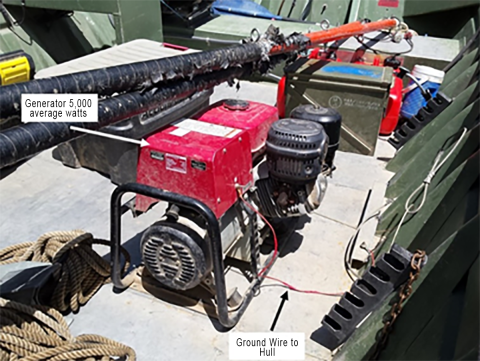
A 5,000 average Watt generator in an electrofishing boat. Note the ground conductor from the generator case to the hull. Typical power capacity range of generators used for boat electrofishing is 5,000 – 7,000 average Watt rating, but generators with greater capacities are used in higher conductivity waters (e.g., 12,000 average Watt rating). Quieter inverter generators are becoming more common. | ||||||
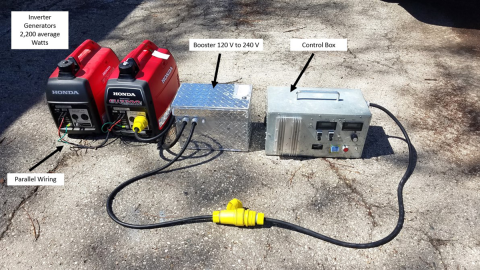
Another option is this setup of two inverter generators wired in parallel, with a manufacturer booster transformer box, and a control box. This parallel system doubles the generator maximum power output to 4400 average Watts (36 amps at 120V). Then the booster doubles the output voltage to 240V at 18 amps (still 4400 Watts). The 240 V line is then run to the control box. This is a somewhat lower capacity power source but can be sufficient depending upon conditions as water conductivity, stream size, and target species. | ||||||
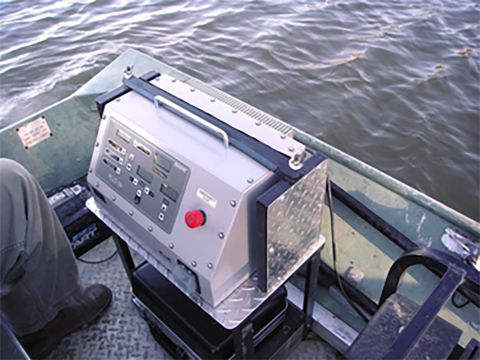
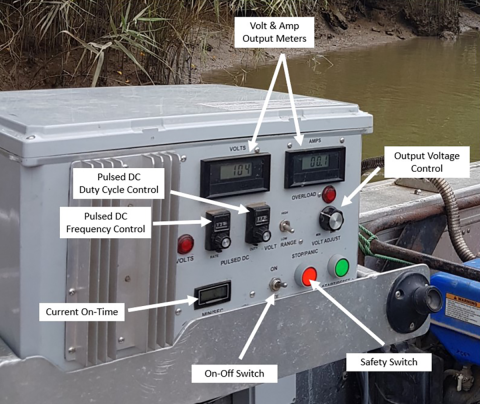
Control box (pulsator)- controls waveform characteristics Waveform type (AC, DC, pulsed DC, etc.) Control Box secured in place for operation. This is a very upscale holding cradle. There are many holding cradle designs. Particularly if the cradle is nonconductive, then the control box must be “grounded” to the hull with a wire or ground strap (may be in addition to a ground line in the power cord from the generator. | ||||||
A boat control box or “pulsator” | ||||||
Boat electrofisher with two boom dropper anodes and the hull wired as the cathode. | ||||||
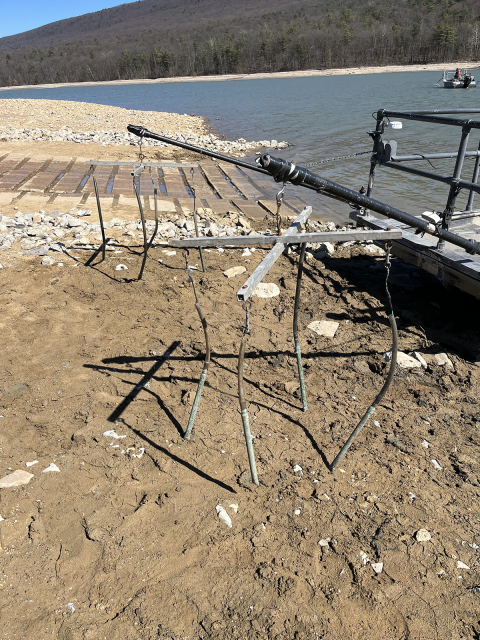
Larger diameter boom dropper electrodes with the hull wired as the opposite electrode. | ||||||
Raft electrofisher with two boom sphere anodes and cathode cables off both sides of the raft. | ||||||
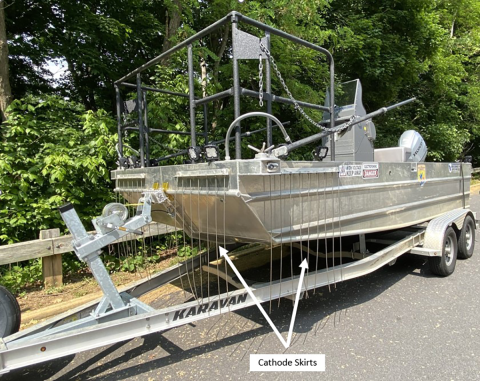
Cathode skirts installed on the bow and sides. | ||||||
On a metal boat, the hull is wired directly as the cathode and the booms with metal droppers or spheres wired as the anodes. Rafts have a similar anode arrangement, but the hull is not the cathode. Instead cables typically are positioned over the port and starboard sides or off the stern.
Wiring/CircuitryAll conductors (wires), conduit, junction or conduit boxes, safety switches which connect electrodes, control box, and power source. Safety Equipment | ||||||
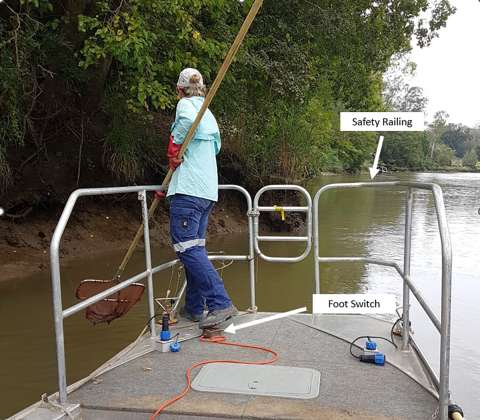
Dip netter engaging foot switch on boat bow. | ||||||
Auxiliary equipment | ||||||
| Nets, Lights, Livewells/pumps, Aerators, also much more! | ||||||
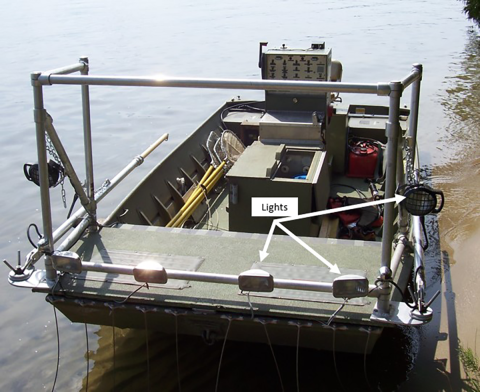
Lights on bow railing for night sampling. | ||||||
Operation (Control box settings) | ||||||
*For additional instructional videos on related topics as electrical waveforms, measuring water conductivity, standardized sampling, trouble-shooting, and safety, see Electrofishing Essentials Course Resources or https://www.fws.gov/training/electrofishing-essentials-course-resources Troubleshooting: Often times crews call the manufacturer from the field site for help with equipment. To answer diagnostic questions the manufacturer may have and to make simple repairs, there needs to be a tool-box on-board. See the PDF titled Suggested Basic Field Tool Kit for an Electrofishing Boat. | ||||||
Deployment | ||||||
Boat electrofishing samples a segment of stream or shoreline, known as a “pass” | ||||||
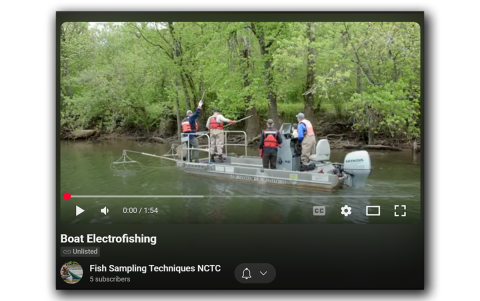
Boat and Raft Operation in the FieldBoat electrofisher sampling on a river. The dropper boom electrodes are in a typical configuration Raft electrofisher sampling. Note that instead of cylindrical boom droppers, this raft uses a single spherical electrode.
| ||||||