Hoop net
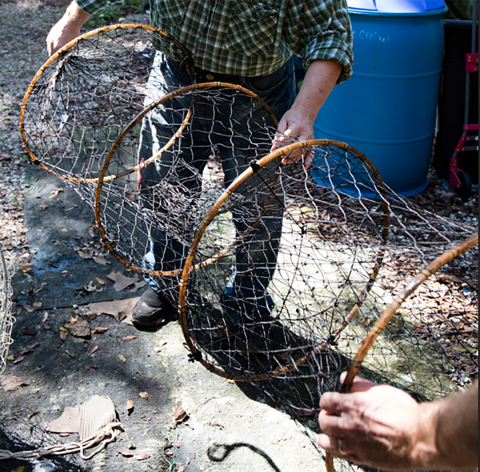
DescriptionHoops nets are a cylindrical or tubular-shaped gear composed of mesh netting supported by a series of typically 4-8 hoops. Internally, the hoop net has one or more “funnels” or “throats” which allow fish movement further into the net but inhibit outward movement (escape). Bait can be hung in the closed end to attract target fish species or groups. Conversely, hoop nets used for sampling fish assemblages may not be baited. | ||||||
| ||||||
Hoop net with seven hoops and two throats | ||||||
Typical Sizes, Dimensions, Materials, Mesh size:
| ||||||
Overview Introduction | ||||||
Hoop Net Dimensions Materials Storage MaintenanceGeneral introduction 1 VIDEO LINK: Hoop Net Dimensions Materials Storage Maintenance | ||||||
Hoop Net Target Fishes DeploymentGeneral introduction 2 VIDEO LINK:Hoop Net Target Fishes Deployment | ||||||
Hoop Net OverviewGeneral introduction 3 VIDEO LINK: Hoop Net Overview | ||||||
Materials | ||||||
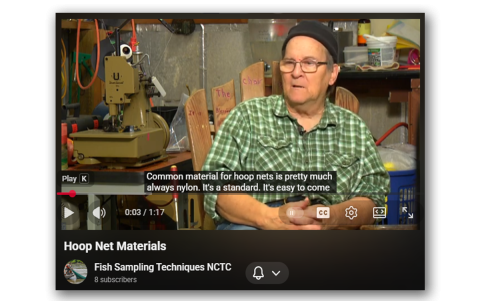
Hoop Net MaterialsVIDEO LINK: Hoop Net Materials | ||||||
Design Considerations | ||||||
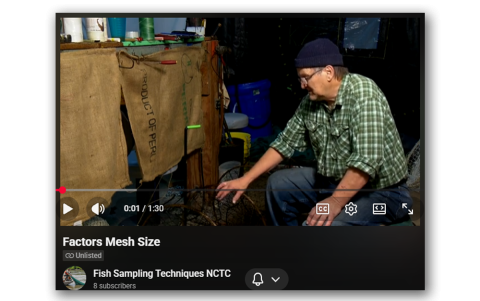
Factors Mesh SizeVIDEO LINK: Factors Mesh Size | ||||||
Hoop net with four fiberglass hoops, with the mouth on the right and the cod end on the left. In this image, the rear throat is located near the middle of the net and the square throat opening is located between the first and second hoops. | ||||||
Major categories
| ||||||
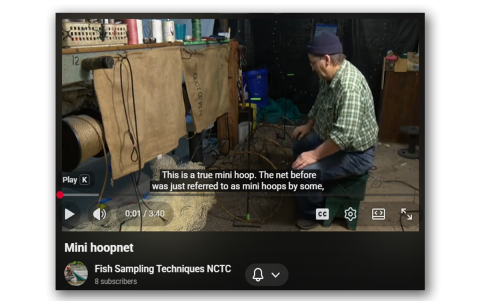
Mini Hoop NetVIDEO LINK: Mini Hoop Net | ||||||
| Back to Top | ||||||
Baiting, how hoop nets function, how they catch fish | ||||||
Baiting Hoop NetsVIDEO LINK: Baiting Hoop Nets | ||||||
Hoop Net Attraction TechniqueVIDEO LINK: Hoop Net Attraction Technique | ||||||
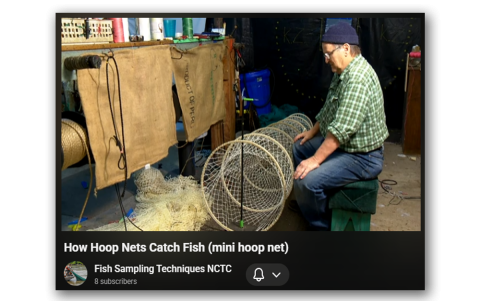
How Hoop Nets Catch FishVIDEO LINK: How Hoop Nets Catch Fish | ||||||
Issues | ||||||
Hoop Net Issues BuryingVIDEO LINK:Hoop Net Issues Burying | ||||||
Hoop Net Issues Detritus Species InteractionsDebris and Negative species interactions: VIDEO LINK: Hoop Net Issues Detritus Species Interactions | ||||||
MaintenanceNylon requires periodic dip or coating treatment typically with a petroleum-based product. | ||||||
Repair (see also “Repairing Nets module) | ||||||
Hoop Net Repair 1VIDEO LINK: Hoop Net Repair 1 | ||||||
Hoop Net Repair 2VIDEO LINK: Hoop Net Repair 2 | ||||||
Stowage | ||||||
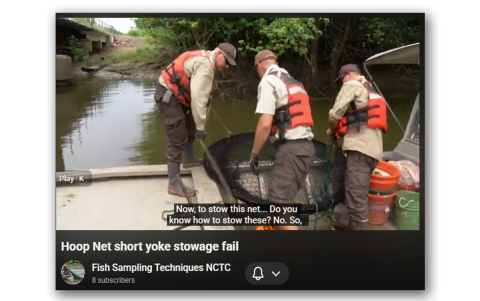
Hoop Net Stowage Boat 1Hoop net storage on boat VIDEO LINK: Hoop Net Stowage Boat 1 | ||||||
Hoop Net Stowage Boat 2Hoop net storage on boat but bridle too short on the hoop net VIDEO LINK: Hoop Net Stowage Boat 2 | ||||||
| Back to Top | ||||||
Field Methods, Deployment, Retrieval, Illustrations, and Definitions | ||||||
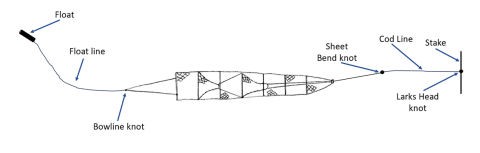
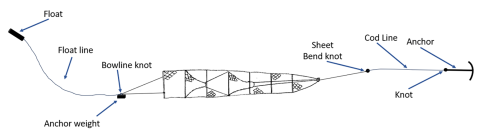
DeploymentUsually parallel with the current, closed end (cod) upstream and mouth facing downstream. Cod end of net attached to a stationary object as an anchor or tree limb, etc. Mouth of net attached to a float and sometimes also to an anchor. Flow keeps the hoop net open for sampling. In slow or still water, both front and rear ends of net may be attached to stakes or anchors. | ||||||
Hoop net positioned by a stake | ||||||
Mainstem flowing water | ||||||
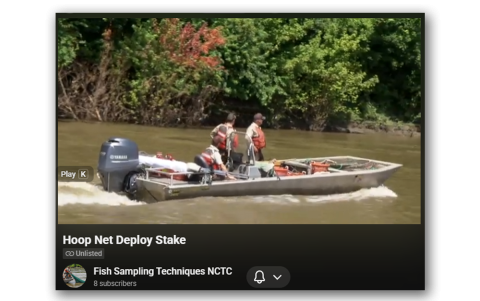
Hoop Net Deploy StakeDeployment in moderate current, intermediate-sized hoop net using a stake off cod end VIDEO LINK: Hoop Net Deploy Stake | ||||||
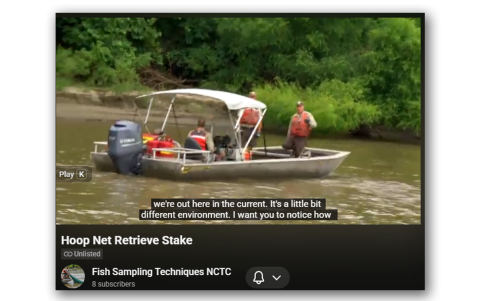
Hoop Net Retrieve StakeRetrieval in moderate current, intermediate-sized hoop net using a stake off cod end VIDEO LINK: Hoop Net Retrieve Stake | ||||||
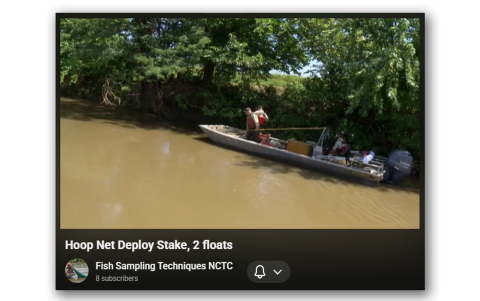
Hoop Net Deploy Stake 2 floatsDeployment in swift current, intermediate-sized hoop net, using a stake for cod end, double floats VIDEO LINK: Hoop Net Deploy Stake 2 floats | ||||||
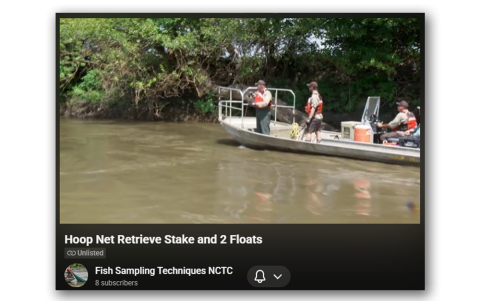
Hoop Net Retrieve Stake 2 floatsRetrieval in swift current, intermediate-sized hoop net VIDEO LINK: Hoop Net Retrieve Stake 2 floats | ||||||
Hoop Net Staking Cod EndDeployment in swift current, intermediate-sized hoop net, stake cod end, tie bridle VIDEO LINK: Hoop Net Staking Cod End | ||||||
Back-eddy (reverse flow) | ||||||
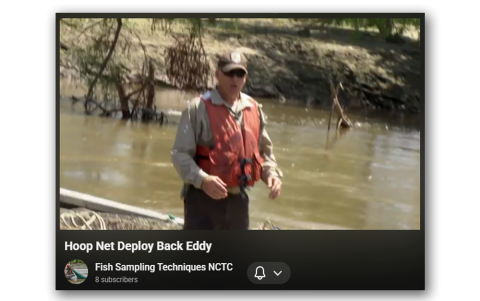
Hoop Net Deploy Back EddyDeployment in back-eddy (reverse current), intermediate-sized hoop net, anchor and stake selection and use VIDEO LINK: Hoop Net Deploy Back Eddy | ||||||
Hoop Net Retrieve Back EddyRetrieval in back-eddy (reverse current), intermediate-sized hoop net, cleat assisted removal of stake anchor VIDEO LINK: Hoop Net Retrieve Back Eddy | ||||||
Hoop net positioned by an anchor (in flowing water) | ||||||
Hoop Net Deploy Cod AnchorDeployment in moderate current, using a sand anchor off the cod end VIDEO LINK: Hoop Net Deploy Cod Anchor | ||||||
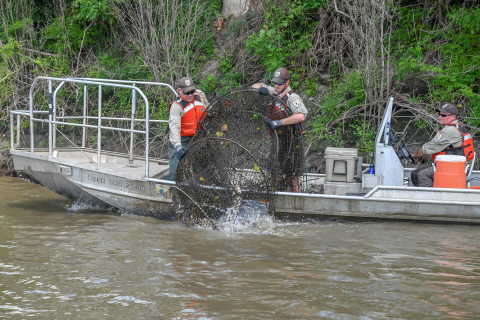
Hoop Net Retrieve Cod AnchorRetrieval in moderate current, using a sand anchor off the cod end, with boat operation techniques, removing catch: VIDEO LINK: Hoop Net Retrieve Cod Anchor | ||||||
Hoop net held open by an anchor weight (in low-flow conditions) | ||||||
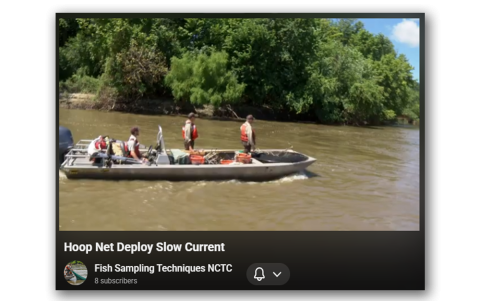
Hoop Net Deploy Slow CurrentDeployment in slow current areas, large hoop net, using cod end and bridle anchors VIDEO LINK: Hoop Net Deploy Slow Current | ||||||
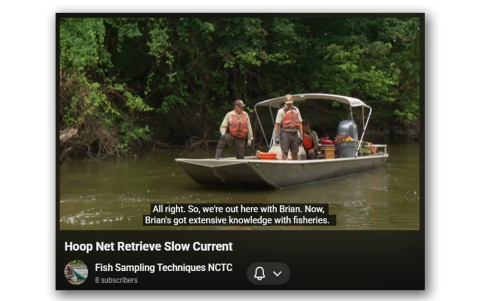
Hoop Net Retrieve Slow CurrentRetrieval in slow current areas, large hoop net, using bridle anchor, training techniques VIDEO LINK: Hoop Net Retrieve Slow Current | ||||||
| Back to Top | ||||||
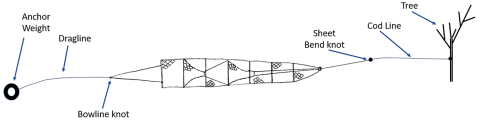
Hoop net hidden using drag line instead of a float (in flowing water) | ||||||
Hoop Net Deploy Hidden SetDeployment In moderate current, hidden set, no float, small (2’) hoop net: VIDEO LINK: Hoop Net Deploy Hidden Set | ||||||
Hoop Net Grapple Hidden SetRetrieval in moderate current, hidden set, no float, small hoop net boat maneuvering by driver, grappling technique: VIDEO LINK: Hoop Net Grapple Hidden Set | ||||||
Knots Used with Hoop NetsBowline, Sheet Bend, Larks Head | ||||||
Accessory equipmentfloats, floating “drag” line, float hook, anchors, stakes, grab, pound pole, gaff | ||||||
Hoop Net Anchor ChoiceUse of different anchor types (in current): VIDEO LINK: Hoop Net Anchor Choice | ||||||
Hoop Net Tighten Technique SetDetailed methods to set Hoop Net VIDEO LINK: Hoop Net Tighten Technique Set | ||||||
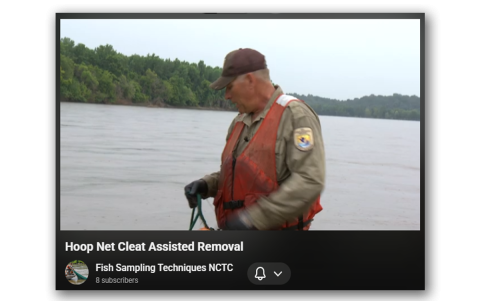
Hoop Net Cleat Assisted RemovalHoop net stuck in sand, cleat assisted removal VIDEO LINK: Hoop Net Cleat Assisted Removal | ||||||
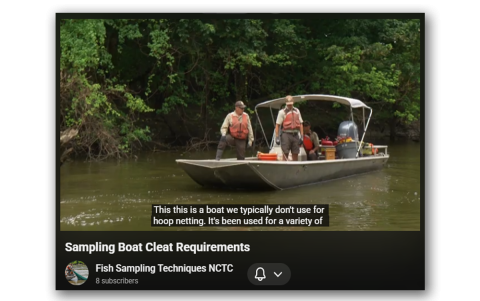
Sampling Boat Cleat RequirementsNeed for adequate numbers of cleats on boat VIDEO LINK: Sampling Boat Cleat Requirements | ||||||
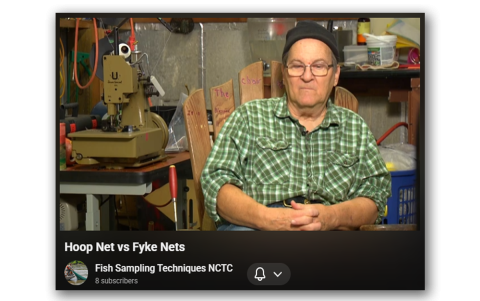
Hoop Net vs Fyke NetVIDEO LINK: Hoop Net vs Fyke Net | ||||||
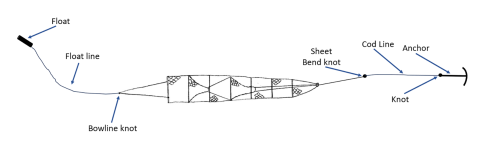
DefinitionsAnchor: A weight that comes in various configurations used to hold the hoop net in position. Depending on flow, habitat conditions, or desired level of concealment, tied to the cod line, float line or dragline. Bridle or Yolk: A line attached to Hoop #1 at mouth. The float line or dragline attaches to the bridle. Used to tie hoop net for stowage. Cod end or pot: Closed or open end opposite the net mouth. Oriented upstream. Held closed by a drawstring during sampling and is the net compartment containing most of the captured fish. Cod line: A line tied to the drawstring on one end and a stationary structure on the other (anchor, stake, woody vegetation). Rode 7:1 recommended (7 feet of cod or anchor line per 1 foot depth of water) Drawstring: A line tied to the cod end, used to open or securely close the cod end. Float: Floating object that can come in a variety of shapes and sizes, attaches to the float line. Used for aiding location and retrieval. Float line or dragline: A floating line tied to the bridle and terminating in a float (= float line) or an anchor (dragline). Can be flat-shaped to aid in retrieval and made of polyethylene. Hoop: Made of metal, fiberglass, or composite materials. Hoops are the supporting structure of a hoop net. Common diameters are 2’, 4’, and 6’. All hoops can be equal diameter in a hoop net or taper toward the cod end. Mesh: Usually built of nylon but sometimes polyethylene. Comes in various bar mesh sizes, such as 0.5”, 1.25”, 2.5”. If nylon, the mesh must be dipped in a coating for preservation. Mouth: Opening to the hoop net, hoop #1. Oriented downstream. Pound pole: A rod, hollow on one end, typically made of fiberglass and metal, but also wood or aluminum, used to pound stakes into the substrate. Stake: A metal rod tied to the cod line and pounded into the substrate to hold the hoop net in position. Throat: Mesh material in a cone or funnel shape, having a larger opening toward the mouth and a smaller opening toward the cod end. The throat is held in position by lines tied to posterior hoops or the cod end. Types Square- the throat has a square-shaped exit hole; square throats are sometimes used for the front throat to make the net mouth appear more open Finger or Crow’s Foot- the throat has a somewhat flat exit, and the “fingers” are lines tying the throat exit to a posterior hoop. Flat- the exit is very flat since the exit is tied by essentially right-angles lines to the close hoop, thereby stretching and flattening the throat exit | ||||||
| Back to Top |