Barge Electrofishing
DescriptionElectrofishing is the application of electricity into water to capture or control fish. Electrofishing gear takes several forms, the most common types are backpack, barge, and boat electrofishers. Barge electrofishing is portable and is typically used in mid-sized wadeable streams. All three major waveform types (Alternating Current [AC], Direct Current [DC], and Pulsed Direct Current [PDC] including Gated Burst variations can be used. For the purposes of this discussion, DC or PDC output is assumed. Accordingly, electrode terminology will refer to anodes and cathodes. | ||||||
| ||||||
Overview | ||||||
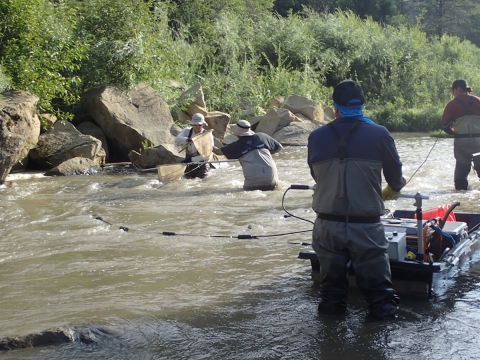
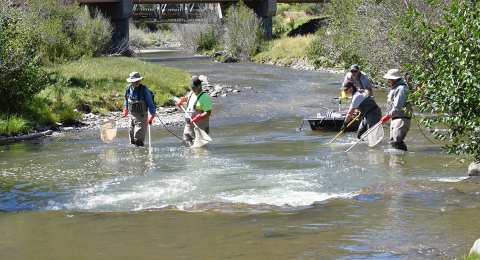
| Barge electrofishers or “shockers” are portable and have power capacities approaching that of boat electrofishers. Commonly, crews carry barges over a distance or rough terrain to launch, and must maneuver through shallow water habitats, thus smaller-sized generators are necessary (2,500 average Watts). Occasionally, when stream access is relatively easy and maneuverability through shallow water zones is not a concern, larger generators can be used, up to 6,500+ average Watts The barge operator preferably pushes the barge from the stern so that the control box and safety switches can be continuously managed. A minimum crew size of three is indicated if using a stern operator position. Barges can employ 1 - 4 hand-held electrodes (anodes if outputting direct current). Thus, crew size varies from (2)3-4 members to 10 or more. Primary roles are barge operator, electrode handler, dip netter, and bucket carrier for captured fishes. It is good if one person can act as a supervisor, especially when >1 hand-held electrode is deployed and with larger crew sizes. The hand-held electrode operator also may use a dipnet as well as the bucket carrier. | ||||||
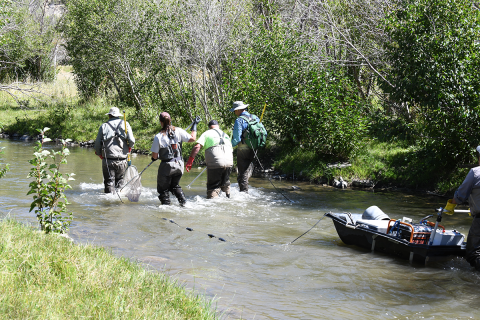
Barge crew with two hand-held electrodes (anodes in this case as the output is pulsed DC). Operator is pushing the barge and is depressing a safety switch on the white push bar. | ||||||
Barge crew with two hand-held electrodes (anodes in this case as the output is pulsed DC). Operator is pushing the barge and is depressing a safety switch on the white push bar. | ||||||
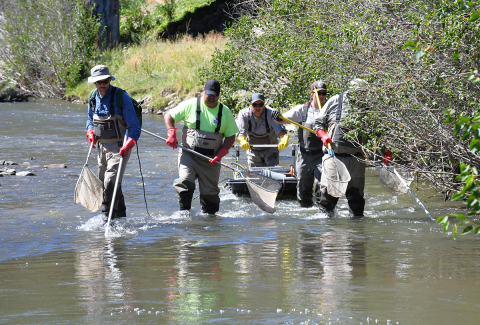
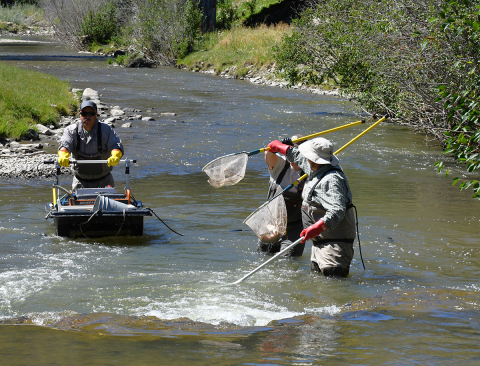
Closeup of anode crews. Note the earplugs worn by the dip netters | ||||||
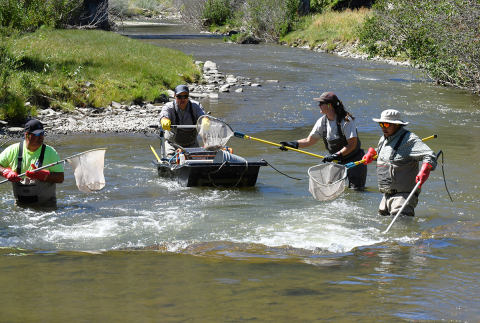
Rearview of the two-anode barge crew operation. Note the floats on the anode cables. | ||||||
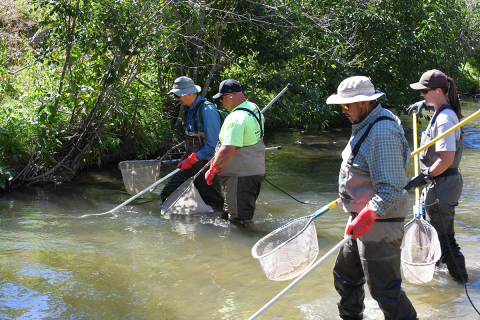
Anode operator is transferring his catch to the dip netter and exchanging nets. | ||||||
The dip netter is transferring captured fish to the live well. Note the deeper water habitat being sampled in this picture. | ||||||
Pros
Cons
| ||||||
| Back to Top | ||||||
Barge Electrofisher Anatomy | ||||||
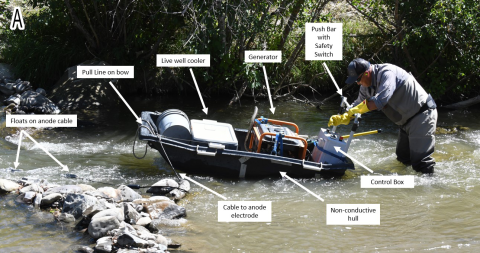
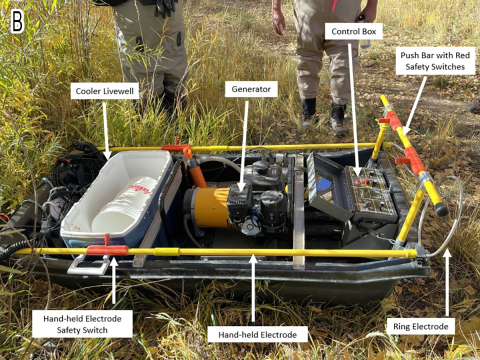
Barge electrofisher major components. | ||||||
Barge electrofisher major components. | ||||||
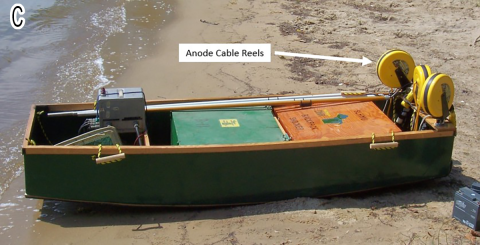
Older barge with anode cable reels. | ||||||
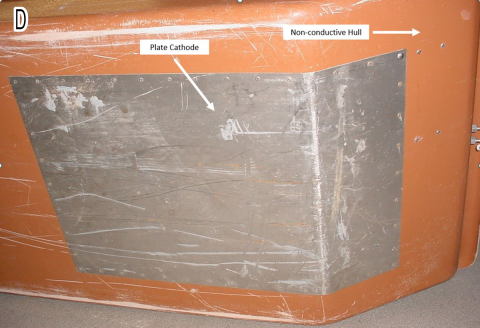
Barge with plate cathode. | ||||||
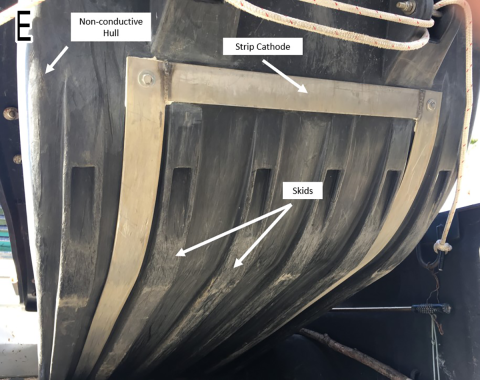
Barge with skid strip cathode in rectangular shape. | ||||||
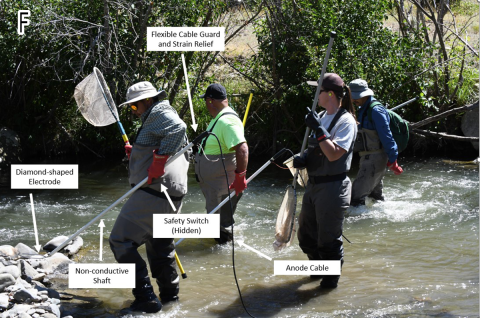
Hand-held electrode (anode when using direct current). | ||||||
| Back to Top | ||||||
Electrode Arrangement | ||||||
The cathode is located on the barge hull bottom, isolated from the hand-held anodes. If only one hand-held anode is used, then the electrode operator and dip netter perform similarly to a backpack electrofishing crew. If more than one hand-held anode is in operation, then the multiple anodes can behave independently or work together side-by-side to sample wider streams like multiple backpacks or make more complex movements to sample confined areas as deeper habitats.
GeneratorOften a 2,500 average Watt generator is used as the power source. There are smaller, lighter generators that can be used instead (e.g., the Honda 2200i which is 2,200 average Watts). This generator will require additional equipment (transformer booster to increase output to 240 V and possibly a filter [talk to an electrofishing equipment manufacturer]). | ||||||
Control Box | ||||||
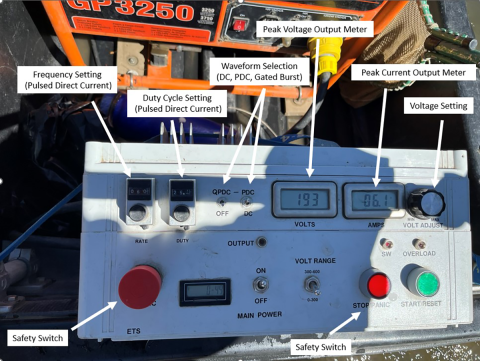
This is a control box designed for barges. It is in use and the output metering is displaying peak Voltage and peak Current. (The shadow cast on the box is from the barge operator). Control boxes used in barges usually are boat pulsator models but control boxes may be specifically designed for barges. | ||||||
Operation (Control box settings) | ||||||
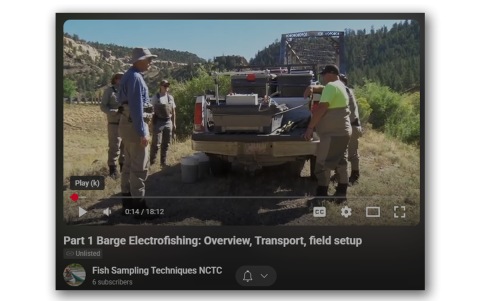
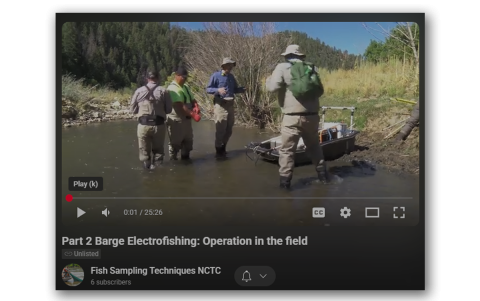
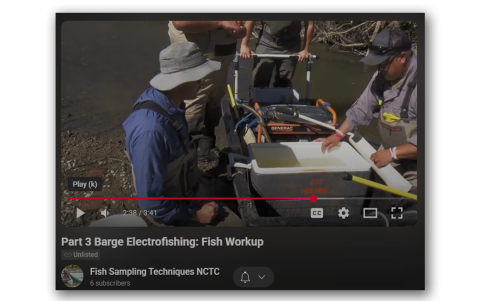
*For additional instructional videos on related topics as electrical waveforms, measuring water conductivity, standardized sampling, trouble-shooting, and safety, see | ||||||
Deployment | ||||||
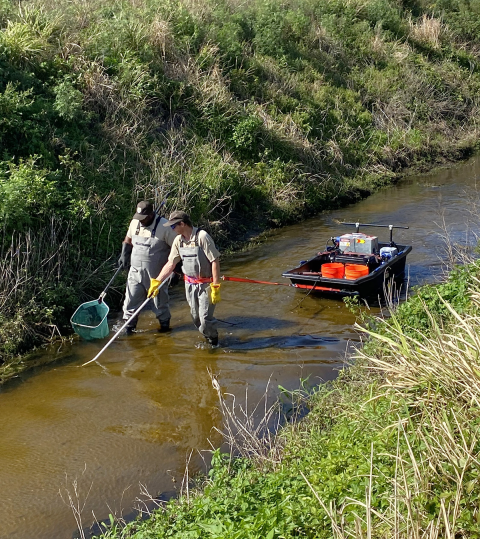
Two-person crew pulling a barge electrofisher. Barge electrofishing samples a segment of stream or shoreline, known as a “pass” | ||||||
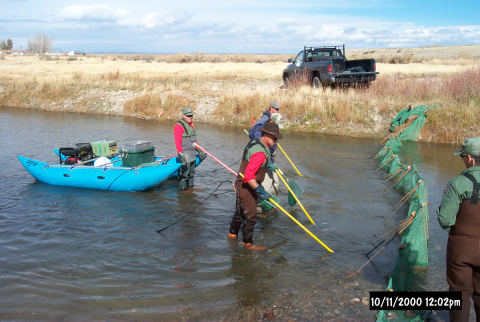
Sample stream segments can be with or without block nets. | ||||||
| Back to Top | ||||||
Barge Operation in the Field | ||||||
| ||||||
| Back to Top | ||||||