Floats
DescriptionThis module is an overview of float types for gillnets, trammel nets, purse seines, and trawls. There are important calculations to relate floats and floatation to weights and sinkage, depending upon whether the net is meant for surface or sinking (benthic) deployment. Also, for correct floatation one must anticipate current pushing into net or the amount of fish weight a net might capture. | |
Explanation of various float types: Net Floats | |
Net FloatsVIDEO LINK: Net Floats | |
“Hotdog” floats (models FL125 and FL200) | |
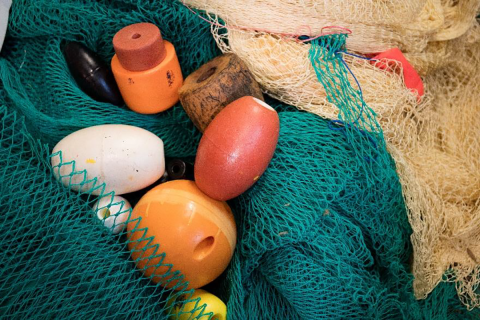
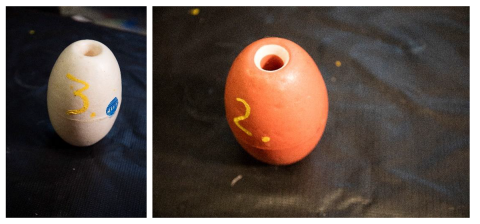
a. FL125 meant for sinking gillnet; sinks but holds up the gillnet; used prior to development of foam core rope; 1-1/4" outside diameter, 5" length, 5/16" hole diameter, approximately 1.8 oz. buoyancy; not beveled. b. FL200 for heavier duty net (coastal sinking, set in current with a lot of lead weight) or a floating net; 1-3/4" outside diameter, 5" length, 3/8" hole diameter, approximately 4.2 oz. buoyancy; beveled; the beveling shoves the net aside, reduces tangling | |
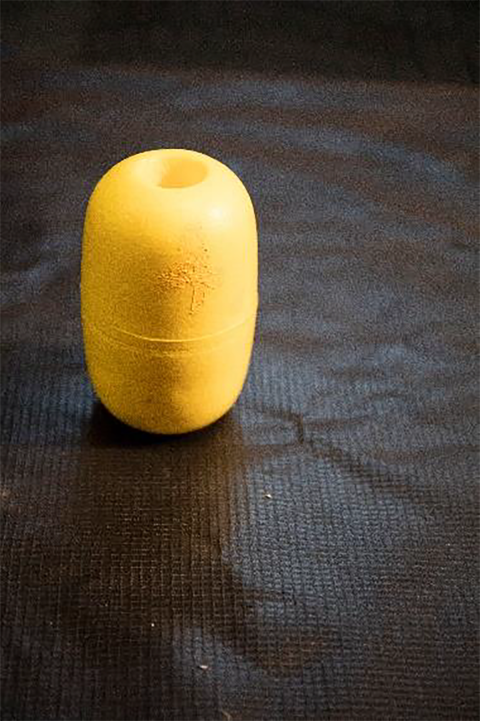
Oval seine floats | |
a. FL106; 4" outside diameter, 5-3/4" length, 3/4" hole diameter, approximately 21 oz. buoyancy; bevel or football shape helps netting slide around them reducing tangling; more buoyancy, meant to float on surface, not for sinking nets. b. Some have grommet type plastic or foam inserts to reduce chaffing on lines and allows float to have some “play” c. Full length plastic grommeted floats take a lot of abuse | |
Can floats (various colors, sizes) | |
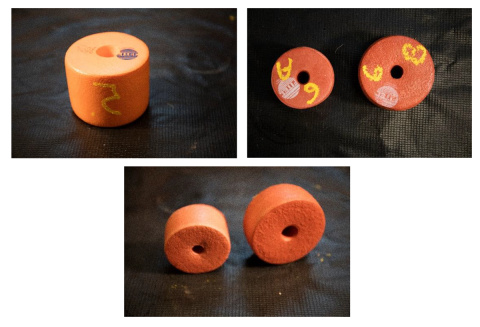
a. Larger can floats are made for heavier nets; particularly large nylon nets; high buoyancy; for example, the SB10, 4-1/2" outside diameter, 3-1/2" length, 7/8" hole diameter, approximately 30 oz. buoyancy b. Intermediate height can floats termed “donut floats”; for example, SB4 (3" outside diameter, 1-1/2" length, 1/2" hole diameter, approximately 6.1 oz. buoyancy); larger sized used for trawl nets whereas smaller sized used for hand seines; c. Short and wide can floats also called “pancake floats”; e.g., SB1 (5-3/4" outside diameter, 3/4" length, 3/8" hole diameter, approximately 10.3 oz. | |
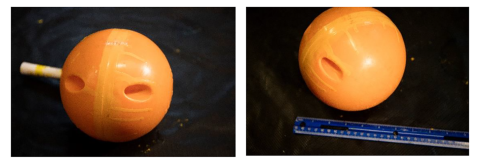
Deepwater ball or pumpkin float (for trawls); *8”, 14” diameters | |
a. Made in Denmark b. Small airpocket, mostly plastic; go to deep depths (down to 1,500-2,000”) c. Tough, takes extreme abuse d. Any trawls that go deeper than 750’ depth should be outfitted with this float type | |
Potato Float | |
a. Closed cell, much buoyancy; b. Tough, durable, resists cracking c. Great on trawl nets and trap nets d. Very good buoyancy e. Wide mouth allows large 1/2-inch or 5/8-inch lines | |
Roller Float (more oval, preferred) | |
a. Low buoyancy b. Very hard, can take great depths before it crushes c. Does not float; put on bottom of bottom trawls (Siamese, SKT); d. When the floats encounter a rock, they bounce (float up slightly) and go over; if in mud, their lower density tends to lift the trawl out of the soft bottom; e. Wide mouth allows large 1/2-inch or 5/8-inch lines | |
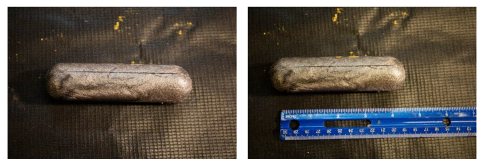
Sausage float (longer for diameter) | |
a. Example FL130, 1-1/4" outside diameter, 5" length, 5/16" hole diameter, approximately 1.5 oz. buoyancy. b. Not for use in great depths c. Made of hard foam material as a roller float but with a bit more buoyancy; d. Can be used as a roller float, but design must be careful to balance the floats with the lead line; e. Is a good float for sinking gill nets f. Will not crack | |
| Back to Top | |