Draft Programmatic Compatibility Determination for Rights-of-Way and Rights to Access for Temporary Disturbances and Minor Impacts on Conservation Easements, Region 3 Midwest Region

This draft document evaluates the compatibility of proposed activities that may cause temporary, minor disturbances while supporting necessary public infrastructure needs across conservation easements in the Midwest Region. 

Author(s)
Publication date
Type of document
Compatibility Determination
Facility
Dozens of geese swim on a lake surrounded by golden grasses
Agassiz National Wildlife Refuge was established in 1937 and consists of 61,500 acres of wetland and upland habitats in northwestern Minnesota. The refuge lies in the aspen parkland transition zone between the boreal forest to the north and east and the tallgrass prairie to the south and west. 26...
Graphic of Missouri with Missouri River and green dots for Big Muddy Refuge Units
Refuge staff work to restore natural floodplain conditions, including bottomland forests and its associated wetlands for the benefit of wildlife. We strive to provide public access to all areas for wildlife dependent recreation including hunting and fishing.
Mature forest in spring at Big Oaks NWR
Historical land use practices have created unique habitat at Big Oaks National Wildlife Refuge for many rare and uncommon species of animals and plants. The 50,000 acres of land has been designated as a Globally Important Bird Area.
Two river otters at rest on a frozen river.
Big Stone National Wildlife Refuge was originally purchased by the U.S. Army Corps of Engineers and was transferred to the U.S. Fish and Wildlife Service on May 21, 1975. The refuge currently includes 11,586 acres in Big Stone and Lac qui Parle Counties, in Minnesota.
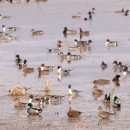
Mallards on pond
Big Stone Wetland Management District covers two counties in southwest Minnesota, Lincoln and Lyon counties. Our staff manages all federal lands, easements and private land projects in both of these two counties.
Four blue wing teals swimming in a wetland together.
Boyer Chute National Wildlife Refuge was authorized in 1992 and established in 1997 to restore and protect fish and wildlife habitat in and along the Missouri River. At Boyer Chute, the namesake side channel was restored after being blocked in 1937 to aid riverboat navigation. Following restoration...
Sunrise over a wetland with pink and purple clouds reflected in the water
Cedar Point National Wildlife Refuge has a fascinating history. From a famous hunt club to a refuge in 1964, it has provided habitat for a variety of waterfowl, bald eagles and plants for many years. The nearly 2,500 acres protect rare plants and habitats that aren’t found in other areas of Ohio.
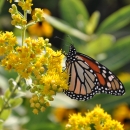
Monarch butterflies on blooming yellow flowers
Chautauqua National Wildlife Refuge was established in 1936 for the main purpose of providing sanctuary for the millions of birds that migrate along the Illinois River. Today, Chautauqua refuge provides sanctuary and breeding ground for migratory birds, fish and other wildlife. The refuge has been...
Mallards on pond
Clarence Cannon National Wildlife Refuge is named in honor of Congressman Clarence Cannon and covers 3,750 acres of Mississippi River floodplain. Refuge lands are comprised of managed moist soil units, open water, wet meadows and bottomland forest habitats. The refuge provides a feeding and resting...
Sunset at Crab Orchard Lake shoreline
Crab Orchard National Wildlife Refuge was established on August 5, 1947. The refuge is made up of 44,000 acres of land with a great diversity of flora and fauna. The major habitats on the refuge include oak hickory upland forest, bottomland hardwood forest, cropland, brushland, prairie, wetlands...
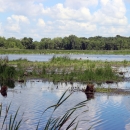
Platte River at Crane Meadows National Wildlife Refuge
Crane Meadows National Wildlife Refuge was established in 1992 to protect one of the largest, most intact wetland complexes remaining in central Minnesota. Currently, the refuge is made up of 14 different parcels of land, totaling 2,150 acres. Featuring a rich mosaic of healthy sedge meadow,...
Autumn at Cypress Creek NWR
Cypress Creek National Wildlife Refuge was authorized June 26, 1990 under the Emergency Wetland Resources Act of 1986. Management emphasis is placed on acquiring land, restoring habitat and providing opportunities for the public to experience and learn about Cache River wetlands.
A larger flock of Canada geese in a wetland with some standing on a grassy shore or flying up into the air.
DeSoto National Wildlife Refuge is located along the Missouri River and borders both Iowa and Nebraska. Within its 8,365 acres lies DeSoto Lake, an oxbow lake that used to be a bend in the Missouri River. The refuge contains bottomland forests, tall grass prairie and wetland habitats that are...
Swans resting on a foggy pond at sunrise.
The district manages hundreds of federally owned waterfowl productions areas in Becker, Clay, Mahnomen, Norman and Polk Counties in northwest Minnesota. The district is divided into three general landscape areas: the Red River Valley floodplain, the glacial moraine/prairie pothole region, and the...
Aerial view looking down on two kayakers in a marsh with lots of green aquatic vegetation on surface, green forest in background
The Detroit River has long served the United States and Canada as a vital transportation corridor and center for industries that helped forge the economies of both nations. As a result of this growth, the river and its ecosystem have paid a high price for human progress. Indeed, in our mind and in...
Monkshood hanging over side of the bluff
The refuge encompasses 1,238 acres of the Driftless Area in Iowa - a small portion of the entire Driftless Area. This area is also known as the karst region and boasts topography of steep slopes and cliffs carved by the boundary of the ancient glacial stampede. Here the glacial deposits found in...
mixed flock of mallard and pintail ducks resting in wetlands
Emiquon National Wildlife Refuge is managed as part of the Illinois River National Wildlife and Fish Refuge Complex and encompasses 2,631 acres of wetland habitats at the confluence of the Illinois and Spoon rivers. The Nature Conservancy’s Emiquon Preserve and the Illinois State Museum Dickson...
Visitor center and deck viewed from Center Pond
Welcome to the Fergus Falls Wetland Management District, where we care for 50,000 acres of wildlife habitat scattered across five counties in western Minnesota. Situated on the eastern edge of North America's Prairie Pothole Region, also known as the duck factory, we strive to preserve, restore,...
two tall gray brown birds with two fluffy babies in grass field
Fox River National Wildlife Refuge encompasses 1,054 acres of wetland and upland habitat along the Fox River in Marquette County, Wisconsin. The refuge is closed to the public with the exception of licensed deer hunters during designated time periods of the deer archery and gun seasons.
Greater Prairie Chicken on the prairie
Glacial Ridge National Wildlife Refuge is a key part of a patchwork of preserves and wildlife areas in the region that include some of Minnesota’s best remaining prairies.
Three dark gray, spotted bird eggs lie on a bed of broken mussel shells
Gravel and Spider islands were protected in 1913 by an Executive Order with the intent to preserve breeding habitat for colonial nesting birds such as herring gulls, cormorants and Caspian terns. For this reason, these wilderness islands are closed to public visitation consistent with the...
Swans at Delair Division of Great River National Wildlife Refuge
Great River National Wildlife Refuge aims to restore and mimic the mosaic of habitats that were historically found along the Mississippi River. Slow moving backwaters, floodplain forests, wetlands, sedge meadows and grasslands combine to provide food, shelter and resting areas for a variety of...
purple blooms on dwarf lake iris flower
Green Bay National Wildlife Refuge is made up of several islands located in Lake Michigan, between Wisconsin’s Door County Peninsula and Michigan’s Garden Peninsula. Spanning two states, the refuge is made up of a collection of islands, including Plum, Hog and Pilot islands, as well as a parcel of...
Sunrise over Nippersink Creek
The refuge has been established since November 6, 2012. It all started with a generous 12 acre conservation easement donation and local support from community members. Located in southeast Wisconsin and northeast Illinois, Hackmatack National Wildlife Refuge will serve to connect the dots of...
View of Hesby pond at Hamden Slough National Wildlife Refuge.
Hamden Slough National Wildlife Refuge is located in western Becker County and was established in 1989. Restoration efforts have attracted a very high concentration of waterfowl and shorebirds. The refuge was designated an Important Bird Area by the Minnesota Audubon Society.
Standerson Island Marshy Landscape
Harbor Island National Wildlife Refuge is in the Potagannissing Bay of Lake Huron, Michigan, just south of the Canadian border. The refuge’s biggest island, Harbor Island, has a large marsh-lined harbor popular with boaters. The islands have sandy beaches and mature stands of balsam fir, white...
Wetlands at Horicon National Wildlife Refuge in Wisconsin.
Welcome to Horicon Marsh! At more than 33,000 acres, Horicon Marsh is one of the largest freshwater marshes in the United States and is a critical rest stop for thousands of migrating ducks and Canada geese. It is recognized as a Wetland of International Importance, as both Globally and State...
Lighthouse Island with the Lighthouse in the mist.
Eight small islands, totaling 147 acres, make up the Huron National Wildlife Refuge. The refuge is located just three miles off the south shore of Lake Superior in Marquette County, Michigan. The refuge was established in 1905 as a refuge and breeding ground for migratory birds and other wildlife,...
Pale purple coneflower and Ohio spiderwort at Maynard Reece WPA
The Iowa Wetland Management District includes 75 waterfowl production areas encompassing more than 25,000 acres scattered throughout 18 counties in north-central Iowa. The goal of the district is to restore and protect enough wetland and grassland habitat to meet the needs of prairie wildlife,...
Oak Savanna
Kankakee National Wildlife Refuge and Conservation Area is 66 acres of upland oak savanna, established in 2016 and open to the public for some recreation opportunities. The refuge strives to protect, restore and manage ecological processes within the Kankakee River Basin, benefiting many species of...
A yellow-breasted bird sits on a branch and opens its beak and sings
Kirtland’s Warbler Wildlife Management Area was established in 1980 in response to the need for more land dedicated to the recovery of the Kirtland’s warbler, which was on the endangered species list from 1967 to 2019. The management area contains 125 separate tracts of land totaling 6,684 acres...
orange and black monarch butterfly on yellow stiff goldenrod flower
Welcome to the Leopold Wetland Management District! Named after Aldo Leopold, who is widely acknowledged as the father of wildlife conservation in America, the district encompasses approximately 13,500 acres of waterfowl production areas in 17 southeastern Wisconsin counties, covering some of the...
An ice coated wetland with geese and ducks.
Litchfield Wetland Management District was established in 1978 to acquire, restore, and manage habitat for waterfowl production and other migratory birds. The district manages waterfowl production areas and Northern Tallgrass Prairie National Wildlife Refuge tracts, within a seven county area in...
A large flock of snow geese swirling in unison as they descend upon a prairie wetland
Loess Bluffs National Wildlife Refuge is located in northwest Missouri. Abundant populations of trumpeter swans, bald eagles, songbirds, shorebirds, waterfowl, deer, coyote, snakes and hundreds of other species utilize the wetland, forest and grassland habitats on the refuge. Slow down, relax and...
Three snow geese in flight
Meredosia National Wildlife Refuge was established in 1973 and is located along the east side of the Illinois River in Morgan and Cass counties in Illinois. The refuge is part of the traditional homeland of the Illinois people, past and present. Many areas within Meredosia refuge have been spared...
Landscape view of Michigan Islands National Wildlife Refuge.
The 705 acre Michigan Islands National Wildlife Refuge was established in 1947 as a breeding ground for colonial waterbirds such as Caspian terns and black-crowned night herons. It is comprised of nine islands in Lakes Michigan and Huron. Gull, Pismire, Hat and Shoe Islands are part of the Beaver...
A male wood duck swims through a flooded forest and is reflected in the water
Michigan Wetland Management District has five waterfowl production areas totaling 629 acres in four counties with plans to expand as funding and lands become available. Schoonover, Malan, Kinney, Schlee and Edger Waterfowl Production Areas provide nesting, resting and brood rearing grounds for...
Overlook at Middle Mississippi National Wildlife Refuge
Middle Mississippi River National Wildlife Refuge was established as an individual refuge on May 31, 2000. The refuge consists of seven island divisions that lie within the uncontrolled portion of the Middle Mississippi River, below the confluence with the Missouri River, where river levels are not...
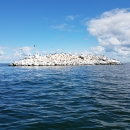
A white, rocky island is centered in the image, with rippled deep blue lake in the foreground and a bright blue sky with puffy clouds above the horizon. A handful of cormorants are perched on or flying above the small island.
Mille Lacs National Wildlife Refuge was established in 1915 and is the smallest refuge in the National Wildlife Refuge System at 0.57 acres. The refuge consists of two islands, Hennepin and Spirit, in Mille Lacs Lake that are covered with jumbled rock, boulders and gravel. Both islands are used by...
Ducks flying out of moist soil unit
Mingo National Wildlife Refuge provides a number of great opportunities to enjoy the outdoors. The mixture of bottomland forests, wetlands and swamps creates great waterways for canoeing and kayaking, and has miles of wildlife drives, a variety of hiking trails, and prime locations for hunting and...
Minnesota River in foreground with brown marsh grasses covered in fog in background.
Minnesota Valley National Wildlife Refuge is a thriving urban refuge where nature connects people, communities and wildlife. Where communities are welcomed through meaningful connections, educational opportunities and recreational experiences, while conserving wildlife habitat in the Minnesota...
Panoramic view of Pauley Waterfowl Production Area, Minnesota Valley Wetland Management District. Wispy clouds are present in the blue sky over the prairie, containing green grasses. White and yellow flowers are present in the foreground.
Minnesota Valley Wetland Management District, established in 1988, is a 14-county district located in the transition zone between northern tallgrass prairie and eastern deciduous forest. It manages more than 10,000 acres of grassland and wetland habitat for the benefit of wetland and grassland...
Ring-necked Duck, Wiley Waterfowl Production Area
Morris Wetland Management District includes 249 waterfowl production areas - small parcels of wetlands and grasslands - scattered throughout an eight-county area and encompassing 54,307 total acres. Like other wetland management districts in the prairie states, the goal of the district is to...
View of Endicott Marsh in winter with brown grass and water
Natural wetlands have attracted and provided wetland habitat to birds and other wildlife at Muscatatuck National Wildlife Refuge for hundreds of years. The small pocket of diverse land and waters has been designated as a Continentally Important Bird Area.
Up close prairie flowers and tall grass.
Neal Smith National Wildlife Refuge was established in 1990 with the purpose to protect, restore and reconstruct and manage native ecosystems of tallgrass prairie, oak savanna and sedge meadow. Prior to European-American settlement, tallgrass prairie covered 85% of Iowa. Today, less than 0.1% of...
Sunrise through prairie grasses
Once part of Glacial Lake Wisconsin, Necedah National Wildlife Refuge is now made up of an ancient, exposed lakebed where shallow surface water streams life into the Great Wisconsin Swamp, historic oak savannas and sand prairies. Seen for its importance for migratory birds by Franklin D. Roosevelt...
Green visitor center building with orange sunrise reflected in the pond in front.
Established in 1961, Ottawa National Wildlife Refuge protects a network of wetlands, grasslands and forests to provide habitat for a variety of migratory birds, resident wildlife and threatened and endangered species. This network of land covers more than 8,000 acres and when combined with the...
A shallow creek lined with trees on both sides
Ozark Cavefish National Wildlife Refuge is managed by Mingo National Wildlife Refuge. For more information on the refuge call 573-222-3589.
Three river otters frolic along the riverbank
The Patoka River in Southwest Indiana had long been recognized for its wetland and wildlife values on a local, statewide and regional basis. Patoka River National Wildlife Refuge and Management Area was established in 1994 under the authority of the Emergency Wetlands Resource Act to protect one of...
A craggy scene of bedrock and ferns
Pilot Knob National Wildlife Refuge was established in 1987. The 90 acre refuge, a donation from the Pilot Knob Ore Company, is located on top of Pilot Knob Mountain in Iron County, Missouri. Pilot Knob is a peak in the St. Francois Mountains above the Arcadia Valley. The refuge contains...
Four turtles, including painted and map turtles, sun on a submerged log among branches and duckweed
The 24,149 acre Port Louisa National Wildlife Refuge was established for the protection of migratory birds and other wildlife. It is located in Iowa and Illinois along the Mississippi River Flyway, one of the major routes for migrating waterfowl. Each year in the spring and fall hundreds, if not...
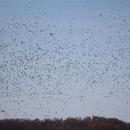
Large number of ducks flying against a blue sky without clouds; the ducks are dots in this photo with the treeline canopy along the bottom of the image.
Rice Lake National Wildlife Refuge is located in Aitkin County in east central Minnesota, about five miles south of the community of McGregor. It was established in 1935 to preserve valuable habitat for waterfowl. The most important resource on the refuge is Rice Lake itself, a shallow, 3,600-acre...
Ruffed grouse in Fall leaf litter with green grass
Located in northwestern Minnesota, Rydell National Wildlife Refuge protects approximately 2,200 acres of grassland, wetland and forest habitat. Managed by the U.S. Fish and Wildlife Service to benefit migratory birds and resident wildlife species, the refuge also provides a variety of educational...
Foggy sunrise at Seney.
The Seney National Wildlife Refuge and its Whitefish Point Unit are nestled in the eastern portion of Michigan’s Upper Peninsula. Slow down, relax and unwind as you enjoy winding roads, beautiful vistas and the local wildlife that populate these forests, wetlands and waters. These tracts of land...
11 sandhill cranes in flight with wings outstretched, with only the sky in the background. The cranes are all flying to the left and the sky is a mix of periwinkle blue and thin white clouds.
The 30,700 acre refuge was established in 1965 at the urging of local conservationists and hunters interested in restoring the wildlife values of the St. Francis River Basin. Following that, the refuge became and remains the largest public land holding in Sherburne County. The refuge is now a wild...
Shiawassee Fawn in Tallgrass by Kim LeBlanc
The 10,000 acre Shiawassee National Wildlife Refuge was established in 1953 for use as an inviolate sanctuary and for any other management purposes of migratory birds. The refuge also serves as an ideal destination for recreation. As a designated Important Bird Area, it is a place of global...
A ground view of a prairie with purple and yellow flowers
St. Croix Wetland Management District was established in 1992 for the purpose of providing wetland and grassland habitat for breeding waterfowl. The district encompasses eight counties in west-central Wisconsin and is responsible for the management of 8,700 acres of public lands on 44 separate...
A flock of mallard ducks take flight over a winter wetland with brown grasses and leafless tress in the background
Swan Lake National Wildlife Refuge was established in 1937 for the purposes of providing habitat, a sanctuary and breeding grounds for migratory birds and other wildlife. The refuge is currently 10,795 acres and focuses on wetland habitat management. The refuge is also managed for other migratory...
Red and orange trees line a pond in fall.
Tamarac National Wildlife Refuge was established as a refuge and breeding ground for migratory birds and other wildlife. The abundance of lakes, rivers and marshes along with the diverse landscape of dense forest to open meadows attracts a plethora of wildlife.
Tamarac refuge lakeshore with blue sky
Tamarac Wetland Management District is one of eight wetland management districts within Minnesota. Located in north central Minnesota, where the pines meet the prairie. Tamarac Wetland Management District stretches more than 10,600 square miles in Beltrami, Cass, Clearwater, Hubbard and Koochiching...
Kayaking in one of the refuge pools, a group of American white pelicans in the background
Trempealeau National Wildlife Refuge was established in 1936 and is nestled along the eastern edge of the mighty Mississippi River. The scenic drive to the refuge along the Great River Scenic Byway entices travelers along the way.
Pintail ducks in flight over Swan Lake wetland unit.
Two Rivers National Wildlife Refuge was established in 1958 to protect and enhance habitat for migratory birds. Located between the Mississippi River and Illinois River, the refuge encompasses 9,225 acres of riverine and floodplain habitat scattered around the confluence of the rivers. The mosaic...
Union Slough view from auto tour route
Union Slough is all that remains of a pre-glacial riverbed. Actually, the area is a connection point, or union, between two watersheds - the Blue Earth River of Minnesota and the east fork of the Des Moines River. Before European settlement, the area was so level that the wind determined which way...
Sun setting behind the bluffs on the Upper Mississippi River
Upper Mississippi River National Wildlife and Fish Refuge has been a haven for migratory birds, fish, wildlife and people since 1924. The refuge stretches 261 river miles from Wabasha, Minnesota to Rock Island, Illinois, and protects more than 240,000 acres of Mississippi River floodplain. The...
Gravel beach with tall trees in the background, lake in the foreground
Declared a refuge in 1938 and a wilderness area in 1975, West Sister Island National Wildlife Refuge is located nine miles from shore in the Lake Erie Western Basin. This 82 acre island is closed to all access to protect the largest nesting colony of wading birds in the United States Great Lakes....
Bright colors and markings of a brook trout
Whittlesey Creek National Wildlife Refuge is part of a large coastal wetland complex on the south shore of Lake Superior near Ashland, Wisconsin. The refuge was established in 1999 to protect, restore and manage coastal wetland and spring-fed stream habitat. Restoration of coaster brook trout...
The sun is peeking up behind the skyline. The camera is focused on some big bluestem grasses in the foreground with a valley in the background. There is a wetland in the bottom of the valley.
Windom Wetland Management District was established in 1990 for the purpose of increasing waterfowl production and to preserve habitat for migratory birds, threatened and endangered native species and resident wildlife. The district manages approximately 17,000 acres of federal owned waterfowl...
Media Usage Rights/License
Public Domain