


Visit Us
National wildlife refuges offer us all a chance to unplug from the stresses of daily life and reconnect with our natural surroundings.
William L. Finley National Wildlife Refuge provides numerous recreation opportunities to thousands of visitors every year. People enjoy viewing the diverse wildlife and picturesque vistas, whether on a determined hike, leisurely walk, or just driving through. Regulation of recreation activities allow for public enjoyment of the refuge while still protecting the wildlife and habitats.
Refuge Access
The refuge is open from dawn to dusk. Visitors can access the northern half of the refuge via Finley Refuge Road at the western entrance off Bellfountain Road or the eastern entrance off Highway 99W. The southern half can be accessed via Bruce Road, with entrances off both Highway 99W and Bellfountain Road. Roads throughout the refuge are graveled and visitors must maintain the posted speed limit of 20 miles per hour. The Snag Boat Bend Unit can be accessed via a turn-off on the west side of Peoria Road. Parking is allowed in designated parking areas only. No overnight parking is allowed on the refuge.
Visitor Center & Nature Store
The Refuge Visitor Center can be found off Finley Refuge Road, about 1 mile east of the Bellfountain Road entrance. The visitor center is open Monday through Friday from 8:00 am to 4:00 pm, Saturday and Sunday from 10:00 am to 4:00 pm, and is closed on all federal holidays. The Wild Goose Nature Store, operated by the Friends of the Willamette Valley National Wildlife Refuge Complex, can be accessed inside the Visitor Center Friday through Sunday from 10:00 am to 4:00 pm. The store is open on some holidays! The profit of all Nature Store sales goes directly to funding refuge programs.
Hiking
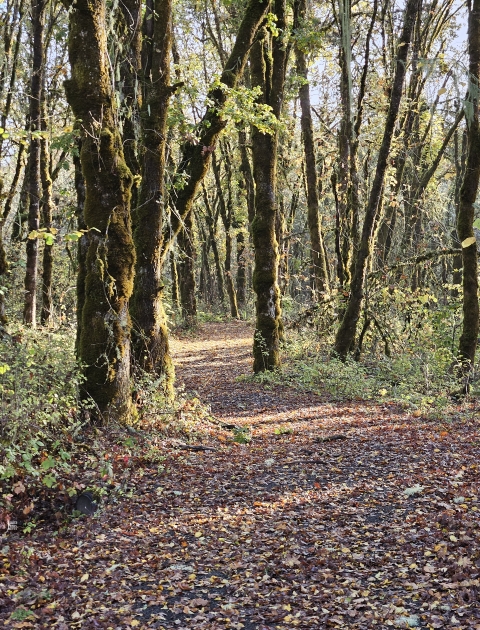
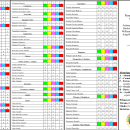
Hiking is allowed in all areas open to the public, except when winter sanctuary closures are in effect (October 1st at Ankeny and Baskett Slough National Wildlife Refuges and November 1st at William L. Finley Refuge). Check the trail guide/map for seasonal and year-round trail information. Wildlife observation and photography are encouraged! Please stay out of closed areas to minimize disturbance to plants and animals. No running or jogging allowed on the Refuge. And sorry, but please leave your pets at home. This is a home for wildlife and domestic four-legged critters can scare off just what you came to the Refuge to see!
Fishing & Boating
Fishing is allowed at Snag Boat Bend but be sure to follow State regulations. When water levels are high enough a boat might be able to access Lake Creek, a tributary within Snag Boat Bend. You would need to launch from the Peoria boat launch upstream. All boating is prohibited on the William L. Finely Unit.
Hunting
Black-tailed Deer:
Deer hunting is allowed at William L. Finley National Wildlife Refuge and the Snag Boat Bend Unit each year, per Refuge and State hunting regulations. Check our website in May for the upcoming Fall and Winter deer hunt information, details and maps.
Click here for the 2025 Deer Hunt information at William L. Finley National Wildlife Refuge.
Click here for the 2025 Deer and Waterfowl Hunt Information at Snag Boat Bend Unit .
Roosevelt Elk:
Elk hunting is only allowed at William L. Finely National Wildlife Refuge for two months each year (~Sept and Oct). Only antlerless elk may be harvested. In order to hunt on the Refuge, you must be awarded a special Refuge elk hunt permit in addition to a current Oregon hunting license and valid state-issued elk tag. Check our website each May for that year's elk hunt details. Applications for the limited Refuge-issued elk permits are due July 1st.
Waterfowl:
At Snag Boat Bend, waterfowl hunting is allowed for part of the year, per State waterfowl regulations.
Click here for the 2025 Deer and Waterfowl Hunt Information at Snag Boat Bend Unit.
For detailed hunt information, regulations, map and application (e.g. elk hunters), visit our hunting page. New information is posted in May each year.
All hunting is in accordance with all state and federal regulations. Hunters should consult the Oregon state hunting regulations. Firearms and other weapons are subject to state law. At all times, persons possessing, transporting, or carrying firearms on the refuge must comply with all provisions of state law. Firearms may only be discharged in accordance with refuge hunting regulations, i.e., only during the lawful pursuit of game during legal seasons.
Activities
Things to Do
If you have 15 minutes....
- Stop by the Refuge Headquarters office for some information and grab an English or Spanish trails brochure. Take a look at the outdoor bird feeders to get an up-close view of the Red-winged blackbirds, Acorn woodpeckers, sparrows, finches, Western Gray Squirrel and more! In the Winter enjoy the view of the seasonal pond behind the Headquarters office to see Wood ducks, a flock of dusky Canada goose, Ring-necked ducks, and other waterfowl.
If you have one hour....
- Go on a hike or go birding! William L. Finley has over 12 miles of trails and is one of the most popular locations for birders to see migratory birds, especially in the Spring and Winter.
If you have half a day or more....
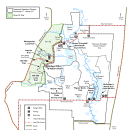
- Drive the auto tour route through the different native habitats on the Refuge and explore the additional trails. You can access the auto tour from Finley Refuge Road or Bruce Road, see the map to plan your adventure!
Know Before You Go
Prepare for your visit by packing supplies in a bag. The following suggested items will keep you comfortable and safe when you’re outside:
- Jacket
- Full water bottle
- Sunscreen
- Hat
- Closed-toe shoes
- Cell phone
You might also want:
- Backpack
- Bug spray
- Personal medications
- Binoculars
- Portable first aid kit
- Sunglasses
William L. Finley National Wildlife Refuge provides a plethora of different public use activities. From hiking to nature photography, there is plenty to do, and just off Highway 99 too!
Wildlife Viewing
If you enjoy getting outdoors and looking for wildlife, consider a visit to your nearest national wildlife refuge national wildlife refuge
A national wildlife refuge is typically a contiguous area of land and water managed by the U.S. Fish and Wildlife Service for the conservation and, where appropriate, restoration of fish, wildlife and plant resources and their habitats for the benefit of present and future generations of Americans.
Learn more about national wildlife refuge ! At William L. Finley wildlife viewing opportunities range from the stately great blue heron, to chittering western gray squirrels and kreck-ek-ing pacific chorus frogs.
Interpretation
For interpretive experiences at William L. Finley NWR, check out the Headquarters Office, the Homer Campbell Observation Blind Kiosk, or the Woodpecker Loop Environmental Education trail.
Recreational Opportunities
With the passage of the National Wildlife Refuge System Improvement Act in 1997, six wildlife-dependent recreational activities are often managed on refuges as long as they are determined to be compatible, legitimate and appropriate public uses of the refuge. Hunting, fishing, wildlife observation, photography, environmental education, and interpretation are often referred to as the "big six". William L. Finley offers five of the big six, including environmental education and interpretation programs, great wildlife viewing and photography opportunities, and limited annual hunts for elk and deer.
Trails
William L. Finley has both year-round and seasonal trails. Seasonal trails are specified in their description and are open from April 1st - October 31st.
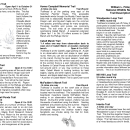
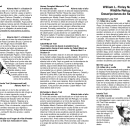
Download Our Trails Brochure: English / Spanish
Here is a refuge map to help you find your perfect trail! William L. Finley NWR Map
Visit our homepage to view any current alerts, including trail closures.
Please note, dogs are not allowed on any refuge trails.
Trails, Viewpoints & Boardwalks
Trail | Image and/or Video | Description | Additional Information |
Woodpecker Loop Trail(Year-round) | Video: Spanish/Español | Location: Trailhead is located just off Finley Refuge Road. Picnic tables and a vault toilet restroom is located near the trailhead.Check out the eBird Hotspot to know which birds are being recorded at the trail.View Trail |
|
Mill Hill Trail(Year-round) | Video: Spanish/Español | Location: Trailhead may be accessed from the Display Pond or Headquarters parking areas. Follow the trail signs as you hike from either access point. |
|
McFadden's Marsh Observation Blind Trail(Year-round) | Video: Spanish/Español | Location: Trailhead is located on the north side of Bruce Road near the eastern boundary. A porta-potty is located near the trailhead. |
|
Cheadle Marsh Trail(Seasonal - 4/1 to 10/31) | Video: Spanish/Español | Location: Trailhead is located at turnout off Bruce Road.
|
|
Homer Campbell Boardwalk Trail(Year-round) | Video: Spanish/Español | Location: Trailhead is at the parking area east of the historical Fiechter House. |
|
Cabell Marsh Trail(Seasonal - 4/1 to 10/31) | Video: Spanish/Español | Location: Trailhead is at the Cabell Lodge parking lot off Finley Refuge Road. A path to an observation deck and scope is open year-round. |
|
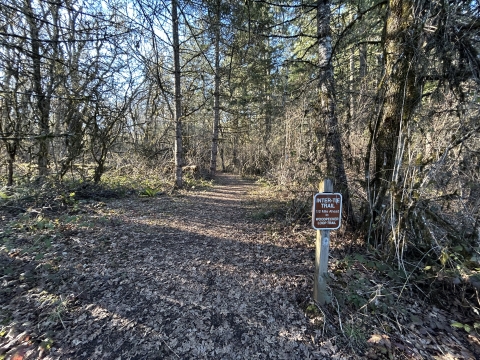
Intertie Trail(Year-round) | Location: Can be accessed near the midway point on Woodpecker Loop or near the beginning of Mill Hill Trail.View Trail |
| |
Beaver Pond Trail(Seasonal - 4/1 to 10/31) | Location: Trailhead is located at a turnout off Bruce Road.Walk up the interior service road to an old rock quarry site. Turn left, cross the bridge and follow the trail through the Maple Knoll Research Natural Area to Beaver Pond. Return to the service road back to the trailhead or continue on to Cattail Pond trail then back. Check out the eBird Hotspot to know which birds are being recorded at the trail. |
| |
Cattail Pond Trail(Seasonal - 4/1 to 10/31) | Location: Trailhead is located at a turnout off Bruce Road. This trail connects with Beaver Pond Trail.Walk up the interior service road to an old rock quarry site. Follow the signs to Cattail Pond. Turn right and follow the field edge to the wooded trail that returns to Pigeon Springs. Check out the eBird Hotspot to know which birds are being recorded at the trail. |
| |
Snag Boat Bend UnitLake Creek Trail(Year-round) | Video: Spanish/Español | Location: Trailhead and parking lot can be accessed through Eastern section of the unit off Peoria Road.Trail Description: From the parking lot follow the boardwalk through a marshy riparian area and onto an unimproved path through the shrubby woodland. Continue along the trail a quarter mile until you come upon a picnic area where you can see western pond turtles basking on logs in Lake Creek. As you walk along the trail you’ll notice numerous young trees in this area. Cottonwoods, big-leaf maple and Oregon ash are just a few of the tree species that have been planted here in recent years to restore historical riparian habitat. Continue to follow the trail as it meanders alongside Lake Creek until you reach the junction to the Lake Creek Observation Blind. At the observation blind look, out one of the windows onto Lake Creek. Wood duck, great blue heron, and belted kingfisher are commonly seen in this area. Check out the eBird Hotspot to know which birds are being recorded at the trail.From here you can either return to the parking area or continue on for Heron and Turtle Loop trails. |
|




Related Documents
Here you will find a variety of Refuge maps and resources.
Other Facilities in the Complex
William L. Finley National Wildlife Refuge is managed as part of the Willamette Valley National Wildlife Refuge Complex. A National Wildlife Refuge Complex is an administrative grouping of two or more refuges, wildlife management areas or other refuge conservation areas that are primarily managed from a central location. Refuges are grouped because they occur in a similar ecological region and have a related purpose and management needs. These refuges for example, were created in the 1960s specifically for the habitat they provide for the dusky Canada geese in the winter.
The Willamette Valley National Wildlife Refuge Complex consists of three refuges: William L. Finley NWR and its additional Snag Boat Bend Unit, Ankeny NWR and Baskett Slough NWR.


Rules and Policies
Know Before You Go
The refuge rules make you a wonderful visitor to wildlife's home and enable you to have some incredible wildlife interactions.
Activities not described in this section OR the activities section(s) are prohibited on the Refuge. To inquire about regulations or Refuge operations, contact the Refuge staff.
There are many fun, interesting, and educational activities you can do at William L. Finley. Keep in mind, if an activity is not wildlife related and doesn't help in the protection or understanding of wildlife or their habitat, there are probably refuge rules governing the activity. Please check with refuge management before participating in an activity that could harm the environment or yourself.
We have several rules and regulations in place to help with the protection of our wildlife and their habitats, as well as for the enjoyment of all visitors to the refuge. William L. Finley National Wildlife Refuge is actively patrolled by Federal Wildlife Officers. All federal, state, and local laws and regulations are applicable on refuge system lands and waters.
Cell phone reception in the refuge is extremely limited. Don’t assume it will work! Make a safety plan before you go and always let someone know where you will be and when you plan to return.
Refuge phone number:(541) 757-7236
Emergency Phone Number: 911
Locations
William L. Finley NWR
Travel south 10 miles from Corvallis, OR or north 7.5 miles from Monroe. Visitors can access the northern half of the refuge via Finley Refuge Road at the western entrance off Bellfountain Road or the eastern entrance off Highway 99W. The southern half can be accessed via Bruce Road, with entrances off both Highway 99W and Bellfountain Road.
Snag Boat Bend Unit
Travel east from Corvallis, OR on Highway 34 to Peoria Rd. Go south on Peoria Rd for 11 miles. Watch for an entrance sign along the roadside.