World Migratory Bird Day
In 2026, World Migratory Bird Day will be celebrated on May 9 in the spring and October 10 in the fall. The conservation theme this year is Every Bird Counts – Your Observations Matter. It highlights the role of public participation in collecting data on migratory bird populations and their habitats and factors that impact their populations and contribute to our knowledge about how to protect them.
Community science, ranging from backyard bird counts to large-scale coordinated surveys/schemes, provide information on species distribution, abundance trends, migration timing, and breeding success. This data is important to identify conservation priorities, and inform effective conservation action plans and strategies. By engaging individuals and communities in monitoring efforts, we not only gather scientific data but also build a deeper connection to nature, raise awareness about the challenges migratory birds face, and inspire direct conservation action.
The Migratory Bird Program is encouraging Service-wide participation in promoting education and outreach about the importance of birds throughout the country.
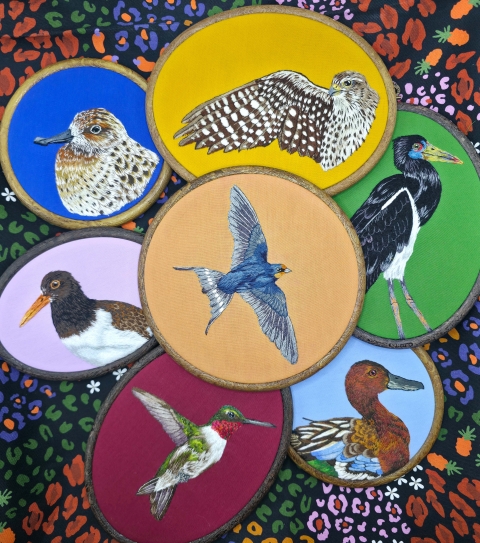
Environment for the Americas has handpicked seven bird species to be ambassadors for World Migratory Bird Day 2026, showcasing how these species contribute to our understanding of migratory patterns and connect with communities across the globe. The cinnamon teal, merlin, ruby-throated hummingbird, barn swallow, American oystercatcher, spoon-billed sandpiper and Adbim's stork are the ambassador species chosen for this year.
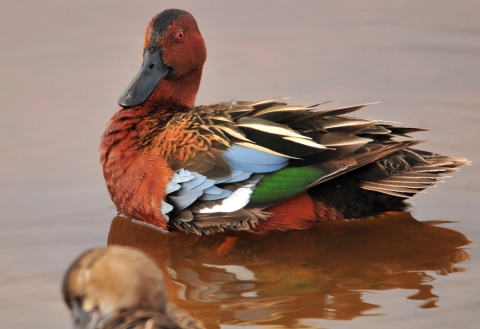
As a harvested waterfowl species, the cinnamon teal serves as a focal point for citizen science through the Harvest Information Program (HIP). Managed cooperatively by the U.S. Fish and Wildlife Service and state agencies, HIP requires hunters to register and provide data on their previous hunting activities, which serves as a vital sampling framework for identifying active teal hunters. This engagement allows the USFWS to select a representative sample of individuals for more intensive follow-up efforts, such as the Migratory Bird Hunter Survey (Diary Survey) and the Parts Collection Survey (Wing Survey). Through these surveys, hunters act as "part-time scientists" by logging their specific hunting dates, locations, and success rates, providing real-world observations that are otherwise difficult for biologists to obtain at such a massive scale. The most significant contribution to citizen science occurs when hunters participate in the Parts Collection Survey, where they mail in wings from harvested cinnamon teal to be analyzed at annual “wing bees.” Biologists use these samples to determine the bird’s species, sex, and age, which provides critical data on recruitment rates—the ratio of young birds surviving to enter the adult population. For a species like the cinnamon teal, which can be easily confused with blue-winged teal in certain plumages, this hunter-provided biological data is essential for generating accurate, species-specific harvest estimates. Ultimately, this partnership ensures that management decisions, including the setting of hunting seasons and bag limits, are based on robust scientific evidence rather than estimates.
Of those ambassador species, the American oystercatcher is listed as a U.S. Fish and Wildlife Service Bird of Conservation Concern, which are those birds that represent the Service’s highest bird conservation priorities. The list includes 269 bird species that the Service considers to be of conservation concern and is used as a catalyst to focus conservation attention on bird species.
How can you help birds?
- Plant native species of trees, shrubs, wildflowers, and grasses: native plants provide food for native birds, pollinators, and other beneficial insects.
- Make your home or other building safer for birds by taking steps to treat your windows to reduce building collisions. Learn how to make your home safer for birds with our Bird Collision Reduction Toolkits!
- Turn off lights between dawn and dusk, especially during fall and spring migration seasons.
- Leave your leaves alone as insects (aka bird food!) rely on the habitat fallen leaves provide, especially over the winter months. Dead leaves also decompose creating compost that can improve soil structure and fertility.
- If you own a rural property, encourage fencerows, un-mowed ditches, and natural areas to help feed and provide habitat for birds.
- If you live in an apartment, set out a balcony pot of native plants to help feed insects that help feed birds.
- Discontinue using pesticides and herbicides, which kill insects and the plants that many birds rely on for food.
- Protect and restore habitats such as woodlands, wetlands, and native meadows where birds live and breed.
- Grab a pair of binoculars and get outside to enjoy the birds in your area. You can even participate in bird monitoring programs like eBird or Christmas Bird Counts.
- Visit one of the 30 Urban Bird Treaty Cities in the U.S. and see how communities are coming together on a wide range of bird conservation, science, education, and recreational activities.
- Buy a Federal Duck Stamp! By purchasing a Federal Duck Stamp, you’re making a direct impact on the future of America’s wetlands, ensuring they remain healthy and thriving for generations to come. It’s one of the easiest and most effective ways to support wildlife conservation.
- Take pride in the important contribution you are making to birds in your community and tell others about your passion for conservation!
Join the Global Effort!
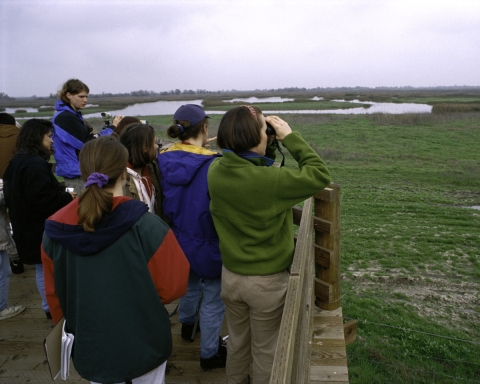
We hope that you’ll join us in the international effort to celebrate. There are many ways that you can participate in events that celebrate birds and all the joy they bring to us, including virtual webinars, birding events, and spring festivals. Find what kinds of events are happening in your area.
We will continue to post opportunities here with events that our very own U.S. Fish and Wildlife Service offices are hosting.