The U.S. Fish and Wildlife Service upholds its trust responsibility to federally recognized tribes by protecting and conserving tribal resources, in part by fostering conservation relationships with tribes in their ancestral homelands. The partnership between the Service and tribal nations to collaboratively manage natural resources is known as co-stewardship. Recently, the Service’s North Attleboro National Fish Hatchery in southeastern Massachusetts put co-stewardship into action.
Early last year, hatchery biologist Katie Marony planned a tribal outreach initiative in collaboration with Tim Binzen, regional tribal liaison, to promote the values of co-stewardship by inviting citizens of tribes in the area to visit the North Attleboro National Fish Hatchery to participate in a tour, join in American shad propagation and release activities, and fish in the hatchery’s pond. Six tribes were invited — and many of them responded with immediate interest.
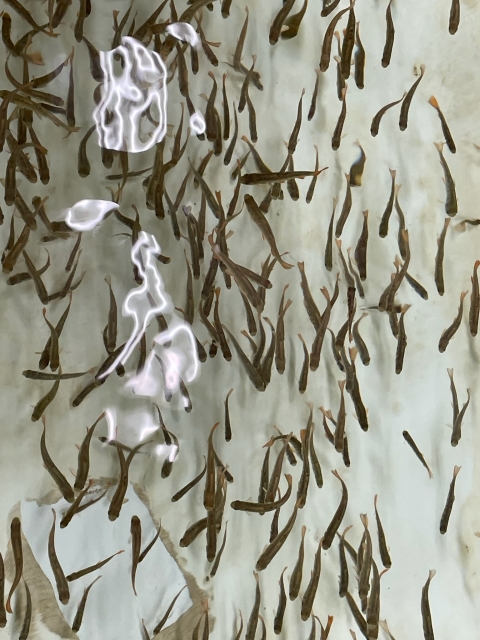
The hatchery has been propagating American shad for nearly two decades. The facility began producing American shad in 2008 to release into the Charles and Merrimack Rivers, and then started stocking rivers in Rhode Island in 2010.
In 2022, the hatchery shifted its focus to producing larval American shad to release in the Taunton River in Massachusetts. “Releasing young fish into these river systems allows them to imprint on these waters, make use of the spawning and rearing habitat recently made accessible by multiple barrier removals and fish passage fish passage
Fish passage is the ability of fish or other aquatic species to move freely throughout their life to find food, reproduce, and complete their natural migration cycles. Millions of barriers to fish passage across the country are fragmenting habitat and leading to species declines. The U.S. Fish and Wildlife Service's National Fish Passage Program is working to reconnect watersheds to benefit both wildlife and people.
Learn more about fish passage projects, and ultimately build back the American shad population in this area,” said Katie Marony, a biologist at the North Attleboro hatchery.
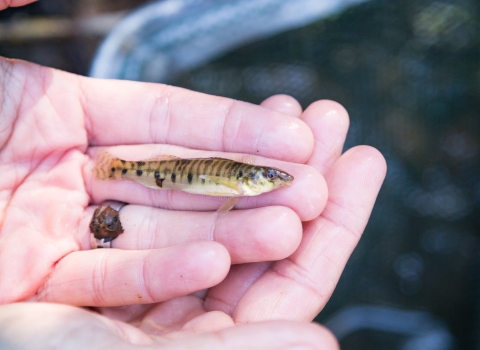
American shad are an important migratory fish in freshwater, estuarine, and marine ecosystems along the East Coast, supporting larger predators such as striped bass, tuna, birds, and marine mammals. The tribal nations in the region have deep rooted connections to American shad, as a food source and for its cultural significance, and some are actively working to conserve and restore shad populations.
Representatives of the Shinnecock Indian Nation (Long Island) and Mashpee Wampanoag Tribe (Cape Cod) visited in early June, and a group from the Mashantucket Pequot Tribal Nation (Connecticut) visited later in July.
"Our visit to the North Attleboro Fish Hatchery last year was a great and eye opening experience. We learned a lot about the process of raising various species of fish alongside an intertribal group with members of several New England Indigenous communities present,” said Shane Weeks of the Shinnecock Nation. “I hope to see more opportunities in the future for our Indigenous communities and environmental organizations to come together to learn from each other in the future. That visit was a great example!"
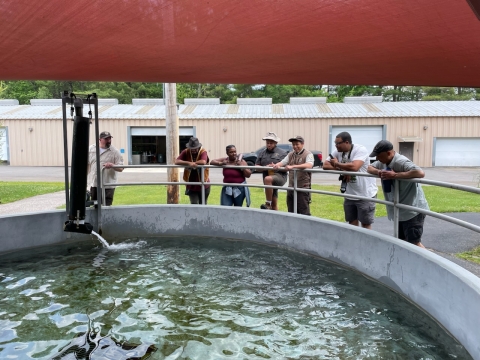
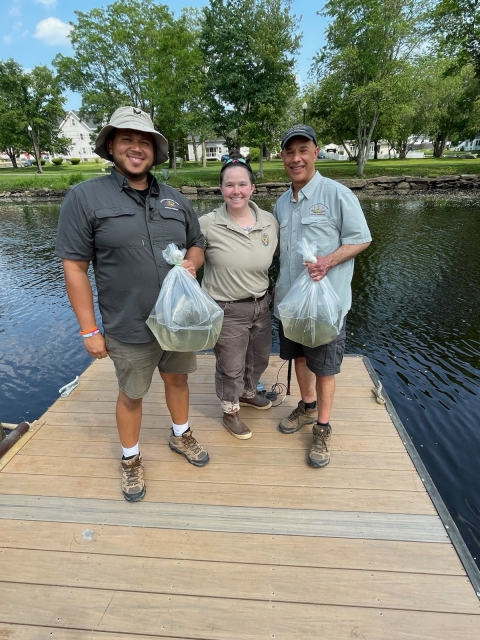
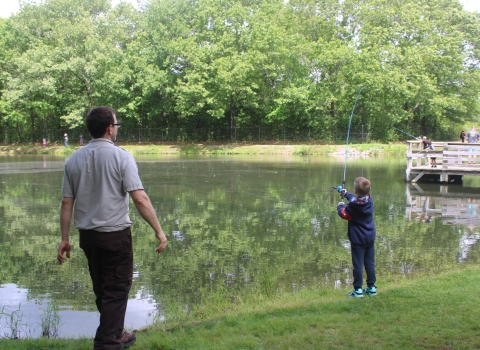
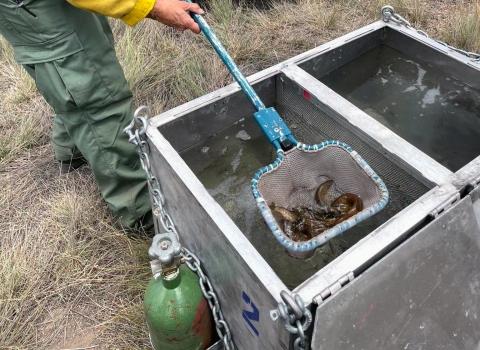
Kevin Cheung, manager at North Attleboro National Fish Hatchery, and Marony provided a tour of the hatchery facilities and explained the shad propagation process to tribal guests. The Shinnecock visitors went fishing at the hatchery’s pond in the afternoon. The Mashpee representatives joined Service staff on a trip to the City of Taunton to release more than 115,000 newly hatched shad larvae into the Tribe’s ancestral waters in the Taunton River.
During the larvae release, tribal representatives said the day was significant because the effort was breathing new life back into their ancestral waters.
The hatchery is planning to continue their tribal outreach efforts in 2026, upholding the Service’s tribal trust responsibilities and mission to work with others to conserve, protect, and enhance fish, wildlife, plants, and their habitats for the continuing benefit of the American people.