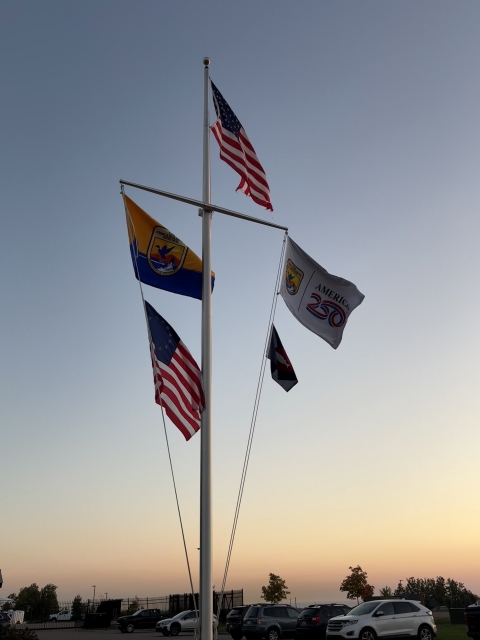
As part of the Flags Across America initiative for America’s 250th anniversary, the U.S. Fish and Wildlife Service is sharing stories from the places where our commemorative flags have traveled. From historic hatcheries to vibrant refuges, each stop celebrates conservation as an enduring American value. Join us as we highlight the lands, waters, and wildlife that connect our nation’s past, present, and future.
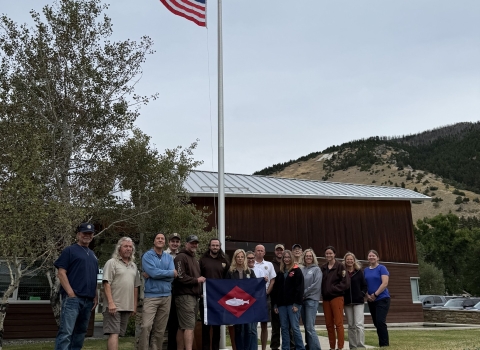
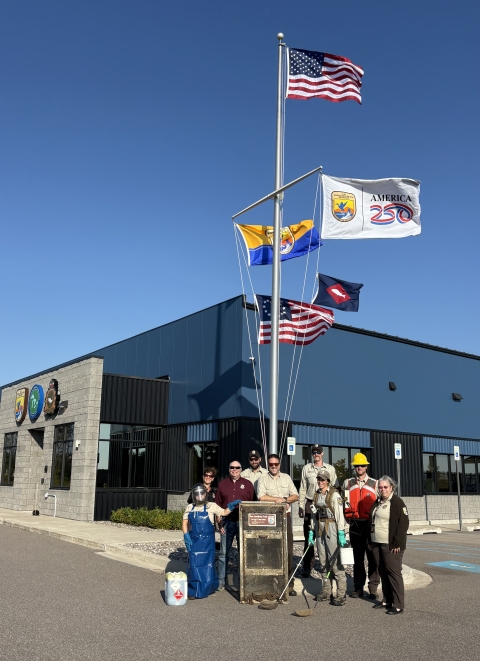
The flags made their third stop at Marquette Biological Station in Michigan from September 15 through 19. “It was an incredible honor to fly the flags and recognize the contribution of the Sea Lamprey Control Program to the storied history of the Service’s work in fish and aquatic conservation,” said Field Supervisor Jess Barber.
Marquette Biological Station plays an important role in the ongoing recovery of lake trout and other Great Lakes fish through sea lamprey control.
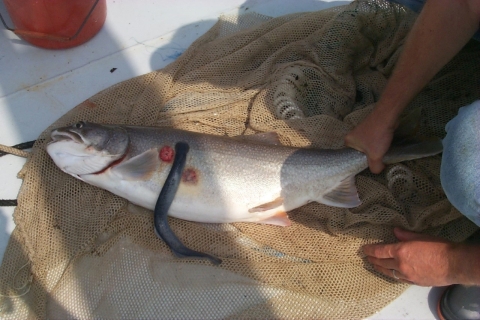
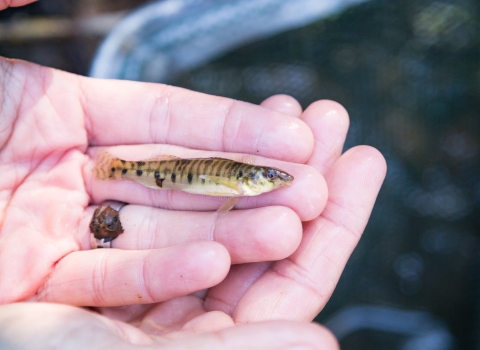
Invasive sea lampreys are a jawless, parasitic fish native to the Atlantic Ocean that entered the Great Lakes system via manmade locks and shipping canals. Their aggressive behavior and appetite for the bodily fluids of fish have wreaked havoc on fish populations and decimated an already vulnerable lake trout fishery. Just one predatory sea lamprey can destroy up to 40 pounds of Great Lakes fish every year.
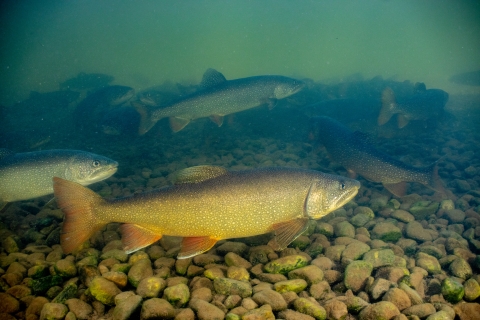
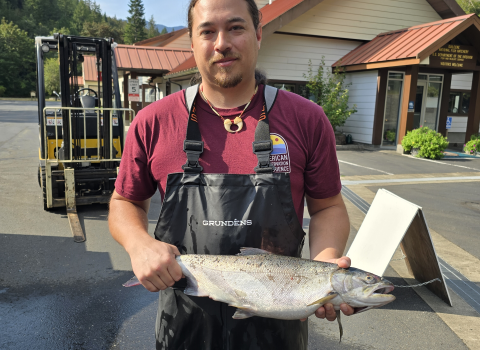
Lake trout are a top predator in the Great Lakes and were commercially harvested on massive scales until the fishery collapsed in the 1950s from a combination of overfishing, loss of spawning habitat, and parasitism by invasive sea lamprey.
The U.S. Fish and Wildlife Service and Fisheries and Oceans Canada implement sea lamprey control in partnership with Great Lakes states, tribes, and others under the coordination of the Great Lakes Fishery Commission.
In the late 1950s, after testing nearly 6,000 different chemical compounds, U.S. Geological Survey scientists found two that control sea lamprey without significantly impacting other species. With the discovery of the two lampricides, the Service launched a major chemical control effort. In 1956, the Service established Marquette Biological Station to support sea lamprey research, monitoring, and control efforts.
With lampricides and other tools like physical barriers to migration, the control program has reduced sea lamprey populations by 90% in most areas of the Great Lakes, a stunning success!
Today, lake trout and other commercial and recreational fish form a tremendously valuable fishing economy in the Great Lakes that is valued at more than $5.1 billion annually. That’s remarkable progress for a fishery that collapsed just 70 years ago, now serving as a cornerstone of the regional economy and an asset to the country.
Service biological stations located in Marquette and Ludington, Michigan are home to staff that continue to control sea lamprey and improve the Great Lakes fishery for the benefit of future generations.
Next up, we follow the flags to Garrison Dam National Fish Hatchery in North Dakota, where we release millions of walleye and other sportfish to help provide quality fishing opportunities throughout the Great Plains. Stay tuned for the next chapter on this historic tour!