What We Do

The U.S. Fish and Wildlife Service (Service) plays a vital role in conserving America’s natural resources by engaging public and private partners in conservation planning and delivery, and in the review of major development proposals. We work collaboratively with other federal agencies, industries, stakeholders, as well as state and local governments, on development projects that accommodate our country’s infrastructure needs, and preserve our nation’s biological, terrestrial, and aquatic natural resources.

Today, there are 250 dedicated biologists in nearly 100 field offices across the country who work on the most pressing issues affecting our fish and wildlife. Our biologists provide technical information, analyze fish and wildlife impacts, serve as members of planning teams and recommend measures to benefit fish and wildlife resources across the landscape.

We recommend early consultation by project proponents and agencies to identify and recommend ways to avoid potential resource conflicts. We also provide technical assistance on how to minimize unavoidable impacts to wildlife and their habitats through appropriate project siting, design, construction, and operation.

Service biologists also provide information about species that may be affected by proposed development, sensitive or rare habitat in the area and sampling and monitoring protocols. If necessary, our biologists help develop compensatory mitigation plans and strategies.

Our goal is to implement innovative solutions to meet development needs, while maintaining ecosystem integrity and protecting fish and wildlife habitat.

Our Projects and Research

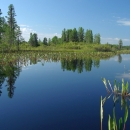
Silky smooth deep blue water surrounded by green trees and vegetation. The trees and vegetation are reflected on the water.
We play a lead federal role in reviewing permits for projects affecting wetlands, streams, and other water resources in the United States. This review process allows the Service to make recommendations for the mitigation of potential impacts.
Wind farm in sand dunes with mountain range in background.
Energy development is necessary to meet the needs of the American public, but there often are environmental impacts. We help energy developers avoid and minimize those impacts.
View of a two-lane highway cutting through Alaskan wilderness.
We encourage the design of transportation projects that provide the greatest value to the greatest number of people, while avoiding or minimizing impacts to plant and animals species and their habitat, as well as the ecological processes that naturally sustain these areas.
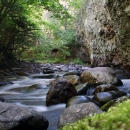
Water flows through narrow gorge with moss-covered rock in the foreground.
We work closely with our federal and state partners to develop federal water resource projects – from dams, to flood control, to water storage projects – that meet the critical needs of local communities and conserve fish and wildlife.

Our Laws and Regulations

The Endangered Species Act establishes protections for fish, wildlife, and plants that are listed as threatened or endangered; provides for adding species to and removing them from the list of threatened and endangered species, and for preparing and implementing plans for their recovery;...

Section 404 (m) of the Federal Water Pollution Control Act (Clean Water Act) authorizes the Service to comment on permit applications submitted to the U.S. Army Corps of Engineers for the discharge of dredged or fill material into navigable waters of the United States. Section 208(i) authorizes...

The Fish and Wildlife Coordination Act directs the Service to investigate and report on proposed Federal actions that affect any stream or other body of water and to provide recommendations to minimize impacts on fish and wildlife resources.

The Migratory Bird Treaty Act of 1918 (16 U.S.C. 703-712) implements four international conservation treaties that the U.S. entered into with Canada in 1916, Mexico in 1936, Japan in 1972, and Russia in 1976. It is intended to ensure the sustainability of populations of all protected migratory...

The National Environmental Policy Act of 1969 (NEPA) provides that the Service examine the environmental impacts, incorporate environmental information, and use public participation in the planning and implementation of all actions; integrate NEPA with other planning requirements; prepare NEPA...