


Visit Us
Hours of Operation (Trails)
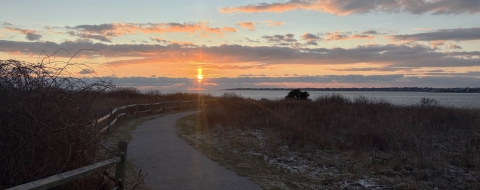
The trails at Sachuest Point National Wildlife Refuge are open from sunrise to sunset. A single bathroom is available on the side of the Visitor Center from 6:30am-4:30pm.
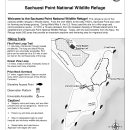
Flint Point Loop Trail is a 1.1 mile loop, mild terrain through coastal shrublands. The loop and Island Rocks platform are universally accessible. Flint point can be reached via a 0.6 mile in-and-out trail on the northwest side of the loop. Ocean View Loop is 1.5 miles with medium terrain and fantastic views of the ocean and rocky shoreline. From Ocean Loop you can access Price Neck Overlook, which is a short in-and-out trail with steep, rugged terrain. At Price Neck Overlook (and on much of the eastern portion of Ocean Loop), step on ancient rocks which used to be part of the African Continent. The Sakonnet Overlook is an accessible platform located near the parking lot which gives visitors a beautiful view of the wildlife refuge and the Sakonnet River.
Hours of Operation (Visitor Center)
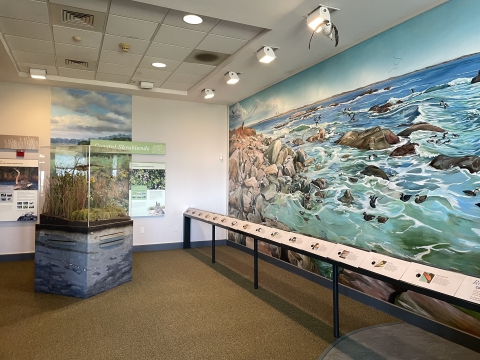
The Visitor Center is open daily from 10:00am-3:00pm, and includes exhibits, more restrooms, water fountains, and a gift shop operated by the Friends of the Rhode Island Refuges.
Getting Here by Car
Sachuest Point National Wildlife Refuge is located at the end of Sachuest Point Road past Second Beach. We have a parking lot, but parking is limited on busy days, like weekends and during special events. We encourage carpooling! Please contact staff at rhodeislandcomplex@fws.gov to ask about parking if you plan on bringing a bus or a large group.
Getting Here by Bike
Bikes are not allowed on the trails or in the building. Please use the bike racks located near the parking lot while enjoying the trails and visitor center by foot.

Can I bring my pet to the refuge?
No, although we love our furry friends too, pets are never allowed at Sachuest Point National Wildlife Refuge. Wildlife who call the refuge home cannot distinguish between a friendly pet and a predator. This causes our protected wildlife and birds to flee nesting, burrowing, feeding, and resting sites, using up critical energy intended for survival and raising their young. Even the lingering scent of a pet can signal the presence of a predator long after your pet is gone.
What about service animals?
Service animals are allowed, but must be on leash control at all times. Service animals are defined as dogs that are individually trained to do work or perform tasks for people with disabilities. There are also provisions for trained miniature horses. Emotional support, therapy, or comfort animals do not qualify or meet the definition of a service animal under the Americans with Disabilities Act (ADA).
Fishing Permits
Please visit our fishing page to learn more about obtaining your fishing permit.
Job, Internship and Volunteer Opportunities
Please visit our Get Involved page to learn how to join our team.
Contact Us
Questions? Please call (401) 619-2680, or email rhodeislandcomplex@fws.gov
Related Documents
Other Facilities in the Complex


Rules and Policies
Because all National Wildlife Refuges were established for the protection of wildlife, activities that are not wildlife dependent (those that do not require the presence of wildlife or that pose a threat to wildlife) are not permitted.
Locations
Email rhodeislandcomplex@fws.gov with questions.