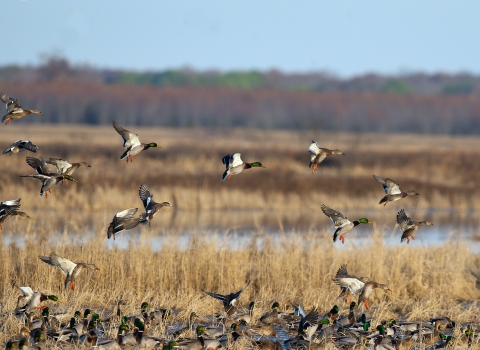
The refuge was established in August of 1915 by Executive Order of President Woodrow Wilson to serve as an inviolate sanctuary, reserve, and breeding ground for native and migratory birds. It is one of the nation’s oldest refuges and is 11,038 acres in size.
Public Comment Period for Draft Compatibility Determinations for Boating and Wildlife Observation (Commercial) Activities

The U.S. Fish and Wildlife Service announces the availability of draft compatibility determinations (CD) for boating and wildlife observation (commercial), at Big Lake NWR for public review and comment. The public comment period will extend for 14 days, beginning June 15, 2026 through June 29, 2026. Interested parties are encouraged to review the draft determinations and provide written comments by email to steven_rimer@fws.gov

View the full Information Bulletin

Location and Contact Information

      About Us

      Once a free-flowing river system, the New Madrid earthquakes of 1811-12 changed the river into the lake and swamp environment that exists today. Due to the refuge’s location, significant bottomland forest habitat, and abundance of bird life, it was recognized as a globally Important Bird Area by the American Bird Conservancy in March of 2001. 

      Our Species

      The refuge annually winters several species of waterfowl. Peak numbers in January and February can exceed 200,000 birds. Wood ducks are year-round residents and annually raise approximately 2,500 young on the refuge. Over 225 bird species have been documented on the refuge. Other wildlife to look for are beavers, river otters, raccoons, wild turkeys, white-tailed deer, bobcats, and the occasional armadillo.

      Our Library

      Publications, Brochures, Plans, and more...