Written By


To celebrate America's 250th birthday, we at the U.S. Fish and Wildlife Service are highlighting the incredible wildlife that calls this beautiful country home. From American icons to subtle specialists, join us as we highlight seven species each week: one species for each of the 250 days leading up to America's 250th birthday.
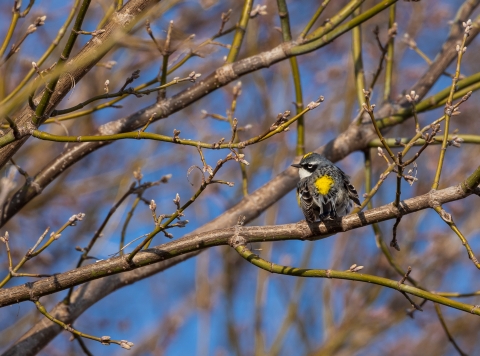
Yellow-rumped warbler (Setophaga coronata)
The yellow-rumped warbler is one of the earliest warblers to return to summer breeding grounds in the spring. Watch for these "butter butts" as they migrate north, stopping to forage on insects and fruit in wooded areas.
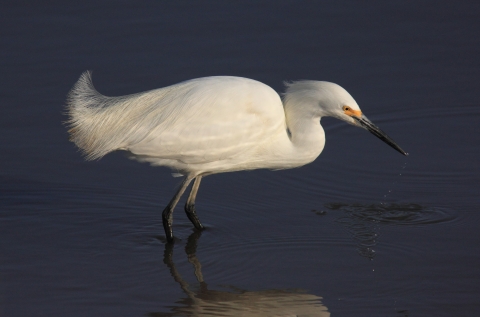
Snowy egret (Egretta thula)
The snowy egret is a white wading bird with elegant plumes and slender black legs with bright yellow feet. Often found in marshes, estuaries and coastal areas across the southern and coastal United States, they're starting to return to summer breeding grounds and nesting colonies.
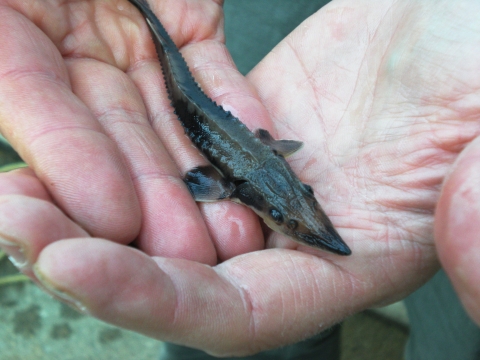
Lake sturgeon (Acipenser fulvescens)
No joke - one day this tiny lake sturgeon may grow to be more than 7 feet long and weigh nearly 250 pounds! Lake sturgeons are native to the Great Lakes and upper Mississippi River basin where they feed at the bottom.
Northern flicker (Colaptes auratus)
The northern flicker is a large, striking woodpecker with a spotted belly and flashy yellow or red lined wings. Unlike most woodpeckers, flickers often feed on the ground. This time of year, they're busy establishing territories and excavating nest cavities.

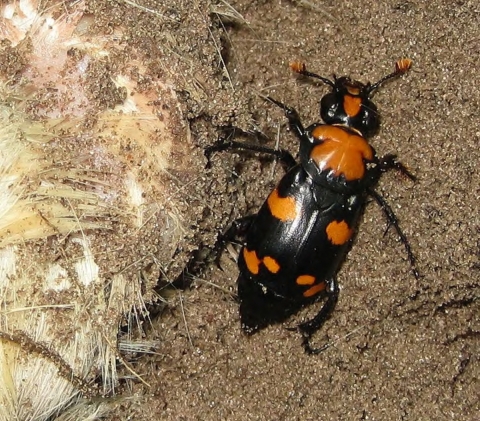
American burying beetle (Nicrophorus americanus)
The American burying beetle is nature's recycler. These striking black beetles with bright orange markings play a vital role by burying small carcasses, which it uses to feed its young. This time of year, they're becoming more active and searching for food sources and mates.
Gila monster (Heloderma suspectum)
Gila monsters are one of few venomous lizards in the world - and the only one native to the United States. Found in the deserts of the southwest, these slow-moving reptiles become more active in the spring as they search for mates. Seeing one is a treat as they're quite shy and spend most of their time underground.

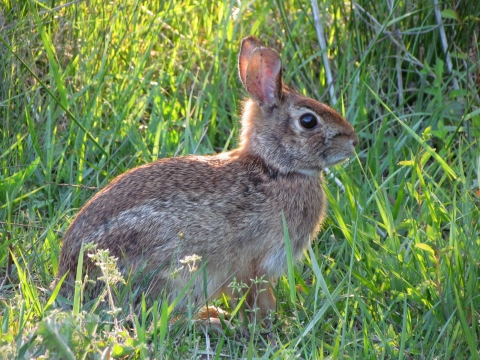
Eastern cottontail (Sylvilagus floridanus)
Public Service Announcement: While the Easter Bunny might bring you eggs, she doesn't lay them. Eastern cottontails are easily recognized by their fluffy white tails. In the spring, bunnies are busy breeding. Some may have up to 5 litters per year with 3 to 8 young in each!