Written By

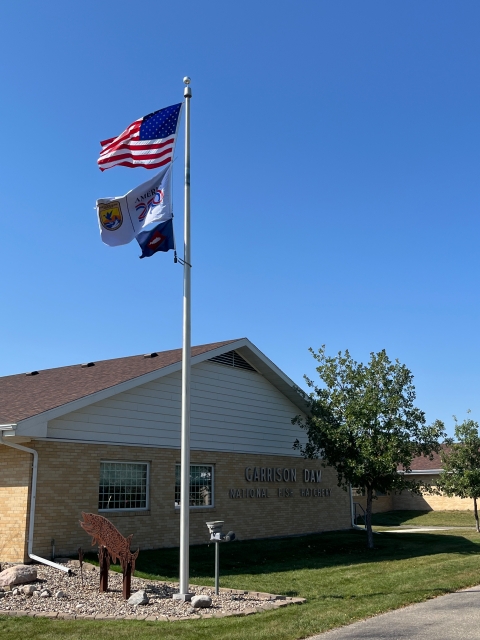
As part of the Flags Across America initiative for America’s 250th anniversary, the U.S. Fish and Wildlife Service is sharing stories from the places where our commemorative flags have traveled. From historic hatcheries to vibrant refuges, each stop celebrates conservation as an enduring American value. Join us as we highlight the lands, waters, and wildlife that connect our nation’s past, present, and future.
In late September 2025, the flags came to Garrison Dam National Fish Hatchery in North Dakota.
The Missouri River’s Garrison Dam, which provides both power and flood control, had been completed in 1953, and local fisheries needed a little help after all that construction. The hatchery was established in 1961 to give them a hand by producing northern pike and walleye.
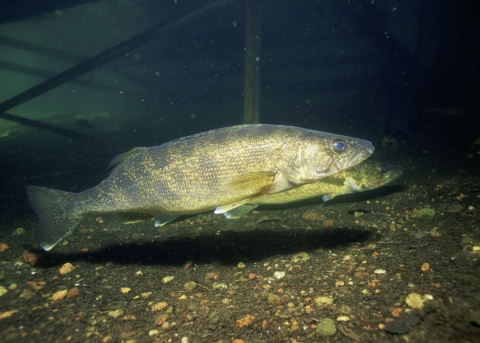
Since then, the hatchery has expanded its operations, raising pike, walleye, perch, trout, salmon, and more. Garrison Dam National Fish Hatchery still plays an important role in providing quality fishing opportunities in North Dakota and waters throughout the Great Plains. In 2025, they released more than 8.7 million walleye fingerlings and 6.6 million walleye fry. Some were released in Wyoming, and the hatchery also shared eggs with Colorado and fry with Idaho. But most of the stockings were across North Dakota.
Fishing is a big deal in North Dakota. According to the North Dakota Game and Fish Department, almost one in four adults in the state buys a fishing license annually. A North Dakota State University study found that fishing brings $1 billion a year to the state’s economy and supports over 4,000 jobs.
The hatchery plays a significant role in generating those economic benefits. Aaron Von Eschen, project leader of the Garrison Dam National Fish Hatchery Complex — which consists of both Garrison Dam and Valley City National Fish Hatcheries in North Dakota — explains the impact.
“The two fish hatcheries in this state are both federal facilities. The state relies on them to support its sport fisheries, which has created a very strong and mutually beneficial partnership that goes back a very long time. It’s truly a tremendous benefit to both agencies and we wouldn’t be able to do what we do without the cooperative relationship and support from them.”
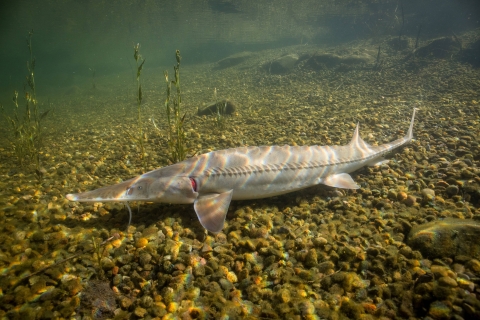
The folks at Garrison Dam National Fish Hatchery have also gained renown for their decades-long effort to help restore the endangered pallid sturgeon in its northern range.
The prehistoric pallid sturgeon, which the U.S. Fish and Wildlife Service protected as endangered in 1990, can grow up to six feet in length and weigh up to 80 pounds. Dam construction, habitat alterations, and over-fishing have hurt the species. But captive breeding efforts at Garrison Dam National Fish Hatchery and other hatcheries have led to the release of millions of young pallid sturgeon.
In the summer of 2025, the Iowa Department of Natural Resources found two pallid sturgeon in the lower Des Moines River. It was the first time pallids were collected in the Des Moines River.
Perhaps those two have ancestors from Garrison Dam National Fish Hatchery.
Next up, we follow the flags to Tualatin River National Wildlife Refuge, where if you’re lucky, you might see over 50,000 waterfowl in a single day during the winter months. Stay tuned for the next chapter on this historic tour!
Written By