Written By

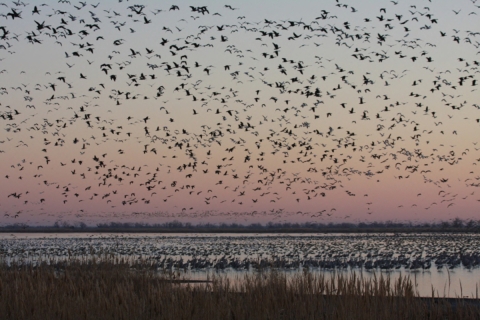
Every year one of America’s great natural wonders takes to the sky over Kansas. As millions of birds migrate each fall to their southern wintering grounds, Quivira National Wildlife Refuge provides the birds a safe stopover in the south-central part of the state. In the spring, waterfowl return to their more northern breeding grounds, again relying on those same wetlands they visited in the fall. At the refuge, you can observe hundreds of species as they rest and eat, taking a needed break from a journey that can span thousands of miles, multiple countries and several continents. We at the U.S. Fish and Wildlife Service are answering a few common questions about the refuge in the article below. Read on to learn more!
What species rely on the refuge?
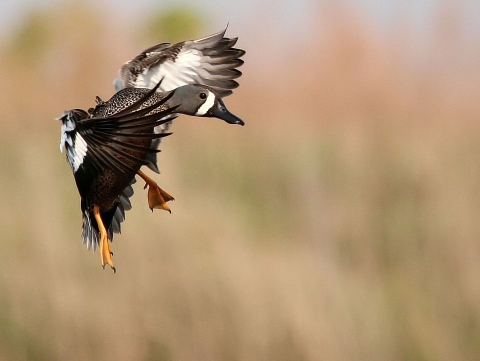
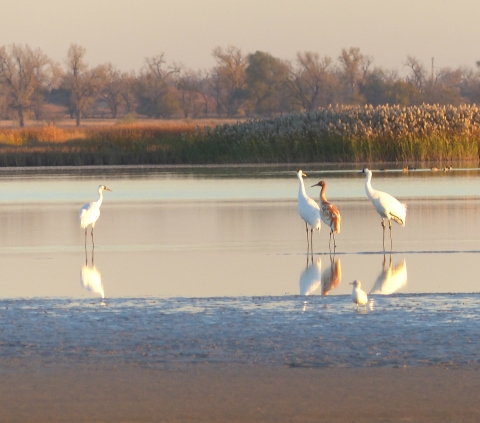
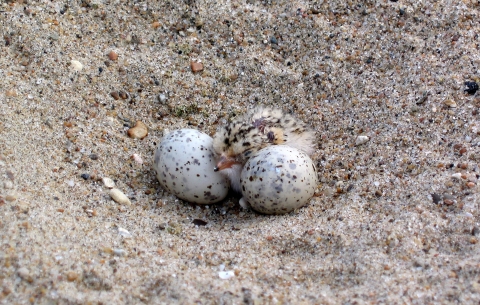
Quivira is also home to nesting species such as snowy plovers, American avocets, black-necked stilts, endangered interior least terns and blue-winged teal. It’s also one of the only places in the world where you can see and hear one of America’s amazing native species – the whooping crane. Approximately, one-fifth of the entire population stops over at Quivira each year. This endangered species has been brought back from the brink of extinction thanks to captive breeding, wetland management at places like Quivira and other national wildlife refuges and an innovative program that teaches some of these human-size birds how to migrate.
There are four major migratory routes, known as flyways, that span North America the Atlantic, Mississippi, Central and Pacific. Kansas is part of the Central Flyway, which includes 10 states and three Canadian provinces between the Rocky Mountains and Mississippi River. As they make their way between breeding grounds and winter homes, birds need places to rest and refuel. In the Central Flyway, Quivira National Wildlife Refuge provides a 22,135-acre mix of rare sand prairie, freshwater wetlands and inland salt marsh salt marsh
Salt marshes are found in tidal areas near the coast, where freshwater mixes with saltwater.
Learn more about salt marsh . The refuge was established in 1955 to ensure migratory birds could rely on this essential habitat.
How do we manage the wetlands for wildlife?
Refuge staff remove invasives species and plant native grasses and forbs. They also move water around the landscape, using a series of canals and water control structures throughout the refuge that raise or lower water levels. This provides the appropriate vegetation for a variety of birds and wildlife, such as foraging and roosting for waterfowl, flooded wetlands and wet meadows for waterbirds, mud and salt flats for nesting shorebirds and deep water for pelicans and diving ducks to fish. Manipulating the water throughout the year is also important to manage germination and growth of vegetation, nutrient cycling and sedimentation.
During times of drought especially, the ability to move water to maintain the habitat wildlife need is essential. At Quivira, refuge staff are working to improve water control infrastructure and systems. For example, many of the deep-water impoundments have been re-contoured so water levels can be quickly adjusted to benefit the different needs of plant and animal species. The refuge team is also replacing old water control structures with new styles that reduce sedimentation to improve water quality and habitat.
How can people experience the refuge?
The marshes protected by Quivira have been used by wildlife and people for hundreds of years. Native American and early settlers relied on the hunting opportunities provided by the migrating birds each fall and spring. Today, Americans can still harvest from those same heritage hunting grounds. In addition to hunting and bird watching, the refuge is a great place to take photos, fish, hike, bike and enjoy environmental interpretation and education opportunities.
There are many ways to get to the refuge, but one of the best ways is to travel is the Wetlands and Wildlife Scenic Byway. The 77-mile journey stretches between Quivira and Cheyenne Bottoms wetlands. Together, these two places protect 66,000 acres of habitat needed by millions of birds that travel through Kansas each year. If you’d like to experience nature a little closer to home, the Great Plains Nature Center in Wichita is a great place to visit and connect with Kansas’ wild heritage. More than 58,000 students attend the center’s education programs each year. A cooperative project between the U.S. Fish and Wildlife Service, Kansas Department of Wildlife and Parks, City of Wichita and the Friends of the Great Plains Nature Center nonprofit organization, connects visitors with wildlife and wild places when seeking adventure closer to home.
Learn more about Quivira National Wildlife Refuge and plan your visit today!