You might be familiar with Halloween's Celtic origins, or how trick-or-treating became a Halloween tradition, but how much do you know about the various animals associated with Halloween? (And before you ask, no, I'm not referring to those inaccurate skeletons that seem to crop up every year.)
Black Cats
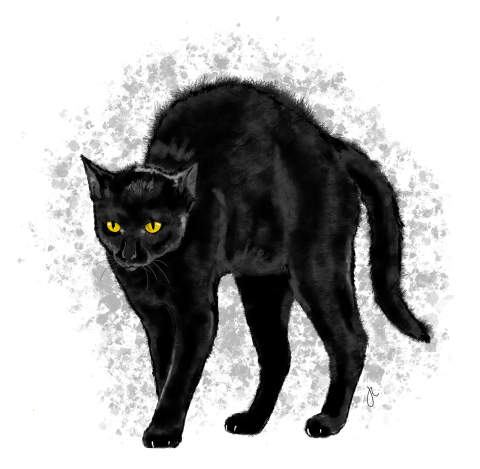
Black cats are probably the most iconic Halloween animal (and yes, not technically wildlife). The superstition that these dark creatures bring bad luck dates back to Greek mythology, where they were associated with Hecate, the goddess of magic, witchcraft, and sorcery. By the Middle Ages, black cats had become widely associated with witches and the devils — so much so that a 13th-century church decree was put out labeling them as demonic incarnations of the devil. This superstition spread to the New World with Puritan colonists and was compounded by the erroneous belief that killing cats could curb the Bubonic plague. These days, black cats are more often seen as spooky Halloween mascots or even lucky charms, depending on who you ask. Interestingly, black cats' dark color might actually be an evolutionary advantage. Their dark color allows them to hunt and catch rodents without being spotted.
Rats
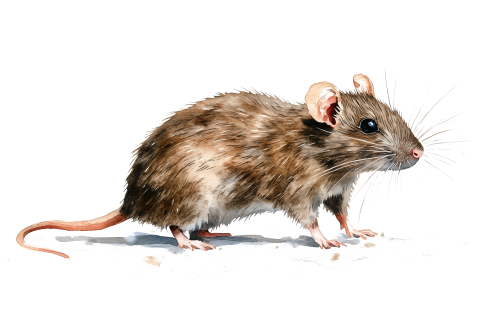
Rats have long been associated with disease and decay. This may be largely due to their role in spreading the Black Death in the 14th century. Although it was technically the fleas on the rats that carried the disease, the rodents became sort of a scapegoat during this period of history; many have considered them to be disease-ridden ever since. Contrary to this myth, rats are actually quite clean and will bathe themselves up to 8 times a day. Rats' secretive and nocturnal behavior also contributes to the belief that they are associated with the supernatural. Rats will also seek shelter indoors during the winter months, which often brings them into conflict with humans.
Bats
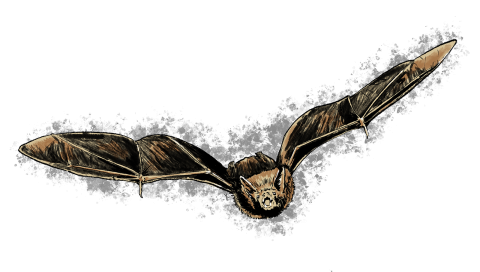
Bats are another animal deeply tied to Halloween. The main reason may simply have to do with how bats look and behave, as these nocturnal animals can be quite startling at first glance. Bats' association with Halloween is largely tied to a near universal myth: the vampire. Legends of vampire-like beings tales stretch back to Ancient Egypt, Mesopotamia, appear as the Préta or BrahmarākŞhasa in India, Mandurugo in the Philippines, Adze or Sasabonsam in West Africa, Camazotz in Ancient Maya, Guajona in Spain and as the legendary Nosferatu in Ancient Romania, precursor to the Prince of Vampires himself, Count Dracula. Of the 1,300+ species of bats, only 3 are "vampire" bats that consume blood. Despite their uncanny appearance and behavior, bats are actually quite beneficial and responsible for pollinating and seed dispersal of countless plant species.
Spiders
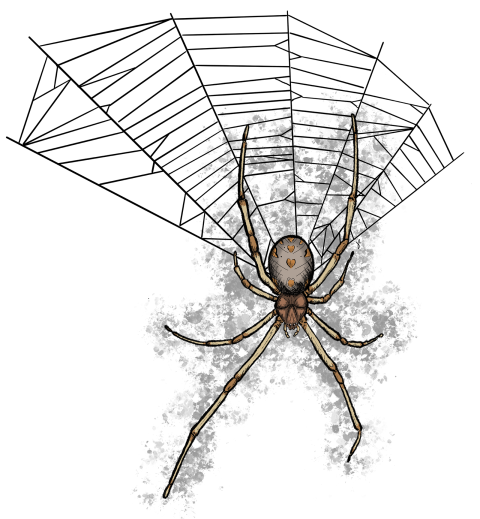
Spiders have a deeper connection to Halloween than just being creepy crawlies, although their appearance is certainly a factor. Spiders and spiderwebs are often associated with dark places, old buildings, and other spooky locations such as "haunted" houses. You’re also more likely to see spiderwebs in the fall months; it’s the time of the year many start mating, which means the arachnids may be more visible throughout September and October. And though their silky creations do make great Halloween decor, make sure you don’t try to recreate their handiwork with artificial spider webs, as those can be dangerous for wildlife.
Owls
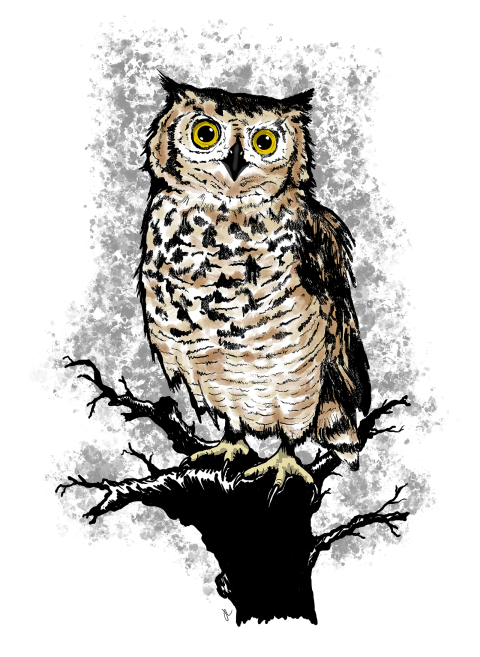
Owls can partially thank their large eyes, haunting hoots, and nocturnal behavior for their association with Halloween. But their association with the holiday is based on more than just appearances. Like many of the animals on this list, the birds been linked to witchcraft and the supernatural throughout history, though their reputation has long straddled the line between wisdom and the supernatural. In Greek mythology, owls served as the symbol of Athena, the goddess of wisdom, while ancient Romans believed the animals could predict someone’s imminent death and that witches transformed into owls in order to travel at night, leading to their eerie reputation. The screech of an owl was also deemed an omen of doom, which displays how tales, in addition to their nocturnal and predatory behavior, steered owls to the path of Halloween stardom. Many Native American cultures believe the raptors have a correlation to death and the afterlife, further cementing their status as otherworldly beasts. Despite these tales, owls are essential components in an ecosystem as they largely prey on rodents, which prevents the overpopulation of these species and sustains a balanced ecosystem.
Toads
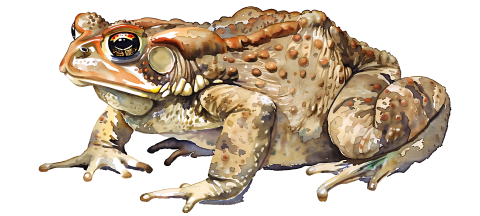
These warty creatures have long been linked to witches in various cultures, and are often depicted as companions believed to assist in their magical practices. This association was popularized in Shakespeare’s Macbeth, where a toad is mentioned in the context of a witch’s brew, reinforcing the idea that the amphibians can be ingredients in dark magic and potions. Adding to their eerie reputation, many toads secrete toxins through their skin that can be poisonous to humans, although you’d have to eat (or lick) them to be affected. Toads are actually important species to have in an ecosystem, as they help control pests such as mosquitos.
Crows & Ravens
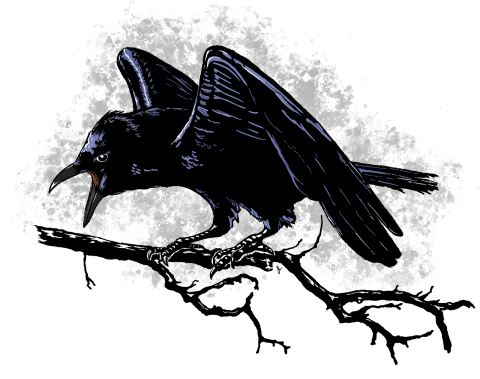
If you’ve ever seen a group of crows, called a “murder," circling around the carcass of a dead animal, you understand why they’re associated with Halloween. The birds will eat anything from berries to live snakes, but they’re also scavengers and will often feed on roadkill and garbage. While they may have a worse public image than they deserve (crows are considered one of the most intelligent animals on the planet), there’s no denying they have a foreboding presence. And it certainly doesn’t help that people often confuse them with ravens, another corvid with an eerie reputation. Speaking of ravens, in medieval times, witches and sorcerers were said to be able to turn into ravens and fly away, which allowed them to escape. In German folklore, witches rode ravens rather than brooms. In 1845, Edgar Allan Poe published “The Raven,” in which a raven visits the character's room one gloomy night, which progressively drives him insane. It's a haunting poem, perfect for Halloween.
In Claws-clusion...
From black cats to crows, the animals of Halloween are more than just eerie decorations or spooky symbols — they’re living links to ancient myths, misunderstood legends, and ecological importance. Each creature carries centuries of storytelling on its back (or wings), shaped by fear, folklore, and fascination. While they may haunt our imaginations in October, these animals deserve our respect year-round, not just for their roles in cultural history, but for the vital parts they play in the natural world. So this Halloween, as you hang the cobwebs (indoors only, of course!) and carve the pumpkins, take a moment to appreciate the real-life creatures that inspired the fright.