Monitoring

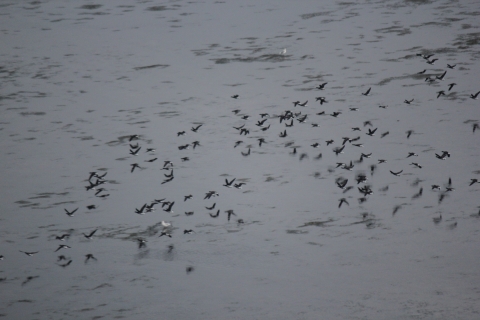
Between September and November each year, nearly the entire world population of Pacific black brant (Branta bernicla nigricans) stages at Izembek Lagoon and surrounding estuaries. The Izembek Complex is a unique area of protected brackish waters, supporting one of the world’s largest eelgrass beds and a diverse array of wildlife. Fall-staging brant have been counted in the Izembek Complex since 1975 via an aerial-based ocular survey. The primary objective of the survey is to provide an annual index of abundance for the entire post-breeding Pacific brant population, while secondarily, providing annual fall population indices for cackling geese (Branta hutchinsii), emperor geese (Anser canagicus), and Steller’s eiders (Polysticta stelleri). While ocular surveys began decades ago, the USFWS and USGS conducted a complementary aerial photographic survey in 2017-2019 in order to improve precision of annual estimates and reduce bias. This new photographic method shows great promise in increasing aircrew safety, reducing disturbance to staging birds, and improving annual population estimates.

Facilities

Black and white bird with long neck and yellow bill on the water
Alaska is home to more than 470 species of birds. Most are migratory birds for which the Fish and Wildlife Service is responsible under international treaties and the Migratory Bird Treaty Act. While some of the birds stay in Alaska year-round, most migrate to Canada, Central America, South America...
A sunset over Izembek Lagoon with a cloudy sky reflecting over the water
Alaska's Izembek National Wildlife Refuge lies between the highly productive waters of the Bering Sea and the Gulf of Alaska. The heart of the refuge is Izembek Lagoon, a coastal ecosystem that's home to one of the world's largest eelgrass (Zostera marina) beds. Hundreds of thousands of waterfowl,...

News

Sandhill Cranes flying over the Refuge from a distance.
Annual migratory bird population status reports are posted each year in early September. Highlighted species include waterfowl, American woodcock, mourning dove, band-tailed pigeon, and sandhill Crane. The annual Migratory Bird Hunting Activity and Harvest Report is also included.

Contact

Programs

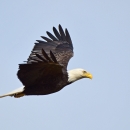
A large bird with brown feathers, white head, and yellow beak flies against a pale blue sky
The Migratory Bird Program works with partners to protect, restore and conserve bird populations and their habitats for the benefit of future generations by: ensuring long-term ecological sustainability of all migratory bird populations, increasing socioeconomic benefits derived from birds,...