


Species that are considered high risk have a well-documented history of invasiveness in at least one location globally, and a high or medium climate match to the contiguous United States.
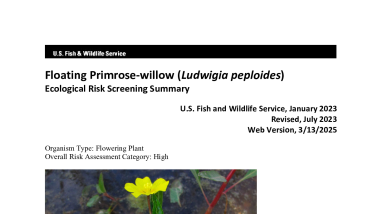
Ludwigia peploides, floating primrose-willow, is a flowering plant native to South America. There are multiple subspecies each with slightly different described native ranges. This species inhabits a variety of freshwater habitats and creates floating mats along the water’s surface. L. peploides has been introduced to and is considered invasive in many portions of the United States and several countries in Europe. Several negative impacts from introductions have been documented. L. peploides has shown to negatively impact water quality, decrease biodiversity, and interfere with native wildlife. It also impacts recreational usage of waterways. At least four States regulate this species. The History of Invasiveness for Ludwigia peploides is classified as High due to the records of introductions resulting in established nonnative populations and the associated documented negative impacts. The climate matching analysis indicates establishment concern for this species. The majority of the contiguous United States had a high match. Areas of medium match were found in the Western Mountains and Colorado Plateau. The Certainty of Assessment is classified as Medium due to the history of confusion regarding the native range of the species and the potential from some information to be confused between closely related congeners. The Overall Risk Assessment Category for Ludwigia peploides in the contiguous United States is High.
Publication date
Type of document
High Risk
Media Usage Rights/License
Public Domain
Program


Species