Written By

Since 1871, the National Fish Hatchery system has been at work improving recreational fishing and restoring aquatic species that are in decline, at risk, and are important to the health of our aquatic systems. Across the country, the network of national fish hatcheries work with states and tribes to conserve, restore and enhance the fish and aquatic resources of America for future generations.
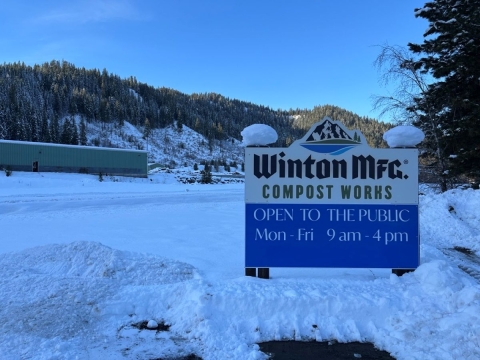
Every year, thousands of salmon return to Leavenworth National Fish Hatchery to spawn- and die. But their story doesn’t end there. One of the most common questions we get from visitors is: What happens to the salmon carcasses after spawning? This year, our answer has changed! A new partnership with Winton MFG, a local composting organization, is aiming to mimic the role of wild salmon in nutrient enhancement using Leavenworth NFH spring Chinook.
In our agriculturally rich region of north central Washington, salmon provide powerful nutrients that support healthy soil and thriving crops. Wild salmon returning to the mid-Columbia River from the ocean bring back essential nutrients that help our forests and rivers thrive. By the time salmon are ready to spawn, they've used up all their energy toward reproduction, and their meat is no longer suitable for human consumption. After spawning, these fish die naturally and decompose in rivers, on streambanks, or in forests- recycling nutrients back into the ecosystem.
At Leavenworth NFH, we spawn around 1,000 fish each year to get the number of eggs needed for the next generation. For decades, the hatchery has followed the same practice with carcasses after spawning: burying fish remains on-site. But thanks to a new partnership with Winton MFG, we will now be composting our fish carcasses. Instead of letting those nutrient-rich carcasses go to waste, they’re now being transformed into compost and returned to agricultural land. While hatchery-raised salmon carcasses from Leavenworth cannot be returned to the river, composting is the next best thing, and in some ways, even better. Every ton of fish becomes about a cubic yard of compost. With tools like compost calculators, we can even measure the methane emissions we’re reducing—turning waste into climate action.
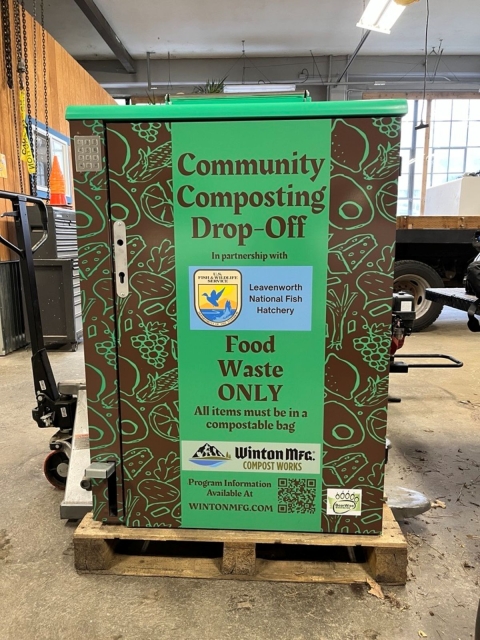
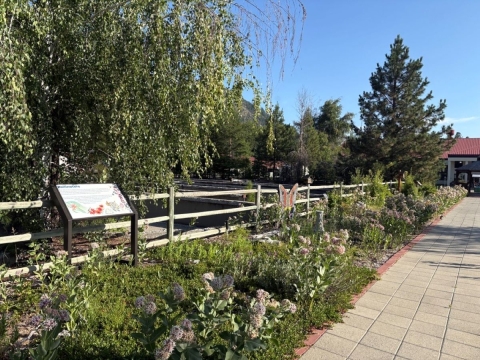
Robbette Schmit, general manager at Winton MFG and a former fish biologist, saw the potential early on. She helped build up Winton’s composting program and envisioned a way to use spawned fish from the Leavenworth NFH. Now, fish are spawned, processed, and then purchased or donated to compost recipients, such as our pollinator garden maintained by the Chelan County Master Gardeners. The hatchery will also host a community composting drop-off, where area residents can bring their food waste to be made into compost at Winton’s composting facility near Lake Wenatchee. A bear-safe enclosure will be located at the parking lot outside the front gate. Composters can access the enclosure using a keypad and tip their compostable food waste into the bin using a hands-free system. Winton then has weekly pickups scheduled that follow best management practices to keep the system clean and efficient. This new hatchery-supported composting drop-off location follows BearWise protocols, leading to less habituated bears in the area getting into residential garbage cans. This partnership with Winton MFG and local landowners is more than just practical; it’s a way of giving back. Compost created from spawning this year will nourish next year’s crops. And through it all, our hatchery and salmon remain an indirect but essential partner to the agricultural industry, helping to keep our community thriving.
The next time you go fishing, you might just catch a salmon that was raised at Leavenworth National Fish Hatchery. Producing fish continues to be an irreplaceable tool in managing or restoring fisheries along with habitat conservation. In doing so, we help provide recreation opportunities to America’s 39.9 million anglers who spend $99.4 billion annually in pursuit of their favored pastime. Learn more about Leavenworth National Fish Hatchery!