To celebrate America's 250th birthday, we at the U.S. Fish and Wildlife Service are highlighting the incredible wildlife that calls this beautiful country home. From American icons to subtle specialists, join us as we highlight seven species each week: one species for each of the 250 days leading up to America's 250th birthday.
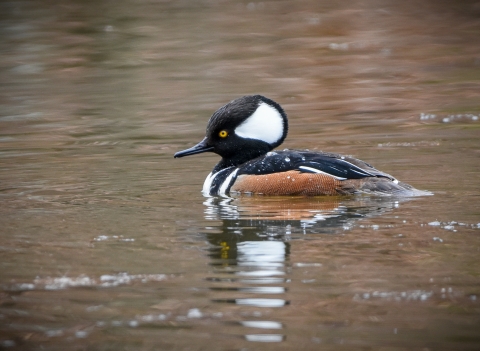
Hooded merganser (Lophodytes cucullatus)
Hooded mergansers are diving ducks with fan-shaped crests. These agile divers catch small fish, insects and crustaceans in wooded wetlands, rivers and ponds. This time of year, you may catch their courtship displays with males fanning crests, rapidly tipping heads and making frog-like croaking sounds.
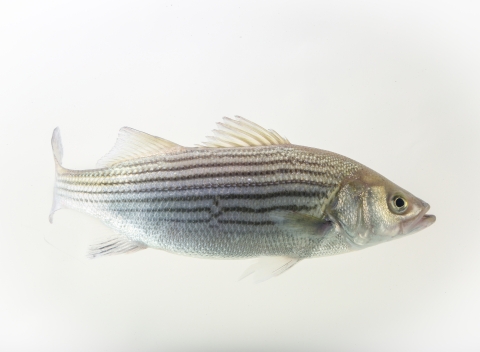
Striped bass (Morone saxatilis)
The striped bass is native to the Atlantic coast, living in the ocean and returning to freshwater to spawn. Some may live up to 30 years with size depending on where they live. Some may grow up to 5 feet long and weigh more than 70 pounds!
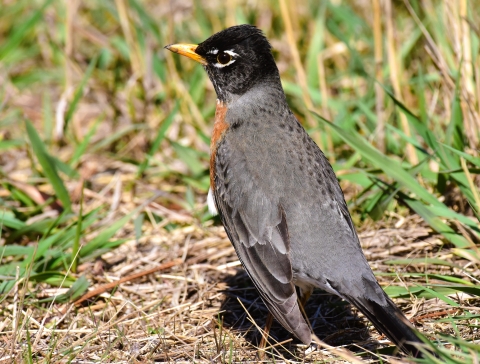
American robin (Turdus migratorius)
The American robin is known for its cheerful song and bright belly. This time of year, large flocks of robins disperse as they start searching for nesting territories. Watch for them foraging for worms on lawns.
Gray seal (Halichoerus grypus)
The gray seal is a large marine mammal with a long snout, spotted coat and large eyes. Found along the North Atlantic coast, you may see them resting on beaches and sandbars or popping their heads above the water as they rest between dives for fish, squid and crustaceans.

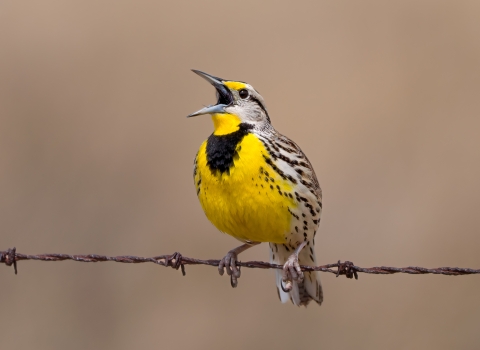
Eastern meadowlark (Sturnella magna)
The eastern meadowlark is a grassland songbird with a bright yellow chest and flute-like song. Breeding season is the perfect time to watch for males perched on fence posts or tall grasses, singing loudly. Nests are hidden in grasses below.
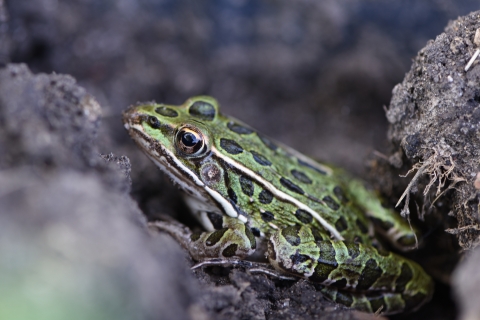
Northern leopard frog (Lithobates pipiens)
The northern leopard frog can be found in wetlands, grasslands and ponds across much of the northern U.S. and Canada. As temperatures rise, frogs begin emerging from their overwintering spots in mud at the bottom of ponds or streams, returning to shallow wetlands to breed.
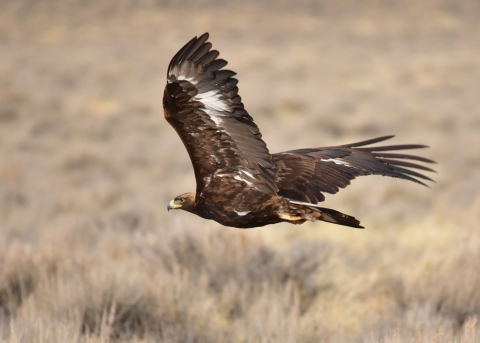
Golden eagle (Aquila chrysaetos)
The golden eagle has dark brown plumage, a golden nape and an incredible wingspan that can measure more than 7 feet. Mostly found in the west, they'll sometime wander east in the winter or during migration.