Establishing an inviting environment for pollinators can enhance any area into a vibrant oasis year-round. At the U.S. Fish and Wildlife Service, we proudly welcome pollinators. You can roll out a welcome mat for pollinators too, no matter where you live!
Imagine, if you will, inviting all the bees, butterflies, birds, beetles and assorted fuzzy sky-guests to a grand soirée, and then imagine providing absolutely nothing but a patch of lawn and the faint smell of chemicals for your guests. No snacks. No drinks. Not even a decent centerpiece. It wasn’t unfriendly — just empty. And for pollinators, empty means no welcome sign.
Whether you’re tending a sprawling yard or nurturing a cozy city balcony, transforming your space into a haven for bees, butterflies and other beneficial wildlife guests is easier and more rewarding than you might think. Let’s explore how simple tasks can turn your space into a lively, beautiful home for you and nature’s hardest workers.
Serve the good stuff
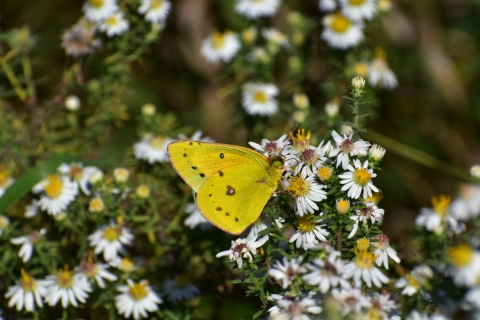
Don’t skimp by serving impostors: non-native and invasive plants. Offer locally found native blooms with high quality pollen and nectar. Plant in your native species in clumps, that offer different food stations for a variety of pollinating guests. Some good plants to consider are wild geranium, milkweed, bee balm, blazing star and aster.

Provide host plants
Flowers are snacks. Host plants are nurseries and may be considered a vacation rental for particular pollinators. If you want to your guests to be monarchs, you need to offer them milkweed that’s native to your area. If you want bumble bees, offer nesting spaces with bare soil, grass clumps and hollow stems. For hummingbirds, provide leafy trees and large shrubs that provide shelter at varying heights of 10 to 90 feet tall.

Choose low maintenance
Native plants bring friends who show up, eat and clean up after themselves. And, once established, native plants reduce the need for water, fertilizers and pesticides that can lead to cost savings. This resilience means fewer plant replacements and less frequent yard work.
Keep the buffet open
Spring appetizers, summer entrees and fall desserts. Create a garden that says, “the kitchen never closes.” By having flowers that bloom in early spring, midsummer heat and late autumn chill makes sure there is nutritious nectar and pollen for next year’s guests.

Let a little mess happen
Your guests will arrive in tiny flying outfits, unannounced and fabulous. Leaving leaves on the ground, stems standing up right through winter and bare patches of ground are important for many guests who tend to not leave, or what biologists call overwintering pollinators.

In the end, hosting pollinator-friendly places aren’t just about supporting bees, butterflies and other beneficial insects. It’s about fostering a vibrant ecosystem that brings life, movement and beauty to your space. By choosing native plants, providing host sites, keeping blooms available spring through fall and embracing a little natural disorder, you’re not only throwing the ultimate garden party, you’re also contributing to a healthier environment for everyone. So, roll out that welcome mat and watch as your garden becomes a lively haven where nature’s hardest workers, and you, can thrive together.