To celebrate America's 250th birthday, we at the U.S. Fish and Wildlife Service are highlighting the incredible wildlife that calls this beautiful country home. From American icons to subtle specialists, join us as we highlight seven species each week: one species for each of the 250 days leading up to America's 250th birthday.
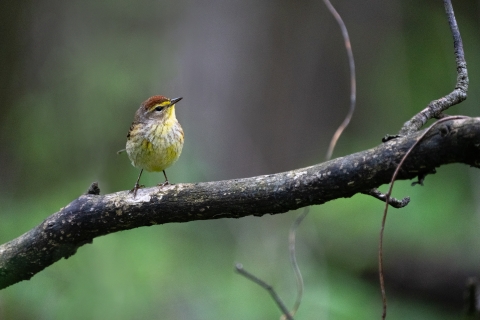
Palm warbler (Setophaga palmarum)
The palm warbler is one of the first warblers to return to northern breeding grounds. Easily identified by its chestnut cap and tail-wagging, this little bird can be found across much of the eastern U.S. during migration as it moves from southeastern wintering grounds to northern breeding grounds.
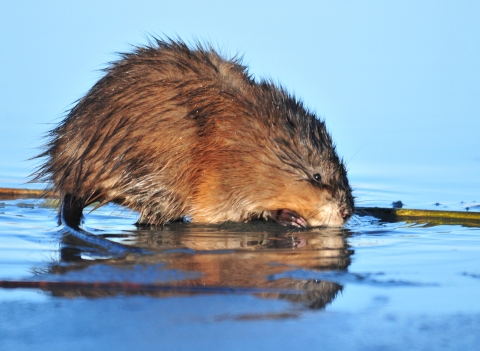
Muskrat (Ondatra zibethicus)
The muskrat is a medium-sized semiaquatic rodent that can be found near waters across much of North America. They build dome-shaped lodges out of mud and vegetation that are sometimes mistaken for small beaver lodges. This time of year, watch for them foraging and repairing their homes.
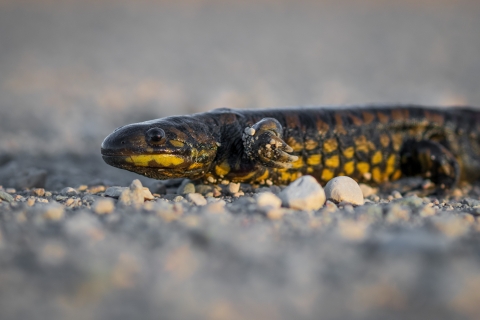
Tiger salamander (Ambystoma tigrinum)
The tiger salamander is a large terrestrial amphibian that can be found across much of North America. They have bold yellow or olive blotches on their backs, providing camouflage. Seeing one is always a treat considering they spend most of their lives underground, emerging in the spring to breed.
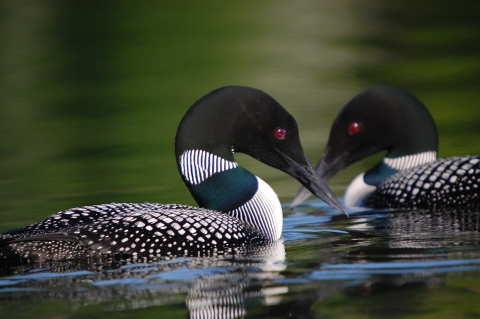
Common loon (Gavia immer)
The common loon is an iconic diving bird known for its haunting calls and striking black-and-white breeding plumage. With dagger-like bills and strong legs, loons are expert swimmers. This time of year, loons are making their way back to northern lakes.
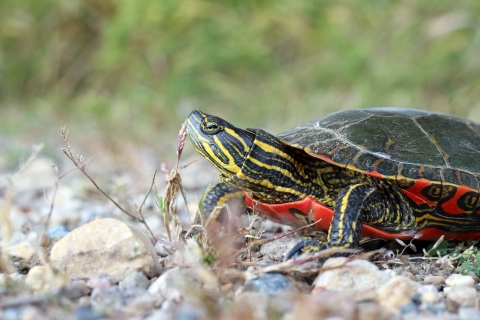
Painted turtle (Chrysemys picta)
The painted turtle is one of the most widespread and colorful turtles in North America, easily recognized for its colorful shell markings and striped face and neck. These turtles are found in ponds, lakes and slow-moving streams, often spotted basking in groups. This time of year, they're emerging from muddy bottoms where they spent the winter.
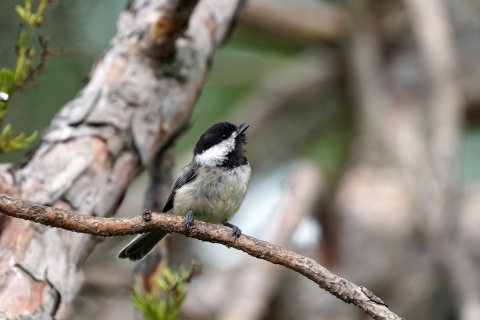
Black-capped chickadee (Poecile atricapillus)
The black-capped chickadee is a year-round resident from Alaska, across much of Canada and the northern half of the United States. These tiny songbirds have bold personalities and distinctive calls. This time of year, they're focused on nesting and will even excavate their own cavities!
Common snapping turtle (Chelydra serpentina)
The common snapping turtle is native to much of the U.S. east of the Rocky Mountains. Found in freshwater habitats, these turtles are mostly aquatic and are becoming more active this time of year, emerging from muddy bottoms where they spend the winters.