Written By

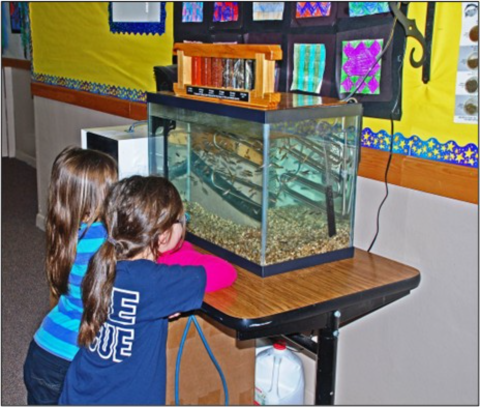
Along the West Coast, salmon and trout are threads in the cultural fabric. They have sustained Native Tribes, fueled the economies of entire towns, and sparked wonder in countless anglers. They have even found their way into thousands of schools. Through state fish and wildlife agency salmon and trout in the classroom programs, students are rolling up their sleeves and becoming fish stewards.
In Oregon, the Salmon and Trout Enhancement Program (STEP) extends to over 800 classrooms from coastal towns to high schools tucked inland. “Through STEP we work closely with our agency staff, state managed hatcheries, volunteers, and teachers to turn science lessons into something unforgettable for students,” said Marty Olson, STEP Coordinator at the Oregon Department of Fish and Wildlife (ODFW). Each fall, ODFW staff and a small army of volunteers deliver fertilized eggs to schools. The tanks that hum quietly in corners become miniature watersheds where students take part in real-world biology. It’s more than a fun break from textbooks; it’s an initiation into conservation and the delicate balance of freshwater ecosystems.
Across the border in California, over 50,000 students take part in the state’s Classroom Aquarium Education Program (CAEP) annually. Genelle Treaster, a fish and wildlife interpreter for the California Department of Fish and Wildlife (CDFW), coordinates over 500 schools across her region. “Our program has provided hands-on education and a connection to nature since 1993,” said Treaster. “Some of the current teachers enrolled in the program got involved because they remember their own childhood classroom experiences with salmon or trout.” Like Oregon, California’s program works with state hatcheries, CDFW staff, and a volunteer network to get eggs delivered and tanks set up.
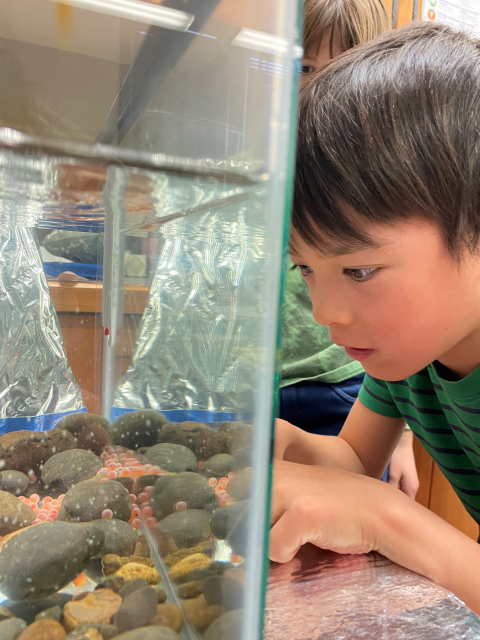
Once the eggs arrive, classrooms come alive. Students test water clarity and temperature like lab techs. They chart data. Some classrooms fold the fish into lessons on math, history, and even art. Perhaps most importantly, students witness what textbooks can’t quite capture. Red translucent eggs stirring in cold water. Small fish eyes appearing. The first wiggling movements of hatched fry. By the time the fry are ready for release, about six to eight weeks after arriving as eggs, these students have learned about the life cycle of fish, habitat and food needs, and how their actions can help or harm an entire species.
Some high school students take the lesson even further. With guidance from state biologists and teachers, they raise their fish beyond fry, all the way to sturdy fingerlings. “Several high schools in Oregon have scaled up from the classroom fish tanks to small scale, educational hatchery programs that include larger recirculating tanks, committing the students to a longer time as caretakers,” adds Olson. “These older students learn aspects of hatchery practices for fish rearing such as feed ratios and monitoring ammonia levels.”
In California, some CAEP high school students are working with UC Davis researchers to study thiamine levels in their fish. “This partnership allows students to help scientists with real-world research highlighting the important connection between food resources and fish health,” adds Treaster. Recent years have seen low thiamine in hatchery fish, which can cause swimming abnormalities, low energy, and high death rates in young salmon. Researchers think the problem comes from salmon eating more anchovies as other prey becomes scarce. Anchovies contain an enzyme that breaks down thiamine, reducing this important vitamin in salmon. As a result, female Chinook salmon that feed heavily on anchovies return to rivers with low thiamine in their eggs, leading to health problems in their offspring.
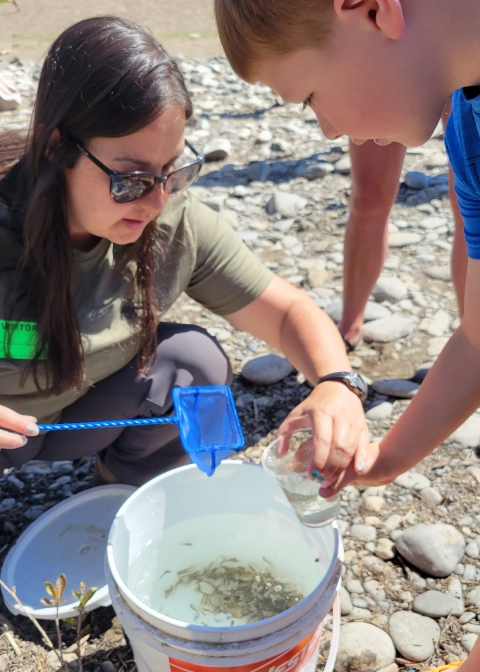
Whether raised to fry or fingerling stage, each fish is ultimately released into local waterways during classroom field trips to preapproved rivers, lakes, and reservoirs. These classroom fish represent less than .001 percent of the millions of fish stocked annually in Oregon and California. They aren’t meant to bolster runs or tip population scales. In fact, few are expected to make it to adulthood. Instead, they serve a different calling as ambassadors to conservation.
“California is a fish state,” said Marnin Robbins, Interpretive Services Manager at CDFW. “We historically had salmon going up every river.” Robbins points out that these fish species have been interwoven with people since time immemorial. They’re interwoven into entire ecosystems. And for thousands of students, they are now interwoven into education. “Through these classroom programs we are helping to keep those connections alive, making sure there is a next generation of stewards so that we can still be a fish state into the future.”
This hands-on learning and connection are made possible partially through the Sport Fish Restoration Act (SFR), administered by the U.S. Fish and Wildlife Service’s Office of Conservation Investment. SFR dollars, paid by manufacturers of fishing tackle and a portion of the fuel tax attributable to motorboat fuel use, fund clean water, fisheries management, hatcheries, and state fish and wildlife agency programs. In the case of these salmon and trout programs, SFR funds support ODFW and CDFW staff time and the development of teacher training and program curriculum that keep the classroom tanks humming. Salmon and trout in the classroom remind us that conservation is more than policy and management, it is about people. By empowering students to raise fish with their own hands, these programs introduce youth to the wonder of the salmon and trout life cycle, their delicate habitats, and their vital role in the rivers and coastal waters of the West Coast.
Written By