Written By


To celebrate America's 250th birthday, we at the U.S. Fish and Wildlife Service are highlighting the incredible wildlife that calls this beautiful country home. From American icons to subtle specialists, join us as we highlight seven species each week: one species for each of the 250 days leading up to America's 250th birthday.
Chinook salmon (Oncorhynchus tshawytscha)
Chinook salmon are the largest Pacific salmon species and a keystone of river and coastal ecosystems in the west. They undertake long migrations from the ocean to freshwater rivers to spawn. Once spawning is complete, their carcasses nourish the ecosystem, feeding bears, eagles and even forest soils.

Humpback whale (Megaptera novaeangliae)
The humpback whale is known for its haunting songs, massive size and impressive breaching displays. These giants travel thousands of miles each year between breeding and feeding grounds. In the winter, they're most often spotted in tropical waters near Hawaii, Mexico, Central America and the Caribbean.

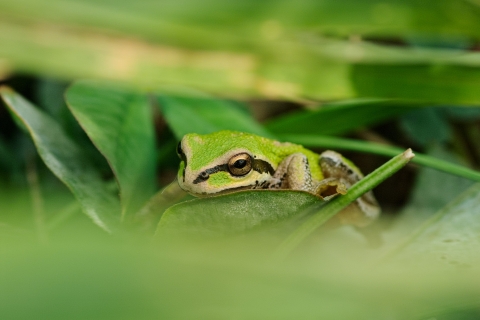
Pacific treefrog (Pseudacris regilla)
The Pacific treefrog is a tiny amphibian with a big voice found in forests, grassland and even yards in the west. In the winter, they take shelter under logs, rocks or leaf litter. As rains begin, they get ready for early spring breeding season in temporary ponds.
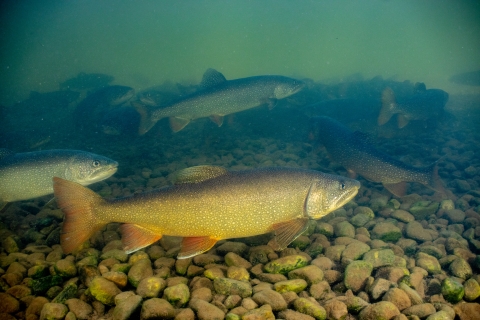
Lake trout (Salvelinus namaycush)
The lake trout is a cold-loving fish found in deep, clear lakes across the northern U.S. and Canada. As spawning season comes to an end, they retreat to deeper waters, remaining active under the ice all winter long.
Fisher (Pekania pennanti)
The fisher is a secretive and agile predator of North America's northern forests. Despite its name, it rarely eats fish! Fishers are one of the few predators bold enough to hunt porcupines. They remain active all winter, climbing trees and using snow tunnels to travel.

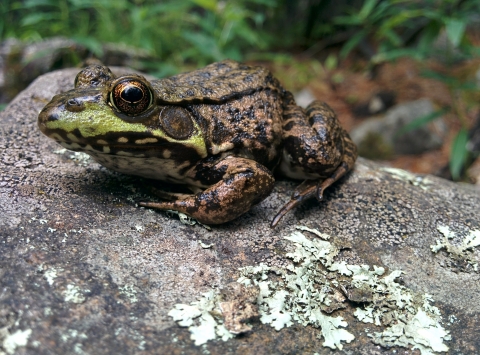
Green frog (Lithobates clamitans)
Green frogs are common near ponds, lakes and slow-moving streams throughout the eastern United States. These frogs often spend winters burrowed into mud at the bottom of ponds, awakening with spring warmth to sing once again.
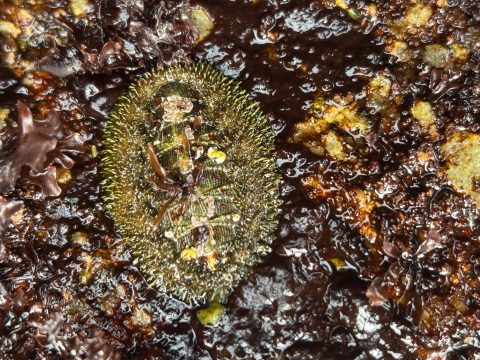
Mossy chiton (Mopalia muscosa)
Mossy chiton is a small marine mollusk found clinging to rocks in intertidal zones of the Pacific Northwest. Named for the greenish, hairy girdle that gives it a moss-like appearance, this chiton is a master of camouflage.
Written By