Written By


Around the world, oil and chemical spills are considered especially injurious to wildlife and habitat. In the Southeastern United States, the dedicated individuals who assess the damages of these environmental disasters are members of the United States Fish and Wildlife Service’s Southeast Natural Resource Damage Assessment and Restoration Program. These are their stories … dun dun.
While you won’t see this at primetime on any major TV Network, implementing the Natural Resource Damage Assessment and Restoration (NRDAR /ˈnêrˌdär/ ) process is crucial after an oil or hazardous substance spill.
Why? Here’s the law (or doctrine to be more accurate).
The Public Trust Doctrine is the principle whereby certain natural and cultural resources are preserved for public use, and the government owns and must protect and maintain these resources for the public’s use.
And here’s the NRDAR.
When these natural and cultural resources may be or have been injured by oil or hazardous substances, the U.S. Fish and Wildlife Service can use NRDAR regulations to bring legal claims on behalf of the American public against parties responsible for injuries and obtain damages to restore the injured resources at no cost to the public.
While the NRDAR program does NOT conduct the actual spill response or hazardous substance removal, the program works in conjunction with the Ecological Services Spill Response program to collect data and begin injury assessment.
No matter the magnitude of the spill, the goal of every NRDAR is the same:
Make the environment and the public whole by restoring, replacing, and/or acquiring the equivalent of the injured resources, the services provided by the resource(s), and any interim losses.
The Service, along with other state and federal agencies, brings the injured resources back to their condition prior to the spill or incident, make up for years of losses, and replace lost services through time.
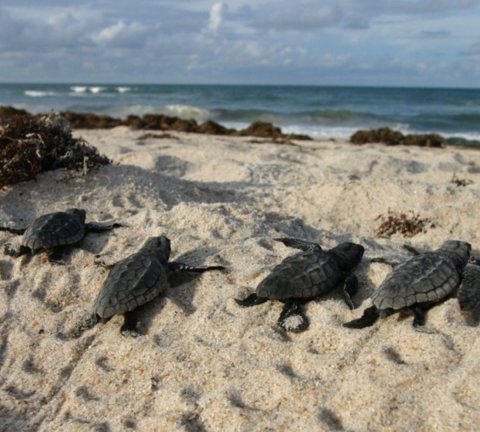
Injured natural resources may include:
endangered and threatened species
migratory birds
nesting sea turtles
Federal lands
A NRDAR claim for injury to the ecosystem services may include:
lost boating days
fishing
bird watching
hiking
cultural practices
education and outreach activities
After determining the extent of the injuries, the next step of the NRDAR process is to develop restoration plans and projects. Restoration projects must have a nexus to the injury—meaning the project must help directly restore the injured species or habitat.
For example, if a sea turtle was injured during an oil spill, projects included in the restoration plan would directly benefit sea turtles, such as removing nest predators or increasing sea turtle nesting habitat.
Before the Service can implement restoration projects, we must recover the damages ($$$) via a negotiated settlement or litigation.
Once the money is in the bank and the plans are approved, it is finally time to break ground on the projects that will help restore injured resources and habitats.
NRDAR in Action
The 2010 Deepwater Horizon oil spill resulted in catastrophic damage in the Gulf of Mexico. As approximately 134 million gallons of oil spilled into the ocean, the death toll for species that call the Gulf home became massive. Scientists estimate that up to 800,000 coastal birds, 160,000 juvenile sea turtles, 8.3 billion oysters, 1000 dolphins, and five million fish died as a result. Additionally, tens of thousands of workers in the region lost their jobs as tourism and fishing halted.
The NRDAR process for this monumental spill required collaboration among the Department of Interior, National Oceanic and Atmospheric Administration, Environmental Protection Agency, United States Department of Agriculture, as well as the five states in the region. Assessing the extent of the injuries and the legal proceedings that followed took several years.
On April 4, 2016, a Federal District judge approved the largest environmental damage settlement in United States history –$20.8 billion. $8.8 billion from the settlement is being used to fund hundreds of NRDAR projects in the Gulf.
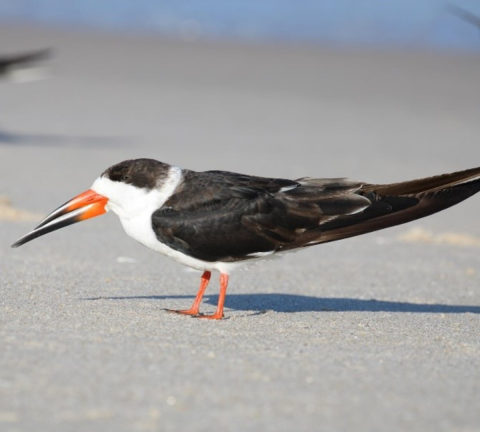
One project funded by the Deepwater Horizon settlement aims to restore Breton Island off the coast of Louisiana to improve nesting habitat for coastal birds like brown pelicans, terns, skimmers and gulls. Another will improve visitor access at Bon Secour National Wildlife Refuge in Alabama.
You can find more information about these and other Deepwater Horizon restoration projects at https://www.gulfspillrestoration.noaa.gov/.
One of Many
As one of the largest oil spills in the history of the United States, Deepwater Horizon is often top of mind when we think of oil spills and NRDAR cases. Unfortunately, Deepwater Horizon is only one of many. There have been hundreds of spills and NRDAR cases in the United States. You can learn more about other hazardous chemical spills and the Department of Interior’s restoration program at https://www.doi.gov/restoration.