Written By

As part of the Flags Across America initiative for America’s 250th anniversary, the U.S. Fish and Wildlife Service is sharing stories from the places where our commemorative flags have traveled. From historic hatcheries to vibrant refuges, each stop celebrates conservation as an enduring American value. Join us as we highlight the lands, waters, and wildlife that connect our nation’s past, present, and future.
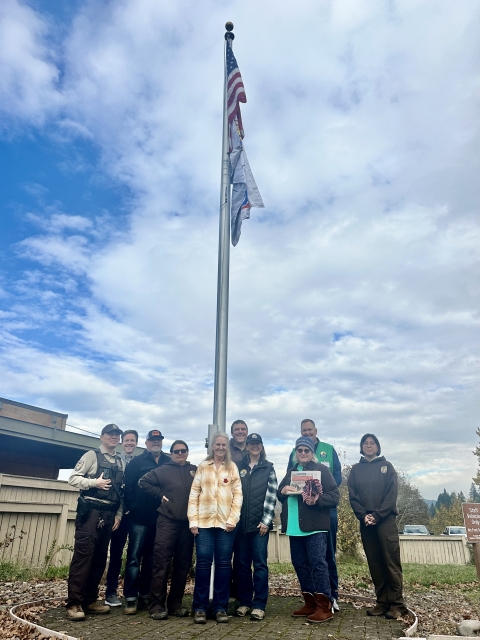
In November 2025, the flags visited Tualatin River National Wildlife Refuge, a special place for residents across Sherwood, Oregon, and the greater Portland area.
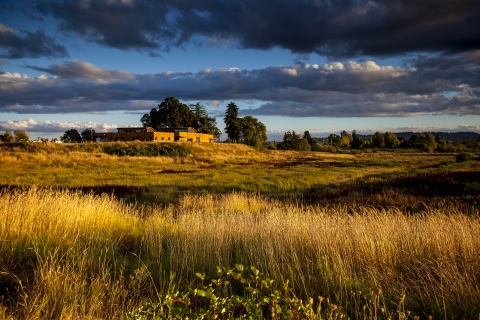
Located just outside Portland, the refuge lets people escape the bustle of urban life and recharge in the comfort of nature.
The Fish and Wildlife Service knows how important this is. With 80% of Americans living in cities and suburbs, the future of conservation depends on their ability to connect to nature, not to mention the importance to people’s quality of life.
Over 100 national wildlife refuges are within 25 miles of 250,000 people or more, and Tualatin River is one of eight flagship urban national wildlife refuges.
“Tualatin River National Wildlife Refuge is a place where people find peace, belonging, and a deep connection to the land. Our community is passionate about seeing this refuge thrive for generations,” says Rebecca Gómez Chuck, refuge manager at Tualatin River National Wildlife Refuge Complex. “Here, everyone is welcome to explore our public lands, learn, and feel at home — because belonging is at the center of everything we strive for.”

In keeping with the idea of community knowing best, the refuge had its start when citizens and local leaders approached us to have the land set aside as a national wildlife refuge national wildlife refuge
A national wildlife refuge is typically a contiguous area of land and water managed by the U.S. Fish and Wildlife Service for the conservation and, where appropriate, restoration of fish, wildlife and plant resources and their habitats for the benefit of present and future generations of Americans.
Learn more about national wildlife refuge . Tualatin River National Wildlife Refuge was officially designated and established in 1992.
One of the refuge’s claims to fame is as a bird-watching destination. Over 200 species of birds visit the refuge during the year. Depending on the time of year, you might see migratory songbirds, shorebirds, Arctic nesting birds, and waterfowl, lots of waterfowl. During the winter, over 50,000 birds have been observed in a single day. You can also see bald eagles and other types of raptors.
Even if you aren’t into birding (although how could you not be!), Tualatin River National Wildlife Refuge has much more to offer. You can view many habitats of the Pacific Northwest, including wetland, oak woodland, forest, and riparian riparian
Definition of riparian habitat or riparian areas.
Learn more about riparian . As you recharge your batteries at the refuge, again depending on when you visit, you might be lucky enough to see:

- The spectacular pink blooms of Nelson’s checker-mallow or the bright flowers of golden paintbrush. We removed both plants from the Federal List of Endangered and Threatened Plants in 2023.
- Maybe a western pond turtle or a rough-skinned newt.
- A North American river otter or even a bobcat.
All right outside Portland.
Next up, we follow the flags to Don Edwards San Francisco Bay National Wildlife Refuge in the heart of California's high-tech industry. There, you can see Anna's hummingbird, one of only three hummingbird species that live year-round in the United States and Canada. Stay tuned for the next chapter on this historic tour!
Recreational Activities
Written By