By Charlotte Foster, Conservation Legacy WaterCorps and AmeriCorps Service Member for the Western Washington Fish and Wildlife Conservation Office.
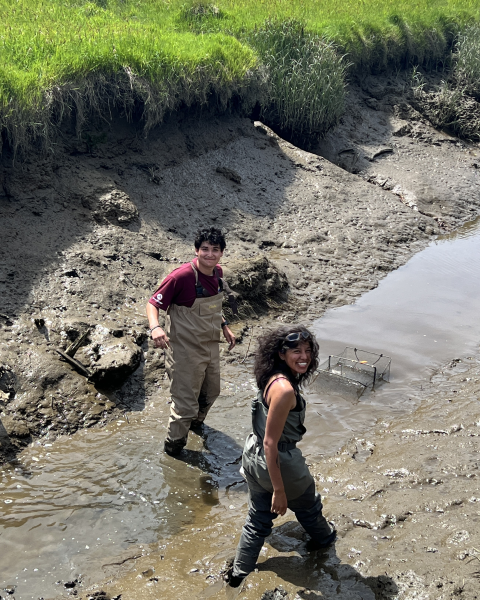
As we arrived at the boat launch the sun was just rising over the distant mountains. I was surprised at how many crab traps we were able to fit in the back of the airboat. I have never been on one before and was a little nervous about it. We threw the anchor on deck and put on our double ear protection. The captain started the engine, and a huge gust of wind caused the salty water to spray over us. We climbed aboard and took off toward our first European green crab (invasive species) trapping site. The colors of the sunrise were mirrored across the surface of the water as eagles, cormorants, and herons flew overhead. We started straight toward a muddy sand bar that was covered with seaweed and I closed my eyes and braced myself for impact. But when I opened them, we were gliding over the land. I was amazed at the lengths that people in this field will go to get the job done. This was one of many of the wonderful experiences that I had during my time with the U.S. Fish and Wildlife Service’s Western Washington Fish and Wildlife Conservation Office as a WaterCorps and AmeriCorps service member.
My name is Charlotte Foster, and I grew up in Neah Bay, Washington, loving anything that has to do with the outdoors and wildlife. I am a member of the Makah Tribe. I’ve always had a strong appreciation for the natural world and this grows stronger the more I learn. I bought my first pair of binoculars in high school when I got into birding and plant identification and was astounded at how much I still had to learn about my own backyard. I knew this was my calling and that I would love to share this experience and knowledge with others, so I went to the University of Washington Tacoma to get my degree in environmental education. My goal is to become an environmental educator with my tribe.
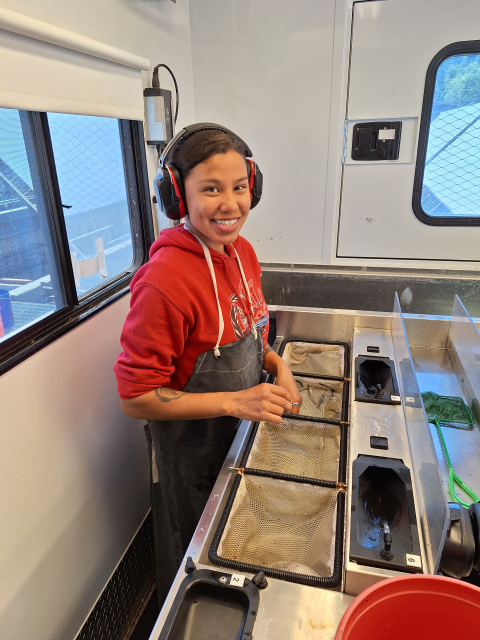
Participating in this AmeriCorps service position has given me the opportunity to work with many different partners on many different projects. From spending starry nights on Lake Washington performing predation surveys, to taking groups of children on tours of the Grays Harbor National Wildlife Refuge to help them identify shorebirds. Every day was a new adventure.
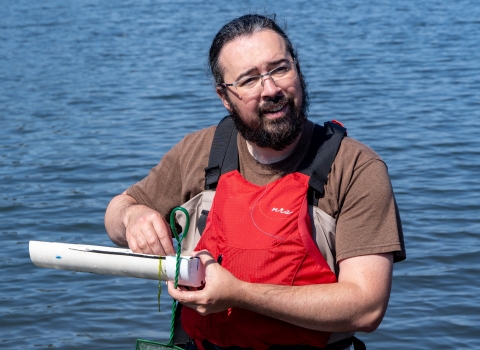
One of my favorite projects that I got to help with was electrofishing the Tsoo-Yess River in my hometown to monitor the juvenile salmon. This involved sending an electric current through a small area of the river using a portable backpack. This stuns the fish, which makes it easier to catch them using nets. From there, we collected and recorded measurements of the salmon, tagged, and then released them. It was great being able to take part in such important monitoring efforts that impact my community. Salmon from the Tsoo-Yess River are an important food resource for community members. Many participate in recreational fishing, commercial fishing, as well as the drying and canning of the salmon to have a year-round supply.
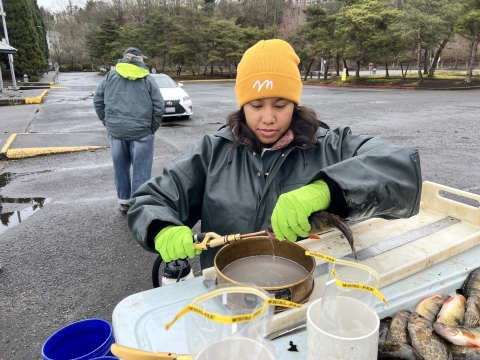
Another project that I got to spend a good while on was the diet sampling of non-native predatory fish from Lake Washington in the effort to better understand their potential impacts on native salmon. We pumped the stomachs of yellow perch, black crappie, smallmouth bass and other species to collect their stomach contents. We then brought those diet samples back to the lab to look at them under the microscope.
I was trained on how to identify and document the fish and aquatic invertebrates we collected from the stomach contents of these predatory fish. This was my favorite part of the project because it was interesting to see how the numbers and diversity of invertebrates and fish changed over the season and among the non-native fish species. I identified organisms like stoneflies, neomysids, snails, tiny clams, sockeye fry, and much more. I found yet another world of identification to explore!
My goal of becoming an environmental educator with my tribe will be supplemented from my time working with the U.S. Fish and Wildlife Service. This experience has given me a competitive edge by providing me with plenty of great skills that are valuable in getting me closer to my next goal. My fish identification, event organizing, and educational outreach skills, as well as the experience of working on a strong team will be great foundational knowledge to teach people why natural resource conservation is so important. I am more proficient in many different scientific methods such as PIT tagging, collecting eDNA, performing snorkel surveys, and adipose fin clipping. I can use personal experiences to better explain to folks how these scientific methods work and how they are important in the environmental field. And who knows? Maybe one day I will be the one taking people to learn about wildlife on an airboat.