Written By


To celebrate America's 250th birthday, we at the U.S. Fish and Wildlife Service are highlighting the incredible wildlife that calls this beautiful country home. From American icons to subtle specialists, join us as we highlight seven species each week: one species for each of the 250 days leading up to America's 250th birthday.
American alligator (Alligator mississippiensis)
American alligators are iconic reptiles native to southeastern states. Adult males can measure more than 14 feet and weigh more than 1,000 pounds. Alligators play a key role in wetland ecosystems, digging "gator holes" that provide water for countless other species during dry spells.

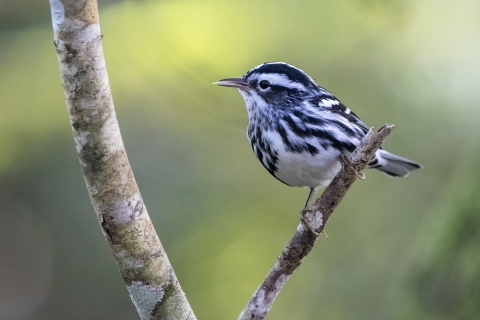
Black-and-white warbler (Mniotilta varia)
Black-and-white warblers spend winters in parts of the southeastern U.S. and across much of Mexico, Central America and the Caribbean. These warblers will move every direction along trees as they forage for insects.
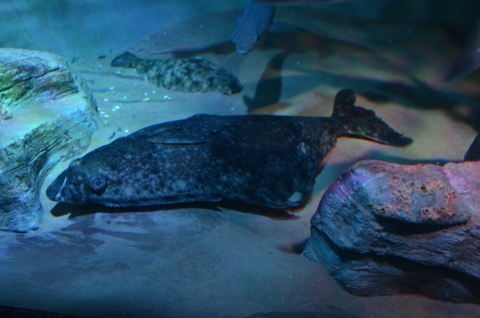
Atlantic halibut (Hippoglossus hippoglossus)
The Atlantic halibut is the largest flatfish in the world, with some growing up to 15 feet long and weighing more than 700 pounds! Found in cold waters of the northern Atlantic, they spend much of their time on the ocean floor.
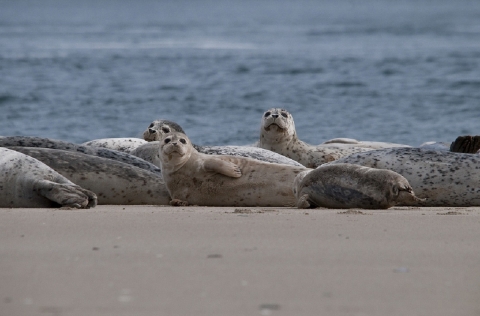
Harbor seal (Phoca vitulina)
Harbor seals are one of the most widespread marine mammals of North America. In the fall, pups are learning to hunt on their own and it’s an important time to fatten up for the cold months ahead.
Brook trout (Salvelinus fontinalis)
Brook trout thrive in cold, clear streams. Fall is spawning season - a time to avoid disturbing streambeds. Females use their tails to create shallow nests in gravel where eggs are laid. Males compete for a chance to fertilize the eggs.

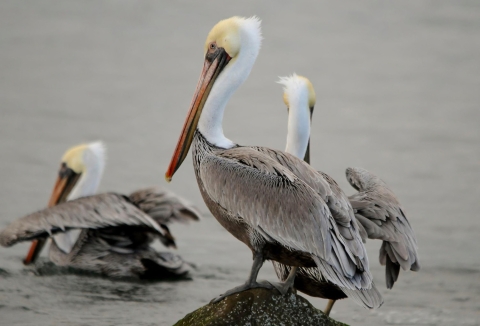
Brown pelican (Pelecanus occidentalis)
Brown pelicans are coastal icons known for their dramatic plunge-dives and oversized throat pouches. These seabirds cruise just above the waves along the coasts, where they feed and roost year-round. You’ll often spot them gliding in formation over the surf or resting in large groups near harbors and estuaries.
Coho salmon (Oncorhynchus kisutch)
In November, coho salmon are reaching the end of their epic journey from the ocean back to the freshwater streams where they were born. After years at sea, they return to spawn in cold, clear rivers, especially in the Pacific Northwest and Alaska. Males develop a hooked jaw and bright red sides, while females dig gravel nests to lay their eggs. This seasonal migration is not only vital for the next generation of salmon, but also for nourishing entire stream ecosystems.

Written By