South San Francisco Bay Restoration

Habitat management, Habitat restoration, Recreational access
South San Francisco Bay Restoration
South Bay Salt Pond Restoration Project

States

California

Ecosystem

Wetland

Subject

Climate change
Floods
Recreation
Wetland restoration

Project description

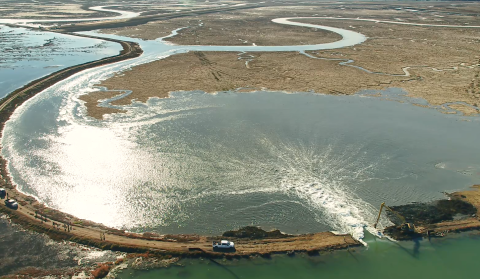
The South Bay Salt Pond Restoration Project is a 50-year effort to restore 15,000 acres of tidal marshland in south San Francisco Bay. Industrial salt makers had drained the marshes and used them as salt evaporation ponds since the mid-19th century. Restoring the marshes should help boost the bay’s resilience to storms and flooding.   

The restoration effort dates from 2003, when the late Senator Dianne Feinstein helped negotiate the land’s purchase from agribusiness giant Cargill. Marsh restoration will also improve recreation access and reduce flood risk for some communities in this region of 8 million people.

Two of three project sites are in Don Edwards San Francisco Bay National Wildlife Refuge, a natural resource gem and the largest landholder along the bay's edge; the other site is a state ecological reserve. Together the three sites account for the West Coast’s largest tidal wetland restoration. The restoration is scheduled for completion by 2050.

The South Bay Salt Pond Restoration Project is one of many nature-based solutions in which the Service is partnering to meet environmental challenges and conserve America’s wildlife. Nature-based solutions are sustainable practices that use environmentally friendly features or processes to make landscapes more resilient.   

More information: South Bay Salt Pond Restoration Project

Project Management Team

California State Coastal Conservancy
U.S. Fish and Wildlife Service
California Department of Fish and Wildlife
Santa Clara Valley Water District
U.S. Army Corps of Engineers


Donors

California Department of Fish and Wildlife Prop. 1 Grant
California Department of Water Resources
California Wildlife Foundation
California Wildlife Conservation Board
Caltrans
City of Mountain View
Ducks Unlimited
National Oceanic and Atmospheric Administration (NOAA) Coastal Resiliency Grant
Pinpoint Foundation
San Francisco Restoration Authority (Measure AA funds)
Save the Bay
U.S. Environmental Protection Agency 
U.S. Fish and Wildlife Service, National Coastal Wetlands Conservation Grant and North American Wetlands Conservation Grant programs

 

Library

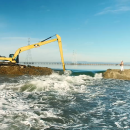
A bulldozer works to remove part of an earthen levy separating two bodies of water.
On December 13, the South Bay Salt Pond Restoration Project partners and the U.S. Fish and Wildlife Service opened a 300-acre former industrial salt pond to the Bay with a celebration marking the 20th anniversary of their joint restoration venture. This major milestone event is part of an ambitious...
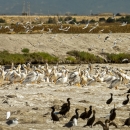
a bunch of different kinds of birds on a beach
Since the 19th century, close to 90 percent of the marshland that historically ringed San Francisco Bay has been lost to development. The effects of that loss include diminished wildlife habitat, increased flood risk, degraded water quality, and far fewer opportunities for nature-based recreation.

Facilities

White pelican flying over a marsh with a city in the background.
In the heart of California's high-tech industry lies a wildlife oasis in an urban sea with 30,000 acres of habitat for millions of migratory birds and endangered species. Established in 1972 through local activism, the refuge provides not only critical habitat for threatened and endangered species...

News

Aerial view of sea and island shows shoreline bolstered by oyster reefs
When the U.S. Fish and Wildlife Service uses nature-based solutions to fortify landscapes against flooding, wildfire, drought and invasive species, it boosts biodiversity and human well-being. As wildlife habitat improves, nearby communities realize related gains in water quality, recreation...

Initiatives

A man and a woman dressed in bright orange safety gear walk across a saltmarsh during a deer hunt
Across North America, hunting was a largely unregulated activity for individuals and commercial entities until the 1800's, when citizens began to ask whether wildlife populations could continue at healthy levels without checks on hunting. The legal framework that has since developed grew out of a...
hand painted glass slide of wetland with plants, bird
Wetlands are one of the most productive and biodiverse habitats in the world. Although they cover only six percent of Earth’s land surface, 40 percent of all plant and animal species live or breed in wetlands. Threatened and endangered species are no exception, with approximately half of all...

Programs

A bright blue sky obstructed by fluffy white clouds reflected off of a stream shot from inside a kayak
The U.S. Fish and Wildlife Service manages an unparalleled network of public lands and waters called the National Wildlife Refuge System. With more than 570 refuges spanning the country, this system protects iconic species and provides some of the best wildlife viewing opportunities on Earth.
Gathering of Puffins on brown rock
The Coastal Program is one of the U.S. Fish and Wildlife Service’s most effective resources for restoring and protecting fish and wildlife habitat on public and privately-owned lands. We play an important role in promoting the Service’s mission and priorities, delivering landscape-scale...