Location
States
ArizonaEcosystem
WetlandIntroduction
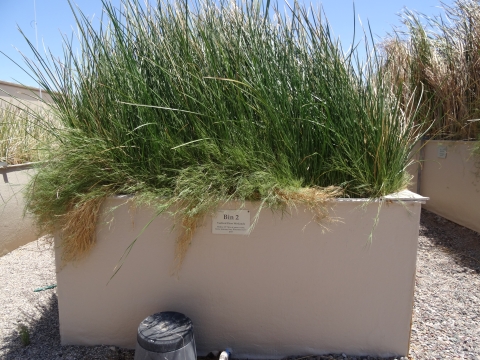
Water supplies are limited in the southwestern U.S. and water resource managers strive to beneficially utilize all available water sources. Desalination of brackish groundwater provides an additional drinking water supply, however, in inland areas, disposal of desalination waste concentrate is a major challenge. Current concentrate management alternatives require either high capital and power costs, or large land areas. Vertical flow treatment wetlands (VFTW) are believed to be a low-cost, environmentally sustainable, concentrate management technology. The Goodyear Pilot Wetlands, previously located in Goodyear, Arizona, provided a unique opportunity to conduct research in a controlled, systematic manner allowing for the development of guidance to facilitate implementation of this innovative technology.
In 2012, Goodyear produced about 3.5 million gallons per day (MGD) of drinking water from brackish water desalination at the Bullard Water Campus Reverse Osmosis facility which generated about 0.5 MGD of concentrate. The concentrate is currently discharged to the sewer system for treatment at a water reclamation facility. Concentrate disposal via sewer discharge increases Total Dissolved Solids (TDS) concentrations of treated effluent and is not sustainable in the long-term, especially as concentrate volumes increase over time; 28 MGD of concentrate is anticipated by 2035.
Through this project, vertical flow treatment wetlands (VFTW) were tested as a long-term, cost-effective strategy to deal with increasing volumes of brackish concentrate in the future. Past BOR Science and Technology (S&T) research at the VFTW demonstrated that the treatment process supports salt tolerant vegetation and removes regulated metals to meet surface water discharge standards. Research conducted during the 2016 S&T study built on past work and focused on evaluating the full-scale use and implementation of VFTW.
Key Issues Addressed
Disposal of desalination waste concentrate is a major challenge. Current concentrate management alternatives require either high capital and power costs, or large land areas. VFTW are believed to be a low-cost, environmentally sustainable technology. The project leveraged past pilot testing experience, equipment, and partnerships to evaluate the demonstration-scale viability of VFTW for concentrate management. The project sought to determine: how VFTW could be implemented in a demonstration-scale application; what wetland design criteria needed to be considered; and how could wetlands be incorporated into city education and recreation plans to provide additional benefits?
Project Goals
- Pilot Study: Provide a controlled wetland research pilot with the potential to provide results that are broadly applicable to ongoing concentrate management studies and BOR Science and Technology research.
- Project Costs and Sustainability: Develop a cost effective, environmentally sustainable, advanced treatment alternative that increases reuse of several “waste” water resources, provides public amenities and educational opportunities, and supports river and habitat restoration.
- A Model for Other Communities: Provide a framework for other inland communities as water managers optimize their water supply portfolios and the need for cost-effective and sustainable concentrate management options increase.
Project Highlights
Tech for the Future: The vertical flow treatment wetlands study proved to remove regulated constituents like selenium, yet did not reduce brackish concentrate, expected to increase from 0.5 to 28 MGD by 2035 for the city of Goodyear, Arizona.
- Pilot Project for Demonstration Facility: The City of Goodyear, in cooperation with Reclamation, managed the pilot wetlands including operation, monitoring and water, soil, and vegetation sampling in preparation for operating a demonstration-size facility.
- Partnership Approach: Goodyear and the BOR Phoenix Area Office supported continued research at the pilot wetlands, and BOR provided funds to support Denver TSC technical expertise. Goodyear also partnered with the Maricopa County Parks & Recreation Department to study the potential to locate a demonstration site and subsequently, full-scale wetland treatment facilities at the Estrella Mountain Regional Park.
- Furthering Science: The Goodyear Wetlands Pilot provided a controlled wetland research facility with the potential to provide results that are broadly applicable to ongoing concentration management studies and Reclamation S&T research including the Oxnard Saline Demonstration Wetland, the City of Waco Brazos River Demonstration Wetland, and the data compilation efforts of the Concentrate Management Toolbox. Years of research at the Goodyear Wetlands Pilot supports the potential to share information, augment existing research, collaborate on future research projects, and benefit from the expertise of Reclamation staff research efforts. This potential to share and build on existing research projects promotes a cost-effective and efficient opportunity to optimize research under the S&T program and to maximize the return on program funding.
- Supporting Other Communities: The City of Goodyear sought to develop a cost effective, environmental, concentrate management alternative that would increase reuse of several “waste” water sources, provide public amenities and educational opportunities and support river and habitat restoration. The results from this project provide a framework for other inland communities as water managers optimize their water supply portfolios and the need for cost-effective and sustainable concentrate management options increase. The multiple benefits of this method provide tremendous potential for widespread adoption.
- Innovation Awards: The project won the following awards: 1) 2016 Top Project Award selected by Water & Wastes Digest’s editorial staff, the award recognizes the most innovative and remarkable water or wastewater projects in the U.S.; and 2) WateReuse Award (Innovative Project of the Year 2016) selected by the City of Goodyear.
Lessons Learned
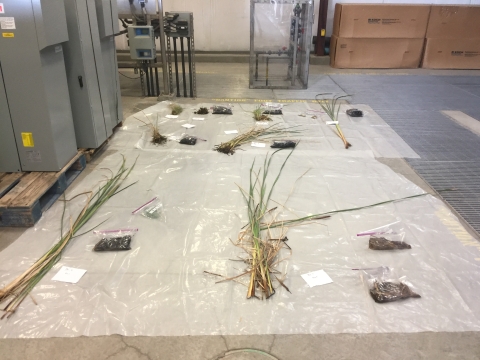
The VFTW demonstration study removed regulated constituents such as selenium below regulatory limits, but overall did not reduce brackish concentrations. The wetlands increased brackish concentrations due to evapotranspiration. The VFTW eject would thus need to be blended with another water source to reduce total dissolved solid concentrations. One potential blending water source has poor water quality and would require treatment and the other source is currently being used beneficially.
Reclamation primarily managed the pilot and all sampling activities initially. Over time, the City of Goodyear provided funding for its Water Operators to manage the pilot and conduct field and laboratory water quality sampling. This resulted in increased interest and understanding of pilot operations that could be utilized at a potential Demonstration Facility. As such, it is important to promote partner involvement from the start of the project to increase vested interest.
Project managers should develop a data management plan before beginning the project to facilitate consistent data analysis and reporting methods and to ease access and use of the data. A data management system was developed after the fact and required a huge effort to import all data and report all data in consistent formats for analysis. In hindsight, it would have been important to develop a data management plan before beginning the project to facilitate consistent data analysis and reporting methods and to ease access and use of the data.
Next Steps
- Goodyear is located in the West Salt River Valley where agriculture and natural land is rapidly being converted to residential development. In addition, regional planning is underway to return surface water flows and to restore and protect habitat in the Gila River which flows through the region (it is now dry or is effluent dependent). Municipalities will use brackish groundwater supplies as their “next bucket of water” when cost effective advanced water treatment and concentrate management options are available. Reclamation’s West Salt Valley River Basin Study is nearing completion and the West Salt Valley River Basin partners seek individual and regional solutions to optimally manage water portfolios.
- Although Goodyear decided to not pursue VFTW treatment at this time, there may still be opportunities in the future for VFTW to provide an alternative for inland management of concentrate.
Funding Partners
- U.S. Bureau of Reclamation, Phoenix Area Office (PXAO)
- City of Goodyear provided a cost share match to PXAO
Resources
- Bureau of Reclamation, Research and Development Office, Project Website
- Bureau of Reclamation, Research and Development Office, Project Information Bulletin
- U.S. Bureau of Reclamation, Denver Technical Services Center
- U.S. Bureau of Reclamation, Phoenix Area Office
Contacts
- Deborah Tosline, U.S. Bureau of Reclamation, dtosline@usbr.gov
- Katherine Guerra, U.S. Bureau of Reclamation, kguerra@usbr.gov
- Mark Holmes, City of Goodyear, mark.holmes@goodyearaz.gov
- Catherine Hoffman, U.S. Bureau of Reclamation,
- Christopher Waechter, U.S. Bureau of Reclamation, cwaechter@usbr.gov
- Gretchen Erwin, City of Goodyear, gretchen.erwin@goodyearaz.gov
- Collins Balcombe, U.S. Bureau of Reclamation, cbalcombe@usbr.gov
- Richard Huggins, U.S. Bureau of Reclamation, rhuggins@usbr.gov
- Douglas McPherson, U.S. Bureau of Reclamation, dmcpherson@usbr.gov
Case Study Lead Author
Rob Campellone, Senior Research Specialist, University of Arizona
Suggested Citation
Campellone, R. M.. (2020). “Goodyear Pilot Wetlands: Using Wetlands for Inland Treatment of Reverse Osmosis Concentrate for Surface Water Discharge.” CART. Retrieved from https://www.fws.gov/project/goodyear-pilot-wetlands.