The U.S. Fish and Wildlife Service is publishing a final rule to downlist the Santa Cruz cypress (Hesperocyparis abramsiana) from an endangered to a threatened species under the Endangered Species Act (ESA). The reclassification reflects ongoing collaborations by stakeholders to reduce threats to the cypress and improve data on tree locations, resulting in an increase in the number of known trees from 2,300 in 1987 to some 33,000-44,000 today. The best scientific and commercial information available on the status of and threats to the Santa Cruz cypress now indicates that it is no longer in danger of extinction.
“As a result of the collective conservation efforts of federal, state, local and private entities, as well as improved science, the Santa Cruz cypress is one step closer to achieving recovery,” said Steve Henry, Field Supervisor of the Service’s Ventura Fish and Wildlife Office. “While there is still a lot of work to be done before it will be fully recovered, with the continued commitment of partners and the public I am sure we will get there.”
The cypress can be found in the Santa Cruz Mountains of San Mateo and Santa Cruz counties in central California, and was listed as an endangered species in 1987 due to threats from logging, development and agricultural conversion. The ESA has focused conservation resources on recovery planning and projects in partnership with states, local governments, and conservation groups. That focus has largely reduced these threats through the conservation of lands by the California Department of Fish and Wildlife, the California Department of Parks and Recreation, San Mateo County and conservation efforts by private landowners in Santa Cruz County.
“The efforts of partners on behalf of the Santa Cruz cypress, such as the state of California, demonstrate the effectiveness of the Endangered Species Act in catalyzing collaborative conservation,” said Henry. “Recent increases in ESA delistings and downlistings indicate that the Act works when given enough time and resources.”
Despite this positive step toward recovery, the Santa Cruz cypress still faces challenges to its long-term survival. Current threats include competition with non-native species, unauthorized recreational activities, vandalism, and changes in temperature and precipitation as a result of climate change climate change
Climate change includes both global warming driven by human-induced emissions of greenhouse gases and the resulting large-scale shifts in weather patterns. Though there have been previous periods of climatic change, since the mid-20th century humans have had an unprecedented impact on Earth's climate system and caused change on a global scale.
Learn more about climate change .
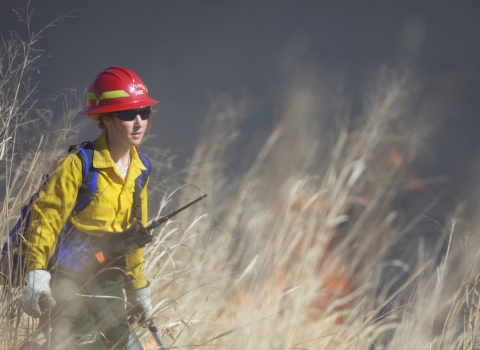
The primary threat to the species’ long-term survival and reproduction, however, is the alteration of fire frequency. While the cypress naturally exhibits a low level of regeneration, extended or reduced intervals between fires – compared to historical levels – can reduce germination and establishment of new seedlings, thus impacting reproductive success.
The Service has determined that while the imminence, severity and magnitude of ongoing threats do not indicate the Santa Cruz cypress is presently in danger of extinction throughout all or a significant portion of its range (the definition of an endangered species), it nevertheless remains likely to become endangered in the foreseeable future (the definition of a threatened species).
The Service’s decision will publish in the February 19, 2016, Federal Register and becomes effective on March 21, 2016.
The public may view materials concerning this final rule at http://www.regulations.gov, using the docket numbers FWS–R8–ES–2013–0092.
Photos of Santa Cruz cypress are available at the Service’s Flickr site at https://flic.kr/s/aHsjHPtD4q.
The Endangered Species Act is an essential tool for conserving the nation’s most at-risk wildlife, as well as the land and water on which they depend for habitat. The ESA has prevented more than 99 percent of the species listed from going extinct, serving as the critical safety net for wildlife that Congress intended when it passed the law 40 years ago. In addition, the ESA has helped move many species from the brink of extinction to the path to recovery, including California condors, Florida panthers and whooping cranes. The Obama Administration has delisted more species due to recovery than any prior administration, including the Oregon Chub, Virginia northern flying squirrel and brown pelican.
Established in 1987, the Ventura Fish and Wildlife Office works to conserve and protect threatened and endangered fish, wildlife and plants across the central and southern California coast, collaborating with communities and conservation partners to build a future that supports both people and our unique and diverse natural resources. For more information, visit http://ventura.fws.gov or follow us on Facebook.
The mission of the U.S. Fish and Wildlife Service is working with others to conserve, protect, and enhance fish, wildlife, plants, and their habitats for the continuing benefit of the American people. We are both a leader and trusted partner in fish and wildlife conservation, known for our scientific excellence, stewardship of lands and natural resources, dedicated professionals, and commitment to public service. For more information on our work and the people who make it happen, visit http://www.fws.gov/cno.
Connect with our Facebook page at http://www.facebook.com/usfwspacificsouthwest, follow our tweets at http://twitter.com/USFWSPacSWest, watch our YouTube Channel at http://www.youtube.com/usfws and download photos from our Flickr page at http://www.flickr.com/photos/usfws_pacificsw/.