


Species that are considered high risk have a well-documented history of invasiveness in at least one location globally, and a high or medium climate match to the contiguous United States.
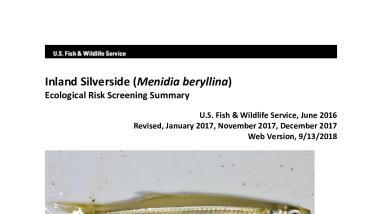
Inland Silverside (Menidia beryllina) is a fish native to the North American Atlantic and Gulf Coasts and the Mississippi River and their drainages. M. beryllinia has been stocked in the United States as food for sportfish and to control aquatic insects and algae. It likely is used as a baitfish, and is used in cancer research. An unidentified species of Gyrodactylus reportedly parasitized M. beryllina; Gyrodactylus salaris is an OIE reportable disease. The history of invasiveness for Menidia beryllina is high. There are many records of introduction, both intentional and accidental. Those introductions have resulted in significant impacts on native species, in some cases displacing them or contributing to extinction. The climate match is high for the contiguous United States; only western Washington, small pockets of the Great Plains, and the upper Midwest had a low match. Areas of high match extended beyond M. beyllinia’s native range in the Atlantic and Gulf coastal areas and the Mississippi River drainage. Part of the range of this species is marine. The climate match only used fresh and brackish water locations as source points and only matched to non-marine areas. The certainty of assessment is high because information on distribution and impacts is clear and well-documented. The overall risk assessment category is high.
Publication date
Type of document
High Risk
Program


