


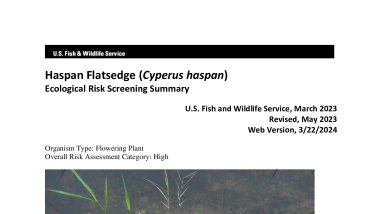
Cyperus haspan, Haspan Flatsedge, is a plant that is native to tropical and subtropical regions in North America, South America, Africa, Asia, and Australia. This species is utilized as an ornamental species, but it is also considered a significant weed of rice and other crops worldwide. It was introduced to Hawaii, where it is reported to form dense stands in boggy habitats and outcompete native plants. The History of Invasiveness for C. haspan is classified as High due to documented negative impacts of its introduction outside of its native range. The climate matching analysis for the contiguous United States indicates establishment concern for this species outside its native range. Locally, the highest climate matches were found in the Southeast and Mid-Atlantic regions, within and adjacent to the native range. The Certainty of Assessment for this ERSS is classified as High due to the documented negative impacts of introduction. The Overall Risk Assessment Category for Cyperus haspan in the contiguous United States is High.
Publication date
Type of document
High Risk
Media Usage Rights/License
Public Domain
Program

