


Facility Rules and Policies
There are lots of fun, interesting and educational activities that you can do on the refuge. We want all of our visitors to enjoy the refuge. Please help us protect this area and its unique wildlife by adhering to the following rules and regulations.
- USFWS Law Enforcement 1-844-397-8477
- Nevada Department of Fish and Wildlife 1-800-992-3030
- AMNWR Manager 1-775-372-5435

The U.S. Fish and Wildlife Service issues permits under various wildlife laws and treaties. Permits enable the public and scientific communities to engage in legitimate wildlife-related activities that would otherwise be prohibited by law.
Permits ensure that activities are carried out in a manner that safeguards wildlife. Additionally, some permits promote conservation efforts by authorizing scientific research, generating data, or allowing wildlife management and rehabilitation activities to go forward.
Contact refuge office for more information 775-372-5435
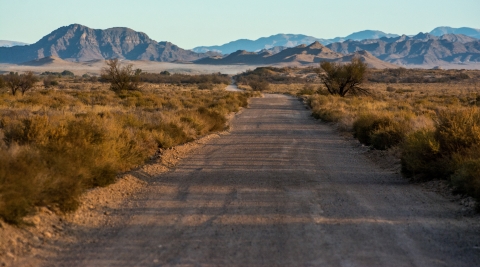
Only registered and insured passenger vehicles are allowed on the refuge. Passenger vehicle is defined as a "motor vehicle that is designed, constructed or adapted for the principal purpose of transporting passengers," but excludes off-highway vehicles. All off-highway vehicles (OHVs), are prohibited because of impacts to the land and natural and cultural resources. OHVs are defined as "a motor vehicle that is designed primarily for off-highway and all-terrain use." This definition includes, but is not limited to, side-by-sides, quads, dune buggies, four-wheelers.
Motorcycles must be registered, insured, and have rear view mirrors.
For nearby locations where OHV use is permitted, please visit the Nevada Off-Highway Vehicles Program.
Please protect wildlife habitat - stay on designated roads and follow posted speed limits.
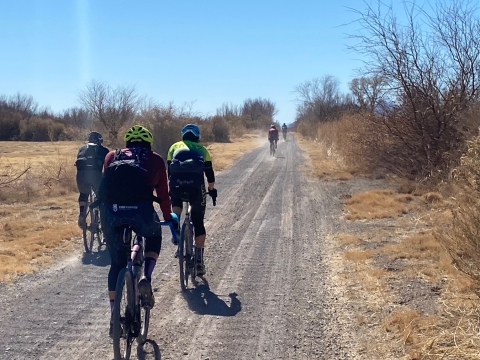
Bicycles are allowed on designated public access roads. Riding bicycles off road or on boardwalks is prohibited.
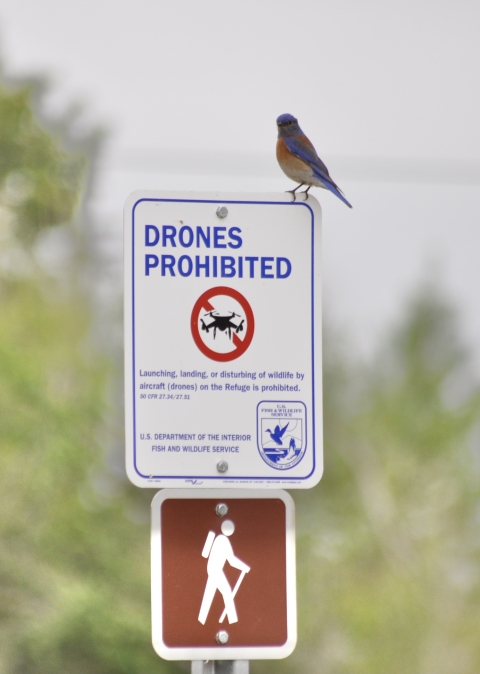
Drones are prohibited on the refuge. Launching or landing aircraft, including drones, or disturbing of wildlife by aircraft is prohibited. 50 CFR 27.34/27.61
Dogs must be on a six foot leashat all times, except when used in association with legal hunting in designated areas. Dogs are allowed on boardwalks; owners must clean up after their pets.
Do not leave pets in vehicles, especially from April through October when daytime temperatures can be high
Even the best behaving pet can unintentionally scare or harm the wildlife, or be harmed by the wildlife. Please keep your pet leashed at all times and remember to clean up after them.
There is no animal dumping permitted on the refuge. If you have a cat, goldfish, or any other pet you can no longer take care of, please find a new home for it away from the refuge. Domesticated animals are ill-adapted to survive on their own, can carry diseases fatal to their wild relatives, and may eat the native species that live here. If you need help finding a new home for your pet, please check the Don't Let It Loose website.
Dispose of trash properly when visiting the refuge. Reduce your impact to the refuge, wildlife, and other visitors by using provided trash cans. When visiting with your dog always bag their poop and place in a trash can. If no trash can is handy, pack all trash out with you.
Hunting is permitted in designated areas (obtain Hunting map) and is subject to all applicable state, federal and refuge specific regulations. Hunting Rules and Regulations.
A flyer may be picked up at the several kiosks near hunting parking areas. The flyer gives additional refuge information and a map of open/closed areas for hunting. The refuge office is open every day from 9 a.m. to 4 p.m. when staff is available. Hunters can call the refuge at (775) 372-5435 for in season updates.
Firearms are not permitted inside the Visitor Center.
Fishing is strictly prohibited on the refuge.
Undeveloped areas are closed to all travel including on foot (see Hunting for exception). Hikers are required to stay on designated boardwalks, roads signed open to foot traffic, and designated public areas for parking, picnicking, and resting.
Please travel the roadways at designed speeds, most are 25 mph. Watch for snakes, lizards, squirrels, etc. crossing roadways and give them the right of way. Do not feed or approach wildlife. Be aware of your surroundings and where you step especially during the warmer months when venomous rattlesnakes, including sidewinders, are still active. Do not disturb, injure or kill them.
Swimming is prohibited outside of Crystal Reservoir. Currently Crystal Reservoir has no water.
Boating is prohibited on the refuge.
Enjoy the petroglyphs, pictographs, fossils, and archeological sites throughout the refuge, but take only pictures. Strive to visit just like an archaeologist. Don’t touch or remove any artifacts - it not only prevents future visitors from being able to enjoy them, but is also a violation of federal law.
If you have questions about historic sites or artifacts, or you are interested in becoming a site steward, please contact the Nevada State Historic Preservation Office.