


What We Do
The Greers Ferry National Fish Hatchery is a dedicated coldwater fish hatchery focused on producing trout to enhance recreational fishing opportunities. These angling experiences not only foster a connection with nature but also generate a positive economic impact for local communities. By providing accessible fishing options, we encourage people to get outside and enjoy the great outdoors. So, the next time you cast your line, you might just reel in a trout that was raised right here at our hatchery!

Management and Conservation
Since 1871, National Fish Hatcheries have been pivotal in addressing conservation challenges impacting America's fish and other aquatic species. The production of fish and various aquatic organisms remains an essential strategy for managing and restoring fisheries, while also supporting habitat conservation efforts. Our hatcheries not only contribute to the sustainability of fish populations but also play a vital role in maintaining the health of aquatic ecosystems across the nation.
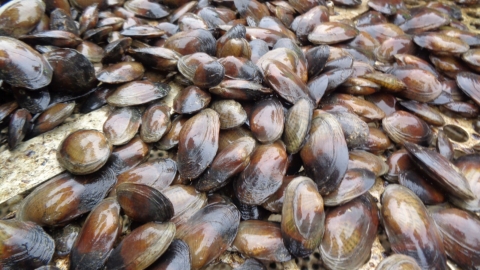
Greers Ferry National Fish Hatchery collaborates closely with the Arkansas Game and Fish Commission to enhance the restoration and recovery efforts for threatened aquatic species, with a particular focus on the endangered speckled pocketbook mussel. This freshwater mussel is native to the upper Little Red River watershed in Arkansas and plays a crucial role in the local ecosystem.
Our Services
Dams and the reservoirs they create significantly alter the natural flow of the rivers they impound, impacting water temperatures downstream. To mitigate these effects, trout are stocked that thrive in the cooler waters released below the dams. This supports recreational fishing opportunities in areas affected by altered water conditions.

The hatchery produces around 700,000 trout annually to stock, primarily in partnership with the Arkansas and Oklahoma state game and fish agencies. This collaboration is crucial for both states in meeting their trout management objectives.
The trout produced here are specifically stocked into the cold tailwaters below dams operated by the U.S. Army Corps of Engineers in Arkansas and eastern Oklahoma, thereby ensuring a sustainable fishery in these regions. This targeted stocking strategy not only supports local anglers but also contributes to the overall health of the aquatic ecosystem.
The trout produced at our hatchery significantly enhances and expands recreational fishing opportunities in waters that have been altered by federal water development projects in both states. This initiative has led to a substantial economic boost for many local communities, generating increased business and income for residents and local governments alike. The positive impact on the economy underscores the importance of our work in fostering both environmental sustainability and community growth.
Our Projects and Research
National fish hatcheries raise fish and other aquatic species – like crayfish and mussels - to help restore and sustain important fish and other aquatic species for the benefit of the American people. Freshwater mussels play very important roles in our rivers and lakes filtering the water and creating habitat for fish and aquatic insects fish like to eat. With declining fish populations and declining freshwater mussel populations becoming prevalent across the world, fish hatchery operations are more important than ever.
The Ozark hellbender is an endangered aquatic species and was listed in September 2011under the Endangered Species Act. Conservation projects are underway to restore the Ozark hellbender population. In partnership with our Ecological Services Division and the Arkansas Game and Fish Commission we build and supply artificial nesting boxes for the Ozark hellbender. The known river habitat where Ozark hellbenders reproduce has declined in the Spring and Eleven Point rivers, so these nesting boxes are placed in those areas to increase the chances of reproductive success and enhance the recovery of the species.
The speckled pocketbook mussel is an endangered mussel and was listed as endangered in February 1989 under the Endangered Species Act. We work in close collaboration with the Arkansas Game and Fish Commission to stabilize and increase numbers of the speckled pocketbook mussel and other imperiled mussels found in the Little Red River watershed. Each spring we set out mussel cages in Greers Ferry Lake to produce mussels. The cages hold host fish that have larval mussels attached to their gills. Once the mussel develops and is no longer dependent on the fish, it drops off into a sand-filled tray at the bottom of the cage. The young mussels use the sand as their temporary home, consuming the natural food available and once they reach a target size they are collected to fulfil continued efforts to enhance the recovery of the species.