To celebrate America's 250th birthday, we at the U.S. Fish and Wildlife Service are highlighting the incredible wildlife that calls this beautiful country home. From American icons to subtle specialists, join us as we highlight seven species each week: one species for each of the 250 days leading up to America's 250th birthday.
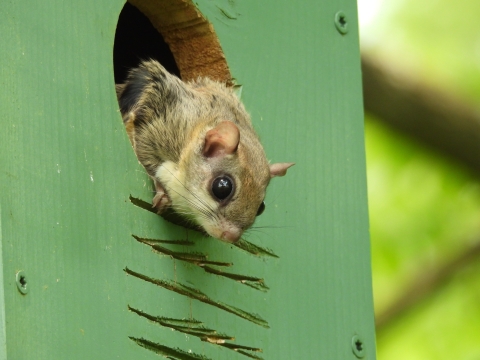
Southern flying squirrel (Glaucomys volans)
Southern flying squirrels can be found across much of the eastern United States. While they can't truly fly, these small mammals are able to silently glide through forests. While they're quite common, they're not often seen due to their nocturnal nature.
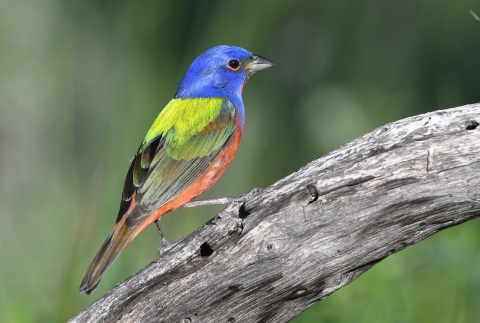
Painted bunting (Passerina ciris)
What a showoff! Male painted buntings are one of the most colorful birds you'll see this time of year. Look for these brilliantly colored songbirds in the southeastern U.S. along woodland edges and thickets. Keep an ear out in the early mornings, as you'll likely hear them before you see them.
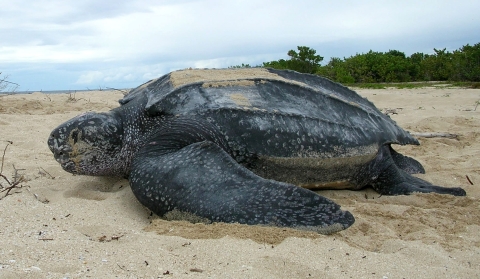
Leatherback sea turtle (Dermochelys coriacea)
The leatherback is the largest, deepest diving, and most migratory and wide ranging of all sea turtles. Adult leatherbacks can reach 4 to 8 feet in length and weigh 500 to 2000 pounds! This time of year, females are busy laying eggs, please be mindful and keep your distance.
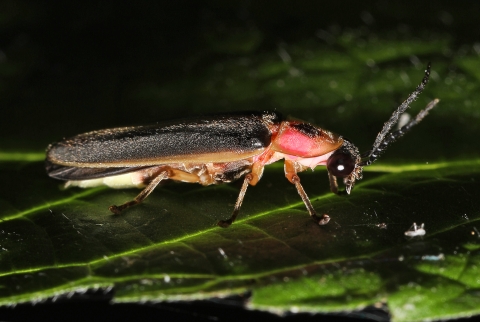
Firefly (Photinus pyralis)
Now is peak season for firefly viewing across much of the eastern and central United States. Warm, humid evenings, especially after rain, from dusk to about 10:00 p.m. are your best chances to see them. The darker your fields and backyards are, the more likely you are to see the light show.
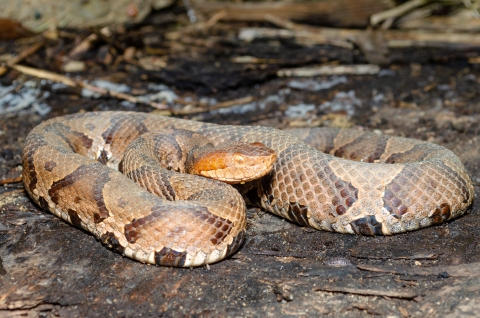
Eastern copperhead (Agkistrodon contortrix)
Eastern copperheads are venomous pit vipers found in forests, rocky areas and fields across much of the eastern and central United States. These snakes are generally not aggressive unless disturbed. This time of year, they're hunting small mammals, especially during cooler times of day.
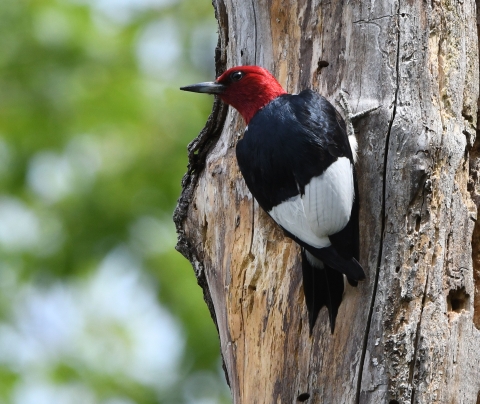
Red-headed woodpecker (Melanerpes erythrocephalus)
Red-headed woodpeckers have a completely red head and neck, paired with a black back and white belly and wing patches. Found in deciduous woodlands across much of the central and eastern U.S., these woodpeckers eat a variety of fruit, insects and seeds.
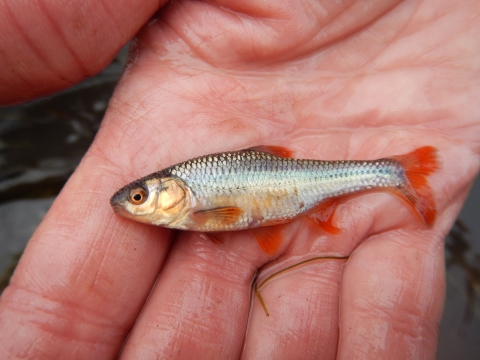
Topeka shiner (Miniellus topeka)
Topeka shiners are small minnows that were once common in prairie streams of the central United States. Today, they're scattered in parts of South Dakota, Minnesota, Iowa, Nebraska, Missouri and Kansas where clean, slow-moving waters remain. Threats to these fish include habitat loss, stream channelization and water quality issues.