Written By

To celebrate America's 250th birthday, we at the U.S. Fish and Wildlife Service are highlighting the incredible wildlife that calls this beautiful country home. From American icons to subtle specialists, join us as we highlight seven species each week: one species for each of the 250 days leading up to America's 250th birthday.
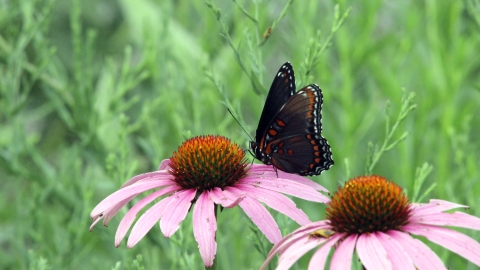
Red-spotted purple (Limenitis arthemis)
Red-spotted purple butterflies can be found across much of North America but are most common in the east. This time of year, watch for these active butterflies flying, feeding and mating along woodland edges and roadsides. Females lay eggs on a variety of trees, including aspen, poplar and willow.
Star-nosed mole (Condylura cristata)
The star-nosed mole is a unique semiaquatic mammal that is mostly found in wet areas and lowlands of the east. Its nose is made up of 22 fleshy appendages covered with touch receptors. These moles have sharp claws to tunnel through soil, feeding on insects, worms and aquatic invertebrates.

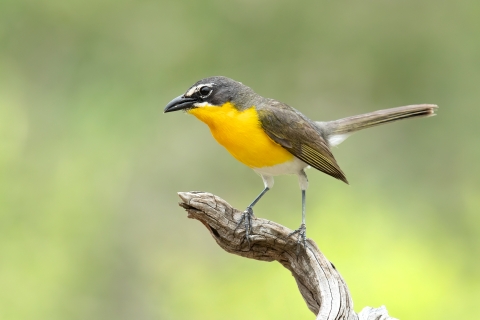
Yellow-breasted chat (Icteria virens)
Yellow-breasted chats make all sorts of whistles, clucks and cackles from thickets and shrubby fields. These talkative songbirds are surprisingly shy but can be found across much of the country in the summer.
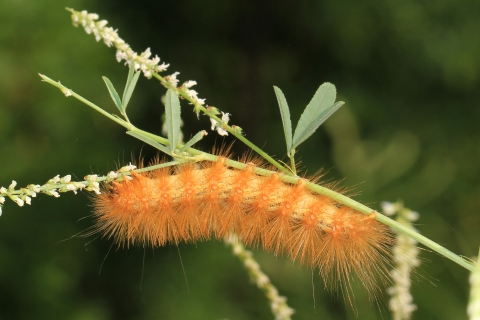
Salt marsh moth (Estigmene acrea)
The salt marsh salt marsh
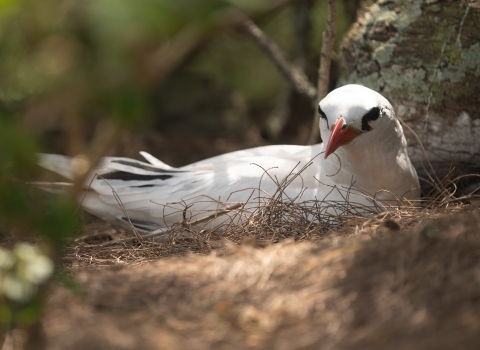
Salt marshes are found in tidal areas near the coast, where freshwater mixes with saltwater.
Learn more about salt marsh moth can be found across much of North America. Adults are white with black spots and pale orange underwings. Caterpillars are called acrean woolly bears and are fuzzy, varying in color from rusty to black. Despite their name, they can be found in fields, gardens and meadows too!
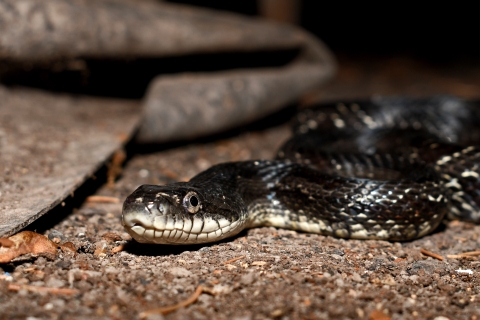
Eastern ratsnake (Pantherophis alleghaniensis)
The eastern rat snake is a nonvenomous snake found in the east that can reach lengths of more than 6 feet! Adults in the northern range are shiny black with a cream or white chin and throat. In the Florida Peninsula, adult color can vary significantly from yellow to orange or tan to gray.
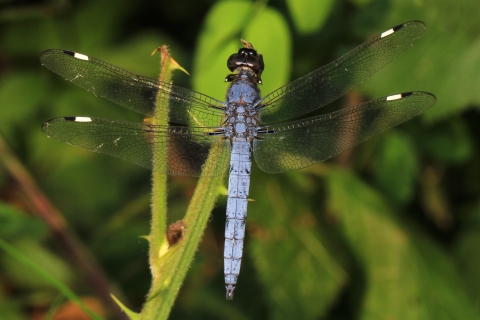
Spangled skimmer (Libellula cyanea)
The spangled skimmer can be found across much of the eastern U.S. near ponds, marshes and slow-moving streams. Males have powdery blue bodies and black-and-white "spangled" patches on their wings. Females are more subtly patterned in browns and yellows. This time of year, watch for them hunting insects in flight, searching for mates and defending sunny perches.
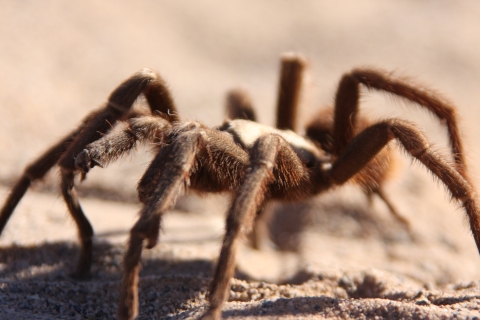
Texas brown tarantula (Aphonopelma hentzi)
The Texas brown tarantula is one of the largest and most recognizable spiders in the southern United States. While they may look startling, they're gentle giants that play an important role in keeping insect populations in check.