To celebrate America's 250th birthday, we at the U.S. Fish and Wildlife Service are highlighting the incredible wildlife that calls this beautiful country home. From American icons to subtle specialists, join us as we highlight seven species each week: one species for each of the 250 days leading up to America's 250th birthday.
Eastern tiger swallowtail (Papilio glaucus)
The eastern tiger swallowtail is a large butterfly with yellow wings featuring black stripes. These butterflies can be found across the eastern United States and this time of year, it's mating season. Females lay eggs on a variety of host plants including black cherry, tulip tree and magnolia.

Eastern newt (Notophthalmus viridescens)
The eastern newt has three life stages: aquatic larva, terrestrial juvenile and aquatic adult. Larvae have gills and olive-green or brown coloring. Juveniles are bright orange to red and are known as red efts. Adults are olive green and may develop webbed hind feet. Watch for these newts across the eastern half of the country.

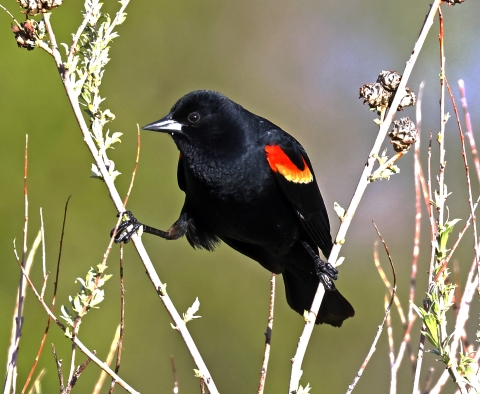
Red-winged blackbird (Agelaius phoeniceus)
Red-winged blackbird males have flashy red and yellow shoulder patches and can be found singing their "conk-la-ree!" call across much of North America. They'll fiercely defend territories, often perched on cattails or in trees. Females often stay hidden in tall grass and reeds where they weave nests and raise the next generation.
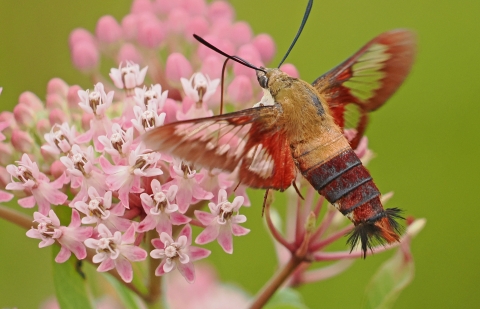
Hummingbird clearwing moth (Hemaris thysbe)
The hummingbird clearwing is a large moth that can be found from Alaska through southern Canada and across the eastern United States. They fly during the day and are often mistaken for hummingbirds as they visit flowers to sip nectar.
Northern water snake (Nerodia sipedon)
The northern water snake is a nonvenomous reptile found near freshwater across much of eastern and central North America. As temperatures rise, they emerge from winter denning sites to find mates. In late summer, females will give birth to live litters of 20-25 young.

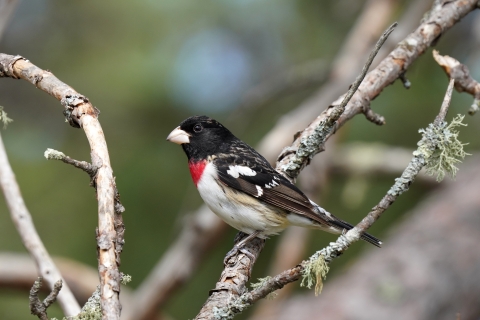
Rose-breasted grosbeak (Pheucticus ludovicianus)
The rose-breasted grosbeak is a striking songbird named after the male's bright red chest. This time of year, these grosbeaks are returning to summer breeding grounds across the midwest, northeast, Appalachian Mountains and parts of southern Canada. You may see them visit bird feeders to eat sunflower seeds or fruit.
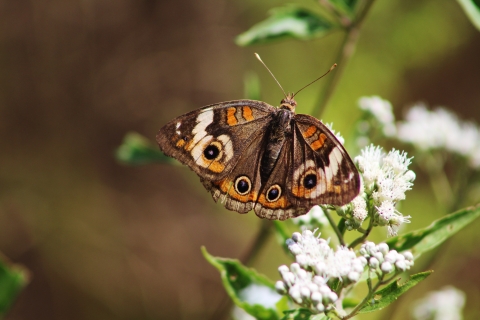
Common buckeye (Junonia coenia)
The common buckeye is a bold butterfly easily recognized by its large eye-like spots and intricate patterns. Primarily found east of the Rocky Mountains, watch for these butterflies visiting flowers and flying low to the ground.