In September 2025, the Great Lakes Coastal Program partnered with the Little Traverse Bay Bands of Odawa Indians Natural Resource Department, Michigan Natural Features Inventory, Michigan State University, and other partners to collect samples from fire scarred red pine trees in Michigan’s Wilderness State Park and at Beaver and High Islands in Lake Michigan to reconstruct a history of fire on the landscape.

Native Americans have been living in the Great Lakes Region for millennia and they have used fire to manage landscapes to maintain native ecosystems and prevent the spread of invasive species invasive species
An invasive species is any plant or animal that has spread or been introduced into a new area where they are, or could, cause harm to the environment, economy, or human, animal, or plant health. Their unwelcome presence can destroy ecosystems and cost millions of dollars.
Learn more about invasive species . Stories about their ancestors’ use of fire to manage forests and blueberry patches have been passed down through oral tradition within Native American communities in these areas.
The project partners set out to find areas with mature red pine trees and stumps specifically because red pine trees release a resin when they come under stress. This resin functions as a preservative, which allows the trees to survive damage, including fires. Once the trees release resin, the trees or stumps can remain on the landscape for hundreds of years and their rings can help reconstruct natural history. Tree stump samples were removed from fire scarred red pine stumps with a handsaw and core samples were extracted using an increment borer.In both cases, care was taken not to cause damage to living red pine trees or to historically and culturally important stumps.
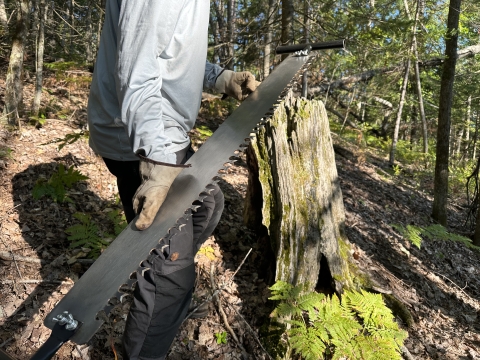
By examining the rings from core samples and stumps of fire scarred red pine trees, researchers can look for evidence of past fires and determine their age by comparing them to core samples taken from nearby living red pine trees.The samples collected provide information on the use, frequency, and intensity of fires in these locations and provide valuable insight into how the land was managed by the native peoples that inhabited this area before European Settlement. This project combined knowledge from indigenous peoples with science techniques to prioritize areas for both cultural fire uses and future invasive species management.
The Setting the Straits on Fire Project was funded by the U. S. Fish and Wildlife Service Great Lakes Coastal Program with matching contributions from the participating partners.