To celebrate America's 250th birthday, we at the U.S. Fish and Wildlife Service are highlighting the incredible wildlife that calls this beautiful country home. From American icons to subtle specialists, join us as we highlight seven species each week: one species for each of the 250 days leading up to America's 250th birthday.
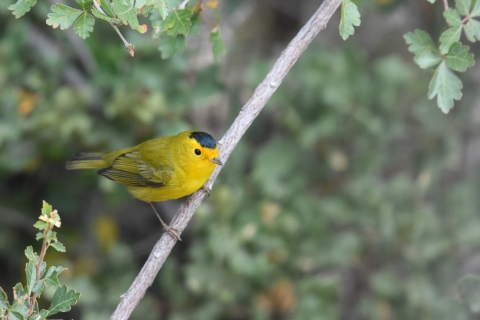
Wilson’s warbler (Cardellina pusilla)
The Wilson's warbler is a small, energetic songbird easily recognized by its bright yellow body and the male's bold black cap. They spend winters along parts of the south and much of Mexico and in a few weeks, they'll begin their journey toward breeding grounds across much of Alaska, Canada, parts of the west and far northeast.
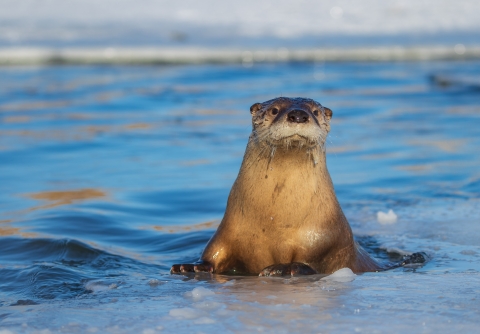
North American river otter (Lontra canadensis)
North American river otters are playful and agile, thriving in lakes, rivers and marshes across much of the U.S. and Canada. They remain active all winter, hunting for fish, frogs and crustaceans beneath the ice and using holes to surface. Right now, otters are particularly active and social - sliding, wresting and vocalizing.
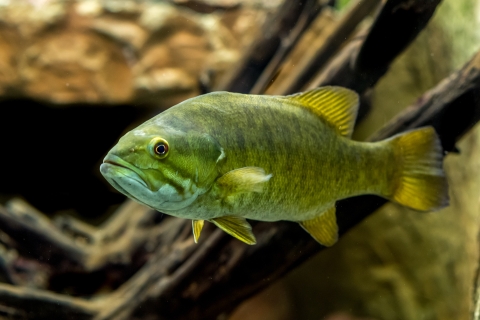
Smallmouth bass (Micropterus dolomieu)
The smallmouth bass is a powerful freshwater sportfish prized for its fight. Found in clear, cool rivers, lakes and reservoirs across the eastern and central U.S., they spend winters in deep, rocky areas where they feed sparingly on crayfish or small fish.
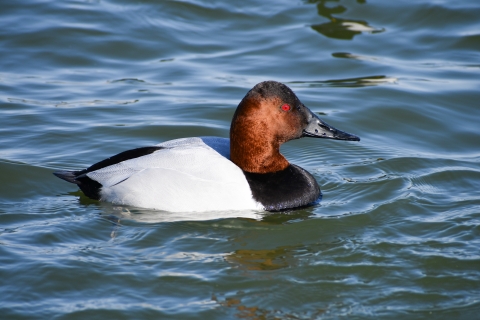
Canvasback (Aythya valisineria)
The canvasback is a sleek diving duck with a chestnut head and striking black-and-white body. This time of year, they can be found on open waters across much of the country, fueling up for their return to northern breeding grounds.
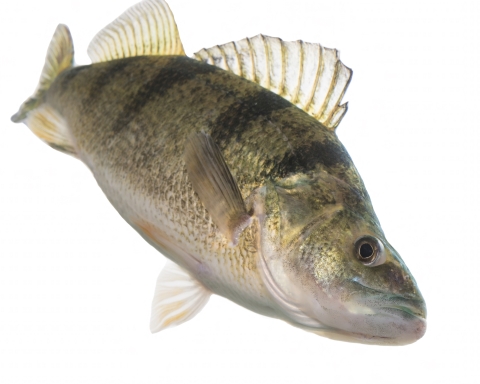
Yellow perch (Perca flavescens)
The yellow perch is a popular freshwater fish with bold stripes and golden-yellow coloring. Found in lakes, ponds and slow-moving rivers across the northern U.S. and Canada, perch remain active beneath the ice in the winter. This time of year, they're preparing for spring spawning, forming large schools.
Eastern deer mouse (Peromyscus maniculatus)
The deer mouse is a small, agile rodent found from forests and grasslands to deserts and alpine regions. These omnivores eat seeds, fruit, arthropods, leaves and fungi. Deermice are important food sources for snakes, owls, minks, martens, skunks, bobcats and more.

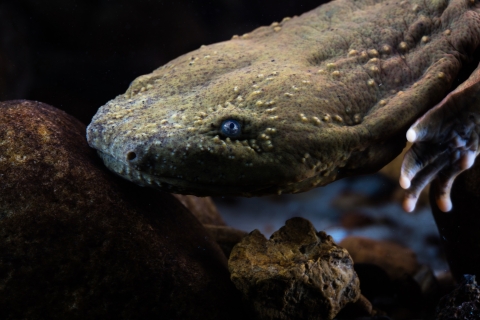
Eastern hellbender (Cryptobranchus alleganiensis)
Eastern hellbenders are giant salamanders that can reach lengths up to 2 feet! They're fully aquatic and live in clean, fast-flowing streams and rivers in the eastern U.S., hiding under rocks, breathing through their skin and feeding on crayfish, insects and small fish.