Written By


To celebrate America's 250th birthday, we at the U.S. Fish and Wildlife Service are highlighting the incredible wildlife that calls this beautiful country home. From American icons to subtle specialists, join us as we highlight seven species each week: one species for each of the 250 days leading up to America's 250th birthday.
Tufted titmouse (Baeolophus bicolor)
The tufted titmouse is a curious songbird found throughout much of the eastern U.S., easily recognized by its gray back, large black eyes and fast-paced calls. This time of year, they're busy searching for tree cavities or nest boxes to raise their young.

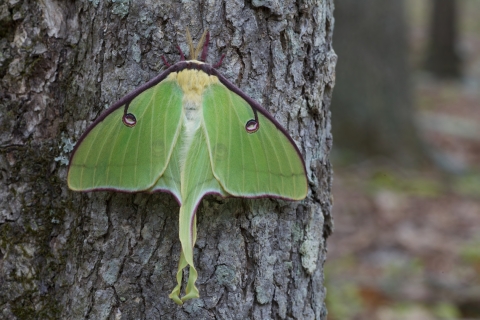
Luna moth (Actias luna)
The luna moth is an enchanting insect known for its pale green wings with eyespots, long tails and large wingspan which can measure more than 7 inches. These moths can be found in the eastern United States where several species of broadleaf trees are used as host plants for caterpillars.
Common garter snake (Thamnophis sirtalis)
The common garter snake is one of the most widespread snakes in North America, known for its slender body and distinctive stripes. This time of year, it’s mating season, and you may even see "mating balls" where multiple males compete to court a female.

Marbled murrelet (Brachyramphus marmoratus)
The marbled murrelet is a small, secretive seabird of the Pacific Northwest. While it forages at sea like a typical seabird, diving for fish and crustaceans, it nests far inland in coast forests, often high in conifer branches.

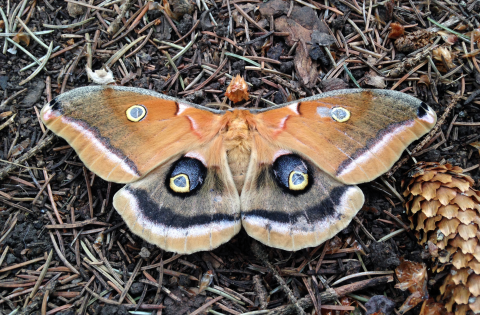
Polyphemus moth (Antheraea polyphemus)
The Polyphemus moth is a giant silk moth known for its large, brown wings and dramatic eyespots, resembling an owl's gaze. These moths have large wingspans measuring up to 6 inches and can be found across most of the country. Like other silk moths, adults don't eat - their goal is to reproduce.
Desert tortoise (Gopherus agassizii)
The desert tortoise lives in one of North America's harshest environments - the Mojave and Sonoran Deserts of the southwestern United States. They spend much of their lives in underground burrows to escape extreme temperatures. In the spring, they become active above ground, foraging on grasses, wildflowers and even cacti!

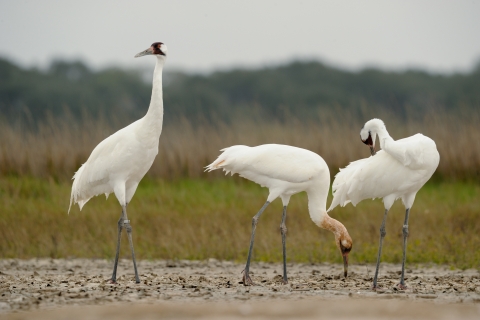
Whooping crane (Grus americana)
The whooping crane is one of North America's rarest and most majestic birds - standing nearly 5 feet tall with a bright white body, black wingtips and loud, trumpeting call. This time of year, they're completing their spring migrations and getting ready for the nesting season ahead.