


1211 SE Cardinal Ct
Suite 100
Vancouver, WA 98683
United States
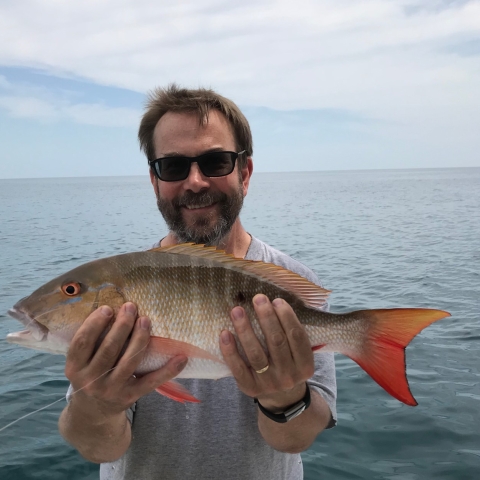
About Scott Covington
Program: Project Leader
Scott has been the Columbia River FWCO's Project Leader since 2025. In this role, he leads a cadre of highly skilled, innovative fisheries biologists who bring exceptional expertise and initiative to every challenge. Together, they collaborate with tribal, state, federal, and international partners to restore and manage fish populations throughout the Columbia River Basin. Our team excels in applied research and management activities—advancing fish passage fish passage
Fish passage is the ability of fish or other aquatic species to move freely throughout their life to find food, reproduce, and complete their natural migration cycles. Millions of barriers to fish passage across the country are fragmenting habitat and leading to species declines. The U.S. Fish and Wildlife Service's National Fish Passage Program is working to reconnect watersheds to benefit both wildlife and people.
Learn more about fish passage solutions, evaluating hatchery performance, recovering endangered species, and mitigating the spread of invasive species invasive species
An invasive species is any plant or animal that has spread or been introduced into a new area where they are, or could, cause harm to the environment, economy, or human, animal, or plant health. Their unwelcome presence can destroy ecosystems and cost millions of dollars.
Learn more about invasive species . We leverage cutting-edge technologies, including drones, AI, and advanced monitoring systems, to enhance conservation outcomes. At the core of our mission is collaboration: fostering strong partnerships, sharing knowledge, and implementing science-driven strategies to safeguard the basin’s ecological integrity for future generations.
Background: Scott began his career in 1999 as an Aquatic Habitat Biologist with the Wyoming Game and Fish Department, focusing on mitigating grazing impacts and aquatic habitat restoration. In 2000, he transitioned to fisheries work with the Vermont Fish and Wildlife Department before returning to Wyoming as a Fisheries Biologist and later Environmental Analyst, where he led energy-related conservation projects and developed GIS-based decision tools. In 2007, Scott joined the U.S. Fish and Wildlife Service as an Energy Biologist in Wyoming, advancing to Energy Coordinator and then Refuge Energy Program Coordinator in Falls Church, VA, where he managed national oil and gas guidance and interagency partnerships. From 2016 to 2023, he served as Senior Ecologist for the National Wildlife Refuge System, including developing the Service’s Climate Change Action Plan and other innovative adaptation frameworks. In 2023, Scott became Assistant Regional Director for Science Applications in the Pacific Region, promoting cross-program collaboration and climate-smart conservation. Since May 2025, he has served as Project Leader for the Columbia River Fisheries Program Office, overseeing multi-agency efforts to restore anadromous fish populations and sustain aquatic ecosystems within the Columbia River Basin.
At CRFWCO since: 2025