

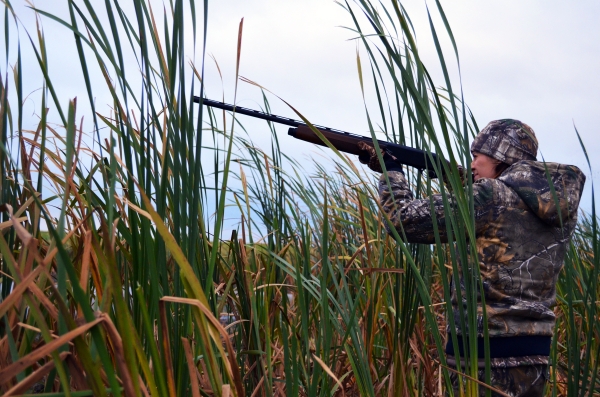
Whittlesey Creek NWR protects wetlands along Lake Superior as well as a beautiful trout stream that provides habitat for spawning fish from the lake. For hunters, the refuge offers a good waterfowl hunting opportunity along the coastal wetlands of the lake east of Highway 13. While Lake Superior is best known by waterfowlers for diving duck hunting, the refuge offers the chance for a good puddle duck hunt along the shores. A boat makes access easier, but some hunters do hike in. Hunting pressure is very light throughout the season. The refuge also offers an archery deer season on refuge tracts that are larger than 20 acres.
| Activity | Season Dates | Harvest | Special Regulations |
| Archery Deer | Applicable state season applies | 2 hours before and after legal shooting hours | State regulations apply |
| Waterfowl | Applicable state season applies | 2 hours before and after legal shooting hours | State regulations apply |
| Sport Fishing | Applicable state season applies | Sunrise to Sunset | We prohibit the taking of any mussel(clam), crayfish, frog, leech, and turtle species by any method on the refuge. |
| Trout Fishing | First Saturday in May to November 15 | Sunrise to Sunset | Daily bag limit: 5 trout and salmon in total, only 2 of which may be brown trout over 15” and only 1 of which may be a rainbow trout. All brook trout must be immediately released. Length limit: brown trout 10”,salmon 12” and rainbow trout 26”. |
Welcome
Whittlesey Creek National Wildlife Refuge is located in northern Wisconsin and encompasses several important tributaries and shoreline along Lake Superior. The refuge was established in 1999 in an effort to restore coaster brook trout, a native trout that spawns in Whittlesey Creek and spends its adult life in Lake Superior. Another important role of the refuge is to provide environmental education in the local community through a partnership with other agencies in the Northern Great Lakes Visitor Center.
Safety
The Refuge is bordered irregularly by private land. Please be aware of refuge boundary signs.
Firearms
Persons possessing, transporting, or carrying firearms on National Wildlife Refuge System lands must comply with all provisions of State and local law. Persons may only use (discharge) firearms in accordance with refuge regulations (50 CFR 27.42 and specific refuge regulations in 50 CFR Part 32.)
Vehicles
Licensed motor vehicles are permitted only on public roads and designated Refuge parking areas. Consult attached map. Overnight parking is prohibited.
Accessibility Information
Equal opportunity to participate in and benefit from programs and activities of the U.S. Fish and Wildlife Service is available to all individuals regardless of physical or mental ability. For more information please contact the U.S. Department of the Interior, Office of Equal Opportunity, https://www.doi.gov/pmb/eeo/public-civil-rights
Hunting and Fishing Regulations
Hunting and fishing regulations are designed to provide safe recreational opportunities through wise use of renewable wildlife resources. Hunting and fishing are permitted in accordance with Federal regulations governing public use on National Wildlife Refuges as set forth in Title 50 of the Code of Federal Regulations.
Hunting and fishing will be in accordance with applicable State of Wisconsin regulations subject to the conditions stated in this brochure. Brochures may be obtained by mail, at the refuge website, or at the Northern Great Lakes Visitor Center.
Specific information related to trout fishing is also included in state fishing regulations for Lake Superior under Whittlesey Creek, downstream from Town Hall Rd.
Access
All visitors, except for hunters, may only access the refuge from sunrise to sunset. Hunters may enter the refuge no earlier than 2 hours before legal shooting hours and must exit the refuge no later than 2 hours after legal shooting hours end.
Hunters and anglers must park in designated parking areas, as identified on the map below. Public access to refuge lands east of Highway 13 open to both waterfowl and archery deer is south from Longbridge Rd. Via adjacent DNR property, or the shoreline of Lake Superior.
TreeStands/Blinds/ Decoys
Ground blinds or any elevated stands are permitted only if they do not damage live vegetation, including trees. The use of nails, wire, screws or bolts to attach a stand to a tree, or hunting from a tree into which a metal object has been driven to support a hunter, is prohibited.
All stands and all other personal property, including decoys, must be removed from the Refuge at the end of each day’s hunt. The construction or use of permanent hunting blinds is prohibited.
Harvest Reporting
Hunters must follow statewide harvest reporting regulations.
ToReport Violations
- Refuge Law Enforcement Officer, phone 612-283-8963
- 1-844-FWS-TIPS (397-8477)
Prohibited Activities
- By law, recreational activities on national wildlife refuges are prohibited unless expressly permitted.
- The use or possession of alcohol or controlled substances are prohibited.
- Fires, including charcoal, as well as all fireworks and explosives, are prohibited.
- Camping is prohibited.
- Pets must be on a leash, except when used for the purpose of hunting where permitted in accordance with federal and state regulations and seasons.
- Vegetation may not be damaged or removed from the Refuge including willow and birch twigs or branches.
- Disposing of animal carcasses, trash, yard waste or other debris is prohibited.
- Trapping of furbearers is prohibited.
- Firearm deer hunting is prohibited on the Refuge.
- Distribution of feed or bait or hunting over bait is prohibited. This includes salt and minerals.
- Bows must be cased at all times while in areas posted as no hunting.
- The use of artificial lights and vehicle headlights are prohibited to take or locate game.
- Hunters must obtain permission form the landowner to enter private property to retrieve deer.
- Hunters must possess and use only non-toxic shot while waterfowl hunting.
- Motorized watercraft use is prohibited.
- We prohibit all types of motorized vehicles on frozen water bodies.
- We prohibit the taking of any mussel (clam), crayfish, frog, leech, and turtle species by any method on the refuge.
