States
New York, Pennsylvania, West VirginiaGCP Overview
The U.S. Fish and Wildlife Service supports its Endangered Species Act (ESA) responsibilities in part by working with others to conserve habitats that federally protected species depend upon, and by encouraging management activities that benefit species recovery.
One way the Service supports strategic conservation for listed species is through General Conservation Plans (GCPs), developed as a streamlined approach to Habitat Conservation Plans.
GCPs are typically landscape-level plans developed by the Service with the conservation needs of specific species in mind. They can be designed to cover many different types of projects that may adversely affect covered species.
For GCPs, the Service defines the covered activities, biological goals and objectives, plan area, permit duration, and associated mitigation requirements.
As part of this process, the Service completes mandatory documents — a Findings document, a Biological Opinion, and a National Environmental Policy Act document — that apply to all actions covered under the GCP with the potential to adversely affect the covered species.
The plan is then made available for adoption and use by applicants who will receive individual incidental take permits when they can demonstrate compliance with conservation goals and permit issuance criteria (including mitigation) associated with the GCP.
Purpose
This Routine Development Projects GCP was created to help individual applicants satisfy the statutory and regulatory requirements for an incidental take permit under Section 10(a)(1)(B) of the ESA.
Project proponents seeking to comply with the requirements of the ESA — who verify that their project meets the requirements described in the plan and agree to implement the conservation measures that apply to their project — can adopt this GCP to satisfy the conservation-plan component of their application when applying for an incidental take permit.
This voluntary process is intended to facilitate compliance with the requirements of the ESA, increase efficiency of permit issuance for eligible projects where there is reasonable certainty of take of a covered species, and generate more consistent and comprehensive landscape-scale conservation actions to benefit the covered species.
What is Covered
Geographic area
The plan area of this GCP (i.e., the geographic area covered by this GCP) includes:
- New York
- Pennsylvania
- West Virginia
Activities
The activities covered by this GCP include the following Covered Activities (see section 3.4 in the GCP for Covered Activities):
- Residential/commercial/other development,
- Transportation (i.e., non-Federal Highway Administration/Federal Railroad Administration/Federal Transit Administration funded projects), and
- Utilities
Covered species
The covered species include:
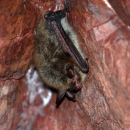
- Indiana bat (Myotis sodalis)
- Northern long-eared bat (Myotis septentrionalis)
- Tricolored bat (Perimyotis subflavus)
Permit duration
Individual permits issued through the GCP process may be authorized for a term of up to 5 years.
How to Apply
To apply for a Permit under this GCP, project proponents must submit a complete Individual Project Plan (IPP) to their local Service field office. Appendix C of the GCP describes the IPP process and provides information on the development and submission of the application package.
Resources
GCP Documents
Multi-Bat Species General Conservation Plan for Routine Development Projects
Appendix D: Threatened and Endangered Species within the GCP Plan Area
Appendix E: National Historic Preservation Act Section 106 Compliance
Appendix G: Standard Process for Obtaining and Implementing a Permit for an HCP
Decision Documents
Other Materials
GCP User Guide - Coming soon!
Reporting
Permitted Projects and Minor Clarifications to the GCP Documents
Contact Information
New York Ecological Services Field Office
3817 Luker Road Cortland, New York 13045-9385
607-753-9334
Send project submissions to: fw5es_nyfo@fws.gov
Pennsylvania Ecological Services Field Office
110 Radnor Road, Suite 101 State College, Pennsylvania 16801-7987
814-234-4090
Send project submissions to: IR1_ESPenn@fws.gov
West Virginia Ecological Services Field Office
6263 Appalachian Highway Davis, West Virginia 26260-8061
304-866-3858
Send project submissions to: fw5_wvfo@fws.gov