AUSTIN, Texas –The U.S. Fish and Wildlife Service is announcing the availability of three draft recovery plans for endangered freshwater mussel species found in the Guadalupe River Basin in Central Texas: thefalse spike, the Guadalupe fatmucket, and the Guadalupe orb. Recovery plans provide a comprehensive strategy for achieving recovery for listed species so they no longer need protections under the Endangered Species Act. The 60-day public comment period opens today and ends on Dec. 1, 2025.

Draft recovery plans available for review and comment include:
- The false spike, a medium-sized mussel with an elongated shell that grows up to 5.3 inches (13 centimeters) in length. Once common within its range, it was later thought to be extinct until recent rediscovery in 2011. The draft recovery plan for the false spike is available online.
- The Guadalupe fatmucket, a small-sized mussel with average shell length of around 2 inches (5 centimeters). The draft recovery plan for the Guadalupe fatmucket is available online.
- The Guadalupe orb, a small-sized mussel with a compressed and somewhat rectangular shell that grows up to about 2.5 inches (6.3 centimeters). The draft recovery plan for the Guadalupe orb is available online.
Freshwater mussels filter and improve water quality and are biological indicators of healthy ecosystems. Threats to the species include declines in water quality, loss of stream flow, riparian riparian
Definition of riparian habitat or riparian areas.
Learn more about riparian and instream habitat fragmentation, and degradation of instream habitats. In coming decades, the riverine environments in Central Texas are anticipated to experience increased frequency and scale of both drought and flood conditions.
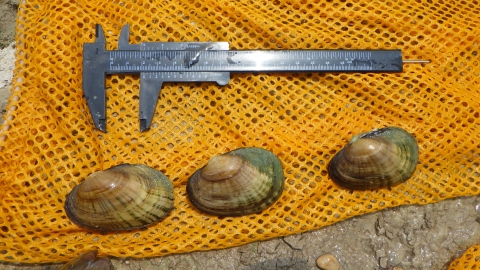
The Service, in collaboration with tribes, stakeholders and partners, develops and implements recovery plans to support the conservation and recovery of endangered and threatened species. These are not regulatory documents, and implementation of actions is not required by the ESA. Instead, recovery plans serve as road maps with specific management actions to foster cooperation in conservation for listed species and their ecosystems. The Service developed these recovery drafts with input from the Texas Parks and Wildlife Department's state mussel biologist. The draft recovery plans define actions that contribute to the recovery of the three freshwater mussels, describe the time and cost estimates for implementing those actions, and outline objective and measurable criteria for downlisting and delisting the species.

The Service works with a wide range of partners to recover the species and supports efforts to conserve native aquatic fauna in the Guadalupe River Basin. These efforts will involve close coordination through partnerships with federal, state, tribal, and local agencies, including river authorities, private landowners, and non-governmental organizations. The Guadalupe-Blanco River Authority is currently working with the Service on a Habitat Conservation Plan, which aims to conserve and protect these freshwater mussels as well as three other at-risk species.
The Service encourages the public, federal and state agencies, tribes, and other stakeholders to review the three draft recovery plans and provide comments. Submit comments by mail to the Austin Ecological Services Field Office, 1505 Ferguson Lane, Austin, Texas 78754 or by email at esaustininfo@fws.gov.