


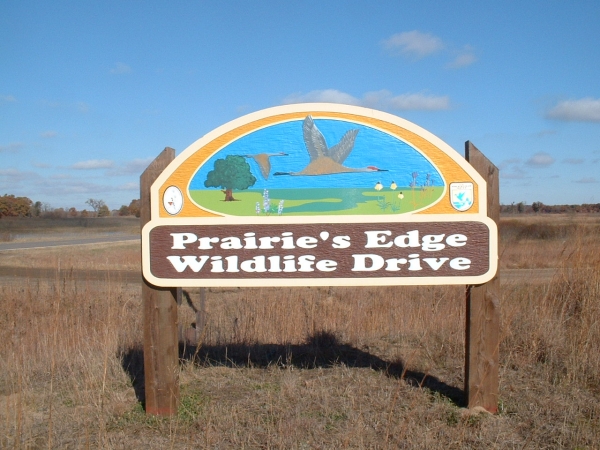
Explore the Prairie’s Edge Wildlife Drive by vehicle, bicycle or on foot and experience the diverse wildlife and habitats of Sherburne National Wildlife Refuge. This 7.3‑mile gravel route begins as a two‑way road before transitioning into a one‑way loop. Pull-offs, overlooks and three short trails offer opportunities to enjoy the Drive at your own pace.
The Wildlife Drive features a mosaic of habitats including oak savanna, prairie, oak forest, shallow wetland, sedge meadow and tamarack swamp. A large variety of songbirds, ducks, swans, geese, wading birds, hawks and eagles, cranes, snakes, turtles and white-tailed deer are commonly spotted on the Drive. On occasion, river otter, black bear, coyote, red fox, muskrat, beaver, badger and mink can also be seen.
Location
1.2 miles north of Orrock, MN on Sherburne County Road 5.
Hours
Hiking: Daily from 1/2 hour before sunrise to 1/2 hour after sunset.
Bicycling: Daily from 1/2 hour before sunrise to 1/2 hour after sunset.
Cross-country Skiing and Snowshoeing: As snow conditions allow, daily from 1/2 hour before sunrise to 1/2 hour after sunset.
Vehicles: As winter weather and road conditions allow, April 1 - November 30 from 1/2 hour before sunrise to 1/2 hour after sunset. Closed to vehicles from December 1 - March 31 and during the nine-day firearm deer season in November. Check road conditions at the Refuge Headquarters, call 763-389-3323 or watch for alerts on the Home Page.
Please Note: Horses, ATVs, UTVs and all other off-highway vehicles (OHVs) are not allowed on the Wildlife Drive.
Know Before You Go
- The speed limit of the Wildlife Drive is 20 mph.
- Vehicles and bicycles must stay on gravel roads and observe all posted signs.
- Hikers must observe all posted signs and stay within 100 feet of the Wildlife Drive and trails during Wildlife Sanctuary (March 1 - August 31).
- Dogs must be on a leash at all times.
- No collection of wildflowers, animals, artifacts or stones is permitted.
- Volunteer Roving Interpreters can help answer refuge questions, point out interesting wildlife observations and offer recommendations.
- For a more immersive experience, roll down your windows and make stops along the route. When stopping, please pull over safely to allow others to pass.
- Using your car as a viewing blind often allows for better wildlife viewing than walking or bicycling.
- Morning and evening are the best times to visit to see wildlife.
- Tuesday to Thursday are the least busy days to visit while Saturday and Sunday are the busiest days.
- Merlin, eBird and iNaturalist can be good resources to help with wildlife observation.
Points of Interest
- Check water control structures along the Wildlife Drive for green herons, belted kingfishers and great blue herons.
- Search mudflats for killdeer and other shorebirds.
- On sunny days watch for turtles sunbathing on logs and snakes basking on the road.
- Appreciate the rare oak savanna habitat on the Bur Oak Trail. This trail is located near the Wildlife Drive Welcome Station and features restrooms, picnic tables, bike racks, a bald eagle nest replica and various songbirds.
- Along the first two miles of the Wildlife Drive, watch for grasshopper, vesper and savanna sparrows, as well as eastern meadowlarks and dickcissels.
- Meander through prairie and oak savanna on the Prairie Trail. Visit in early to mid-June to see wild lupine at peak bloom. From late spring through fall, colors and blooms change weekly and buzz with bees and butterflies.
- Although trumpeter swans can be found throughout the refuge, mile marker 4 on the Drive is usually a reliable spot to view them.
- Hike through the deciduous forest on the Woodland Trail. This trail is a hotspot for warblers and songbirds during spring and fall migration.
- Just after the Woodland Trail, look for sandhill cranes and other wading birds in the shallow areas of Stickney and Nelson Pools.
- Stop near mile marker 6 to see a bald eagle nest that is over 25 years old.
