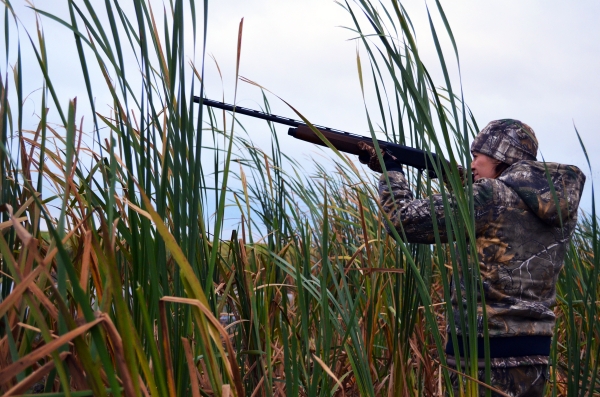
In 2026, Agassiz expanded its hunting opportunities to include more hunt-able acres and species. Some seasons are in accordance with state regulations; others have delayed openers. Contact refuge manager for more details.
Firearms
Persons possessing, transporting, or carrying firearms on National Wildlife Refuge System lands must comply with all provisions of State and local law. Persons may only use (discharge) firearms in accordance with refuge regulations (50 CFR 27.42 and specific refuge regulations in 50 CFR Part 32.)
Vehicles
Vehicles must remain on designated gravel roads. Portions of refuge roads may be closed at various times due to prescribed burning, wildfire, or weather-related emergencies. Snow is not removed from roads, travel with caution.
Boats
Only non-motorized boats may be used.
Accessibility Information
Equal opportunity to participate in and benefit from programs and activities of the U.S. Fish and Wildlife Service is available to all individuals regardless of physical or mental ability. For more information please contact the U.S. Department of the Interior, Office of Civil Rights, https://www.doi.gov/pmb/eeo/public-civil-rights
Agassiz has two permanent, accessible hunting stands available for use. Blinds are not set-up for archery hunting. Call or stop in at refuge headquarters for more details and reservation information.
Hunting Regulations
- Hunting is open to all species of game allowed by State regulations except gopher, monk parakeet, European starling and house sparrow.
- Hunting regulations are designed to provide safe recreational opportunities through wise use of renewable wildlife resources. Hunting is permitted in accordance with Federal regulations governing public use on National Wildlife Refuges as set forth in Title 50 of the Code of Federal Regulations.
- Hunting and fishing will be in accordance with applicable State of Minnesota regulations subject to the conditions stated below. Brochures may be obtained via the link below, by mail, at the refuge headquarters, or informational kiosks located at various locations on the refuge.
- The refuge is divided into areas which are designated as open or closed to hunting as shown on the map. Areas closed to hunting are posted with “No Hunting Zone” or “Closed Area” signs.
- The use of hunting dogs is allowed, provided the dog is always under the immediate control of the hunter and not used for hounding.
- Dogs may be used for deer and bear recovery in accordance with State regulations.
- Trapping and falconry hunting are prohibited.
Access
- The Refuge is open from 5:30am to 9:00pm. Shooting hours are in accordance with state regulations.
- Bikes and wheeled carts may be used. E-bikes are allowed on designated trails, roads and grass dikes on the refuge.
Tree Stands
Only portable tree stands/blinds for deer hunting may be left overnight in accordance with State regulations. They must be removed from the refuge at the end of your licensed season. Attaching a stand to a tree with nails, wire, screws or bolts is not allowed. Unoccupied stands/blinds may be used by anyone. Only 2 stands/blinds per hunter are allowed on the refuge. They need to be clearly labeled with your MN DNR license number.
ACTIVITY, SEASON DATES and REGULATION
*For more specific rules and policy, go to the Rules and Policy link under the Activities section on this website.
| Activity | Units and Season Dates | Regulation |
| Small Game, Big Game, Furbearer and Unprotected animals | South (Sep. 1-last Day of Feb.) North, East, West (Oct.1-last Day of Feb.) | All Hunting Seasons area according to State Regulations. Hunters may use or possess only approved non-toxic shot shells in the field while hunting. |
| Wild Turkey | All Units - State Seasons (Spring and Fall) | All Hunting Seasons are according to State Regulations. Hunters may only possess approved non-toxic shot. Lead shot may not be used or carried while hunting on the refuge. |
| Rail, Snipe, Woodcock | South (Sep. 1-last Day of Feb.) East, West (Oct.1-last Day of Feb) North (No Hunting) | All Hunting Seasons are according to State Regulations. Hunters may use or possess only approved non-toxic shot shells in the field while hunting. |
| Duck, Geese, Sandhill Crane, Teal, Coot, Crow, Dove, Gallinule | South (Sept. 1-last Day of Feb.) North, East, West (No Hunting) | All Hunting Seasons are according to State Regulations. Hunters may use or possess only approved non-toxic shot shells in the field while hunting. |
Prohibited Activities
By law, recreational activities on national wildlife refuges are prohibited unless expressly permitted.
- Possession of alcoholic beverages or any illegal drug or drug paraphernalia
- Camping, littering, overnight parking and fires
- Parking, blocking, or restricting access to roads and gates
- Off-road vehicles (ATV, OHV, UTV and ORV) or snowmobiles
- Destroying or removing any natural items such as antlers, bison skulls, plants, historic, and archaeological features, which are protected by Federal law.
- Introducing, liberating or placing plants or animals, or their parts taken elsewhere, on refuge lands or waters.
- Abandoning or disposing of personal property, animal carcasses, trash, refuse, rocks, wood or other debris.
- Permanent tree stands, nails, screw-in steps, or other items that penetrate the outer bark of a tree.
- Use a spotlight, headlight or other artificial light to spot, locate or take any wild animal.
- Use of any aircraft, drones, and other unmanned aerial vehicles on the refuge - for either recreational or commercial purposes.
- Use of bikes and wheeled carts in the wilderness area wilderness area
Wilderness areas are places untamed by humans. The Wilderness Act of 1964 allows Congress to designate wilderness areas for protection to ensure that America's pristine wild lands will not disappear. Wilderness areas can be part of national wildlife refuges, national parks, national forests or public lands managed by the Bureau of Land Management.
Learn more about wilderness area - Using horses to hunt or retrieve game.
- Shooting on, from, over, across or within 30’ of a road edge open to public vehicle transportation
- Distribution of feed or bait (including salts and minerals), or hunting over bait
- Entering into a No Hunting Zone/Closed Area
To Report Violations
- U.S. Fish and Wildlife Service TIPs: 1-844-FWS-TIPS (1-844-397-8477)
- Turn In a Poacher (TIP) Line: 1-800-POACHER