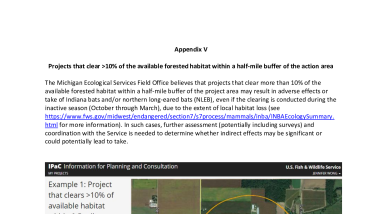
Appendix V - Projects that clear >10% of the available forested habitat within a half-mile buffer of the action area

The Michigan Ecological Services Field Office believes that projects that clear more than 10% of the available forested habitat within a half-mile buffer of the project area may result in adverse effects or take of Indiana bats and/or northern long-eared bats (NLEB), even if the clearing is conducted during the inactive season (October through March), due to the extent of local habitat loss (click here for more information). In such cases, further assessment (potentially including surveys) and coordination with the Service is needed to determine whether indirect effects may be significant or could potentially lead to take.

Facility
Mussels
We are the U.S. Fish and Wildlife Service office responsible for the following activities in Michigan: administering the Endangered Species Act; identifying sources of environmental contamination, assessing impacts of contaminants to fish and wildlife resources and helping to restore contaminated...
Species
Cluster of roosting bats.

The Indiana bat is a medium-sized Myotis, closely resembling the little brown bat (Myotis lucifugus) but differing in coloration. Its fur is a dull grayish chestnut rather than bronze, with the basal portion of the hairs on the back a dull-lead color. This bat's underparts are pinkish to...

FWS Focus