Written By

The American flag’s red, white and blue are more than just symbols of freedom - they’re also found in the wings, feathers and bodies of some of our most vital pollinators. From the fiery red of the ‘I‘iwi in Hawaii, to the shimmering blue of the Karner blue butterfly, these creatures not only dazzle with patriotic colors, they also play essential roles in sustaining our lands across this great nation. Let's explore how these colorful species reflect the spirit of the nation while reminding us of the importance of conservation.
Red: Color of valor and bravery
‘I‘iwi (Vestiaria coccinea)

A brilliant red Hawaiian honeycreeper bird, the ‘I‘iwi is a striking symbol of the unique natural beauty found throughout the islands. Its curved bill helps it drink sweet juice from special tube-shaped native flowers, like ʻōhiʻa , hāhā and ʻōhāwai. Once common, this bird now faces serious threats from habitat loss and avian malaria. Its story mirrors the broader challenges that pollinators are facing across the United States and reminds us that protecting them is not just about biodiversity, it’s also about preserving the spirit of resilience that defines our nation.
Red Admiral (Vanessa atalanta)

This large and strong-flying butterfly is one of the most commonly found butterflies in the United States. They aren’t picky where they live, only requiring the use of any plant member in the nettles family (Urticaceae) as their host plant to raise their young larvae, also called caterpillars. They flash vivid orange-to-red-stripes as they fly, reminding us of old glory unwavering in the wind.
Rufous hummingbird (Selasphorus rufus)

This fiery little bird migrates thousands of miles from Mexico to Alaska, flashing coppery-red feathers as it pollinates native flowers along the way. Despite being some of the smallest birds in the world, weighing less than a marshmallow, they fly at speeds of up to 30 miles per hour. Its freedom of movement and endurance is a fitting representation of Americans.
Red-belted bumble bee (Bombus rufocinctus)

This United States bumble bee is known for its variable color pattern of red bands on its abdomen. It is a smaller, short-haired bumble bee that is best known for living at open sites in the north and the western mountains. It reminds us that even the smallest creatures can have a big impact, echoing the ideal of hard work.
White: Color of purity and innocence
Yucca moth (Tegeticula spp.)

The yucca moth and the yucca plant share one of nature’s most iconic mutualisms, which is an interaction between two or more species where each benefit from their relationship. These pale moths pollinate yucca flowers while laying their eggs inside them. The larvae feed on some of the seeds, but enough remain to ensure the plant’s reproduction. It’s a delicate balance of give and take - an elegant metaphor for interdependence.
All-pale fairy bee (Perdita perpallida)

This tiny and nearly translucent, delicate bee prefers sandy sites that supply a lot of pollen from host plants such as prairie clover and goldenrod. Its pale coloring helps it blend into sandy environments. Living in these harsh places, the all-pale fairy bee represents adaptability, a trait that is woven deep in the American story of survival and innovation.
White-striped black mason wasp (Pseudodynerus quadrisectus)

This wasp features bold white stripes on a black body. You might catch a glimpse of this solitary wasp drinking from nectar-rich flowers like goldenrods and snakeroots. It can be found in the eastern United States from mid to late summer. By building its own nest which consists of mud chambers, they reflect the American value of craftsman spirit— a nod to both the artisan and entrepreneurial innovation.
White-winged dove (Zenaida asiatica)

With its soft gray plumage and distinctive white wing patches, the white-winged dove is more than a desert songbird, it’s also a pollinator. In the American southwest, this dove plays a crucial role in pollinating the saguaro cactus by transferring pollen as it feeds on nectar. Its gentle cooing and graceful flight evoke peace in arid landscapes.
Blue: Color of vigilance, perseverance and justice
Karner blue butterfly (Lycaeides melissa samuelis)

This tiny butterfly once fluttered widely across the Great Lakes region, its silvery-blue wings shimmering like a summer sky. Dependent on wild lupine for survival, the Karner blue is federally endangered due to habitat loss. Its story is one of fragility and hope - an emblem of the delicate balance between development and conservation.
Blue mud wasp (Chalybion californicum)
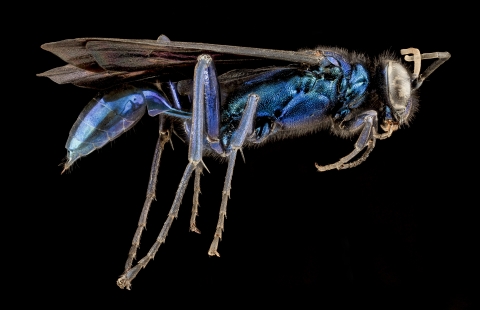
With its sleek, metallic blue body, the blue mud wasp is both beautiful and beneficial. The young prey on spiders, while adults feed on flowers, and often use remodeled mud dauber nests. Its shimmering color and solitary nature make it a quiet yet powerful contributor to healthy gardens.
Blue orchard mason bee (Osmia lignaria)

This native bee is a master pollinator of fruit trees and early spring blooms. Its dark blue sheen and gentle demeanor make it a favorite among gardeners and orchardists. People have the opportunity to provide homes for this bee by drilling holes in blocks of wood or buying a bug hotel to install in their yards. Like many Americans, it works hard behind the scenes to support life and community.
Andrena androfovea
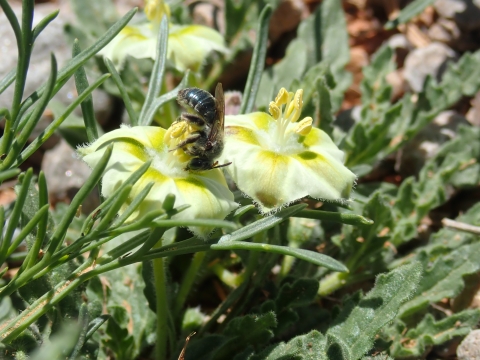
This bee is so new that a common name has not been given. So far, this bee is only known in Texas and Oklahoma by its blue-gray tones and early spring activity. Its finding highlights the ongoing importance of pollinator research and shows the American spirit of exploration and scientific discovery. It reminds us that there’s still much to learn - even in our own yards.
Celebrating and safeguarding our natural heritage
From the crimson feathers of the ‘I‘iwi to the snowy wings of the white-winged dove and the sapphire shimmer of the Karner blue butterfly, America’s pollinators wear the colors of the flag with pride. These species are more than beautiful - they are essential. As we celebrate America’s 250th birthday, let’s also commit to protecting the habitats and ecosystems that allow these living symbols of freedom to thrive.